Dysoxylum excelsum
Blume
Jasmine mahogany tree
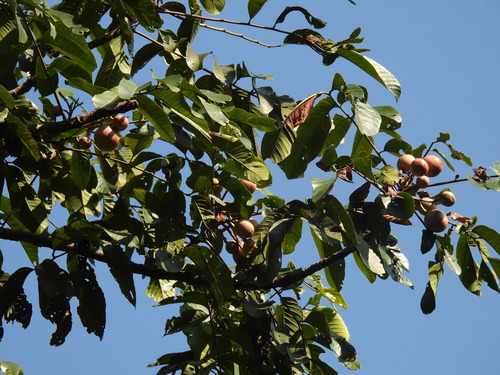
(c) Aparajita Datta, some rights reserved (CC BY-NC)
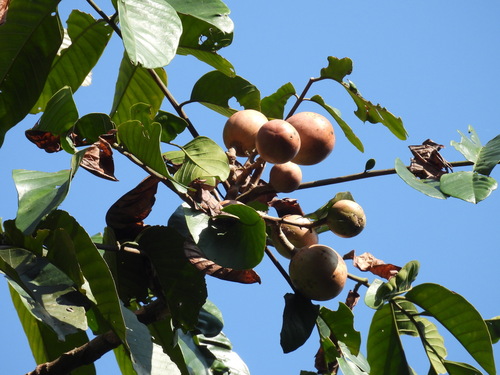
(c) Aparajita Datta, some rights reserved (CC BY-NC)
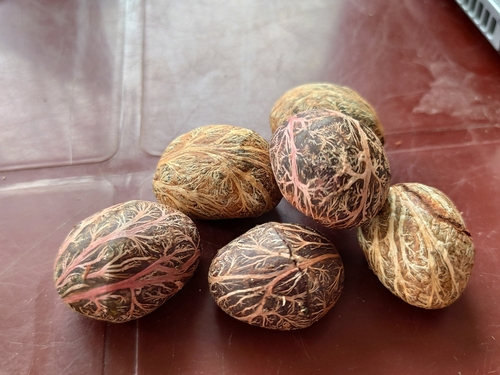
(c) Noopur Borawake, some rights reserved (CC BY-NC)
What to Eat
Edible parts: Fruit, Leaves, Flowers
The ripe fruits are pickled and eaten. Young shoots and flowers are boiled and eaten as vegetables, and shoots are sold in local markets.
Known Hazards
Where to Find It
A tropical plant. In grows in rain forests in mountain valleys and in evergreen broad-leaved forests between 100-1,000 m above sea level.
Asia, Bhutan, Cambodia, China, Himalayas, India, Indochina, Indonesia, Laos, Malaysia, Myanmar, Nepal, Northeastern India, Pacific, Papua New Guinea, PNG, Philippines, SE Asia, Solomon Islands, Sri Lanka, Thailand, Tibet, Vietnam,
How to Identify
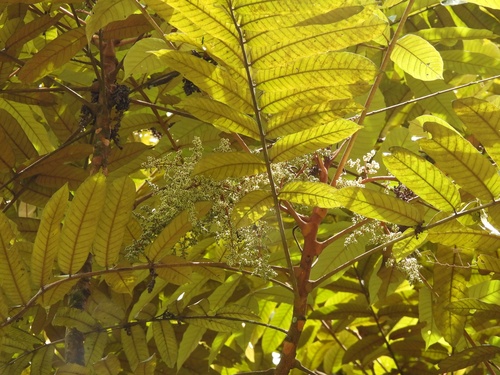
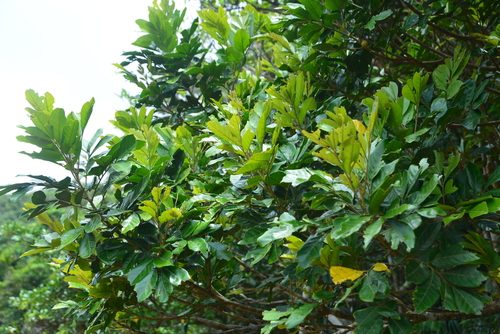
A tree. It grows up to 36 m high. The trunk is straight and can be 80 cm across. It has buttresses up to 3 m tall. The leaves are compound with leaflets along the stalk. There are an even number of leaflets without one at the end. The leaves are 10-25 cm long by 4-10 cm wide. The flowers are 1 cm across. They are pale cream. They are in clusters 30-100 cm long. Fruit can be 4-5 cm long. They are orange and turn red when ripe. They have 4-5 valves. The seeds have a red coating.
How to Grow
Plants can be grown by seeds.
Propagation: Seed - when sown fresh with the pulp still adhering, the seeds have a germination rate of 80% in 1 - 4 months. Seeds sown without the pulp generally germinate faster than those sown with pulp.
Medicinal Uses
Dysoxylum species are well-known in the Philippines for their medicinal properties; an infusion of the bark is widely used as an emetic.
Other Uses
The bark shows insecticidal properties. The heartwood is brownish-red to bright red; it is clearly demarcated from the fawnish-white sapwood. The wood is hard. The wood is little esteemed, but is used for general construction. A handsome wood, well deserving of more extensive notice. It is used for a wide variety of products such as general construction, boat construction, heavy decking, flooring, posts, foundation piles, doors, window frames and sills, mouldings, interior finish, decorative wall panelling, high grade furniture, cabinet work, coffins, vats, pallets, cart wheels, carving, turnery, tool handles, billiard cue butts, and match splints and matchboxes. It is also used for the production of sliced veneer, plywood and block board, and is suitable for the production of pulp. We have no more specific information on the wood of this species, but it is one of a group of species that are the source of a commercial timber known in the trade as 'jarum-jarum'. The general description of jarum-jarum is as follows:- The heartwood is orange-red to brick red when fresh,darkening on exposure; it is clearly demarcated from the yellow sapwood. The texture is moderately coarse but uneven due to the abundant of parenchyma; the grain is straight, interlocked, wavy or irregular; there is a watersilk marking on flat-sawn surfaces due to the parenchyma bands. The wood is moderately hard to hard. It is used for purposes such as flooring, furniture, wall panelling, solid door construction, veneer and plywood. The tree may be useful for reforestation purposes.
Other Information
Shoots are sold in local markets.
Notes
There are about 80-200 Dysoxylum species. They occur in Asia and the Pacific in the tropics.
Names & Synonyms
Bebekok, Bunga kombil, Durong, Galwa, Kasai tembaga, Kasip hutan, Ki gegula, Ki warirang, Kulim burong, Malau, M'bukbua, Plukrak, Pohon kedoya pingku, Singthupi, Sinthup, Sla-luchai, Thing thupui, Thinkpui, Trus gunung
References (15)
- Burkill, I.H., 1966, A Dictionary of the Economic Products of the Malay Peninsula. Ministry of Agriculture and Cooperatives, Kuala Lumpur, Malaysia. Vol 1 (A-H) p 900
- Gardner, S., et al, 2000, A Field Guide to Forest Trees of Northern Thailand, Kobfai Publishing Project. p 116
- Gangte, H. E., et al, 2013, Wild Edible Plants used by the Zou Tribe in Manipur, India. International Journal of Scientific and Research Publications, Volume 3, Issue 5 (As Dysoxylum gobara)
- Guite, C., 2016, A study of wild edible plants associated with the Paite tribe of Manipur, India, International Journal of Current Research. Vol. 8, Issue, 11, pp. 40927-40932 (As Dysoxylum gobara)
- Khodram,S. D., et al, 2019, Local knowledge of edible flowers used in Mizoram. Indian Journal of Traditional Knowledge Vol 18(40 pp 715-723
- Konsam, S., et al, 2016, Assessment of wild leafy vegetables traditionally consumed by the ethnic communities of Manipur, northeast India. Journal of Ethnobiology and Ethnomedicine, 12:9 (As Dysoxylum gobara)
- Lalfakzuala, R., 2007, Ethnobotanical usages of plants in western Mizoram. Indian Journal of Traditional Knowledge. Vol 6(3) pp 480-493 (As Dysoxylum gobara)
- Medhi, P. & Borthakur, S. K., 2013, Wild edible plants sold by the Zeme Nagas at the makeshift market of Mahur, Dima Hasao district of Assam. Pleione 7(1): 84 - 93. 2013 (As Dysoxylum gobara)
- Medhi, P., Sarma, A and Borthakur, S. K., 2014, Wild edible plants from the Dima Hasao district of Assam, India. Pleione 8(1): 133-148 (As Dysoxylum gobara)
- Meitei, L. R., et al, 2022, An ethnobotanical study on the wild edible plants used by forest dwellers in Yangoupokpi Lokchao Wildlife Sanctuary, Manipur, India. Ethnobotany Research and Application 23:15
- Milow, P., et al, 2013, Malaysian species of plants with edible fruits or seeds and their evaluation. International Journal of Fruit Science. 14:1, 1-27
- Sawian, J. T., et al, 2007, Wild edible plants of Meghalaya, North-east India. Natural Product Radiance Vol. 6(5): p 415 (As Dysoxylum gobara)
- Sosef, M. S. M., Hong, L. T., & Prawirohatmodjo, S., (Eds.), 1998, Timber tree: Lesser-known timbers. Plant Resources of South-East Asia, 5(3), p 197
- Sukarya, D. G., (Ed.) 2013, 3,500 Plant Species of the Botanic Gardens of Indonesia. LIPI p 253
- World Checklist of Useful Plant Species 2020. Royal Botanic Gardens, Kew