Vanilla griffithii
Reichb. f.

iNaturalist · cc-by-nc
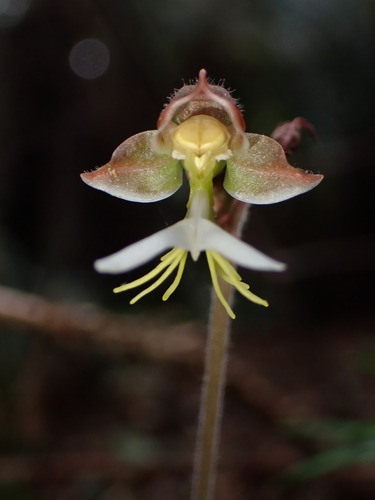
(c) tkp123, some rights reserved (CC BY-NC)
(c) tkp123, some rights reserved (CC BY-NC)
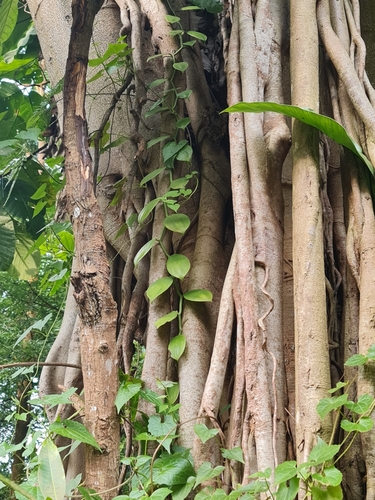
iNaturalist · cc-by-nc
(c) phoebezhouhuixin, some rights reserved (CC BY-NC)
(c) phoebezhouhuixin, some rights reserved (CC BY-NC)
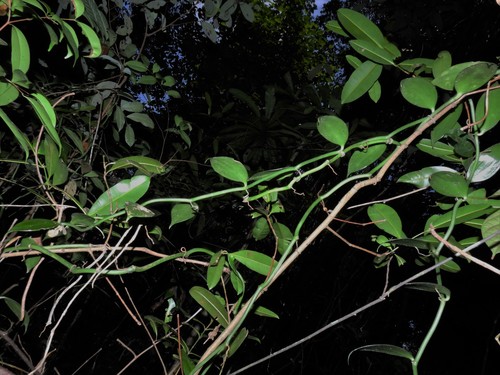
iNaturalist · cc-by
(c) Samuel Lee, some rights reserved (CC BY)
(c) Samuel Lee, some rights reserved (CC BY)
What to Eat
Edible parts: Fruit
The fruit is sweet and edible. The fruit is a fleshy, banana-like capsule about 6cm long by 1cm wide.
Known Hazards
Where to Find It
A tropical plant. It grows in forests.
Asia, Malaysia, SE Asia, Singapore,
Countries: United Arab Emirates, Afghanistan, Armenia, Azerbaijan, Bangladesh, Bahrain, Brunei, Bhutan, China, Georgia, Indonesia, Israel, India, Iraq, Iran, Jordan, Japan, Kyrgyzstan, Cambodia, North Korea, South Korea, Kuwait, Kazakhstan, Laos, Lebanon, Sri Lanka, Myanmar, Mongolia, Maldives, Malaysia, Nepal, Oman, Philippines, Pakistan, Qatar, Saudi Arabia, Singapore, Syria, Thailand, Tajikistan, Timor-Leste, Turkmenistan, Turkey, Taiwan, Uzbekistan, Vietnam, Yemen
How to Identify
An orchid. It has a fleshy climbing stem about 7 m long. The fruit is a capsule 6 cm long by 1 cm wide. It is fleshy.
Medicinal Uses
The pounded flowers are rubbed on the body as a treatment against fever.
Other Uses
A latex obtained from the plant is used to make the hair healthy.
Names & Synonyms
Akar penubal, Akar telinah, Telinga kerbau
References (3)
- Burkill, I.H., 1966, A Dictionary of the Economic Products of the Malay Peninsula. Ministry of Agriculture and Cooperatives, Kuala Lumpur, Malaysia. Vol 2 (I-Z) p 2259
- Milow, P., et al, 2013, Malaysian species of plants with edible fruits or seeds and their evaluation. International Journal of Fruit Science. 14:1, 1-2
- PROSEA