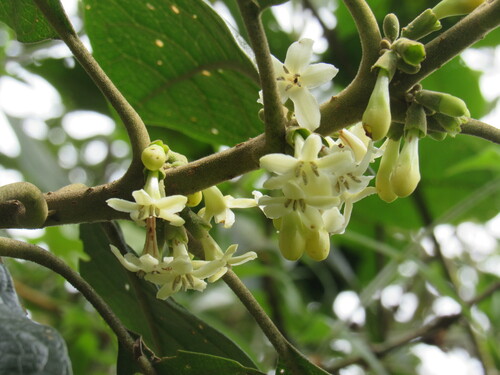
Anisochilus carnosus
(L. f.) Wall. ex Benth.
Feverleaf
LamiaceaeLeaves
iNaturalist · cc-by
(c) Hopeland, some rights reserved (CC BY)
(c) Hopeland, some rights reserved (CC BY)

iNaturalist · cc-by-nc
(c) SONU KUMAR, some rights reserved (CC BY-NC)
(c) SONU KUMAR, some rights reserved (CC BY-NC)
iNaturalist · cc-by-nc
(c) Milind Girdhari, some rights reserved (CC BY-NC)
(c) Milind Girdhari, some rights reserved (CC BY-NC)
What to Eat
Edible parts: Leaves, Vegetable
The leaves are eaten as a vegetable.
Where to Find It
It is a tropical plant.
Asia, China, India, Myanmar, SE Asia, Sri Lanka,
Countries: United Arab Emirates, Afghanistan, Armenia, Azerbaijan, Bangladesh, Bahrain, Brunei, Bhutan, China, Georgia, Indonesia, Israel, India, Iraq, Iran, Jordan, Japan, Kyrgyzstan, Cambodia, North Korea, South Korea, Kuwait, Kazakhstan, Laos, Lebanon, Sri Lanka, Myanmar, Mongolia, Maldives, Malaysia, Nepal, Oman, Philippines, Pakistan, Qatar, Saudi Arabia, Singapore, Syria, Thailand, Tajikistan, Timor-Leste, Turkmenistan, Turkey, Taiwan, Uzbekistan, Vietnam, Yemen
How to Identify
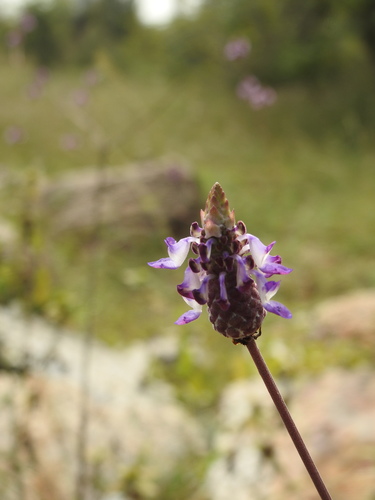
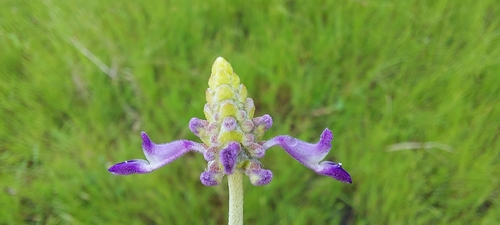
A herb. It grows each year from seed. It is 30-60 cm tall. The stems are erect, robust and branched. The leaves are oval or round and 5-7 cm long by 5-7 cm wide. They are rough and have a white coating. The base is rounded and the edges are wavy. The flowers are in spikes 3-7 cm long by 1-2 cm wide. They are purplish. The plant has an aroma.
Names & Synonyms
Bennia, Kodipunju chettu, Samon-byu
Anisochilus crassus Benth.Anisochilus decussatus Dalzell & GobsonAnisochilus eriocephalus Benth.Anisochilus glaber Schrad.Anisochilus rupestris Wight ex Hook.f.Lavandula carnosa L.f.Plectranthus carnosus (L.f.) Sm.Plectranthus dubius Spreng. [Illegitimate]Plectranthus stribiliferus Roxb.
References (4)
- Ambasta S.P. (Ed.), 2000, The Useful Plants of India. CSIR India. p 42
- Misra, S., 2020, Survey of edible plants for human consumption in south Odisha, India. Journal of Emerging Technologies and Innovative Research (JETIR) Vol. 7, Issue 12 p 278
- N. Wallich, Pl. asiat. rar. 2:18. 1830
- Reddy, K. N. et al, 2007, Traditional knowledge on wild food plants in Andhra Pradesh. Indian Journal of Traditional Knowledge. Vol. 6(1): 223-229