Juniperus polycarpos
K. Koch
Indian Juniper, Himalayan Pencil cedar
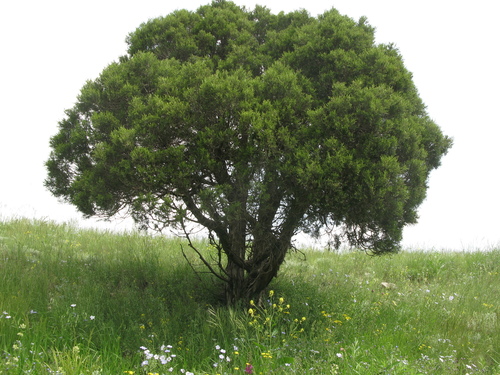
(c) ramazan_murtazaliev, some rights reserved (CC BY-NC), uploaded by ramazan_murtazaliev

(c) Теймуров А.А., some rights reserved (CC BY-NC), uploaded by Теймуров А.А.

(c) Теймуров А.А., some rights reserved (CC BY-NC), uploaded by Теймуров А.А.
What to Eat
Edible parts: Fruit-oil, Spice
The oil from the fruit is used to flavor gin after removing the turpentine-like odor. The fruit is also used as a spice.
Where to Find It
It is a temperate plant. It grows in the Himalayas between 1,500-4,300 m altitude. It grows in semi-arid places.
Afghanistan, Asia, Central Asia, China, Georgia, Himalayas, India, Nepal, Tajikistan, Tibet,
How to Identify
A shrub or small tree. It grows 12-15 m tall. It can be 2 m around the trunk. The crown is a pyramid shape. The wood has a sweet smell. The lower leaves are awl shaped and the upper leaves are scale like and egg shaped. The male flower catkins are on a scaly stalk. The fruit are a flattened round shape. They are 8.5 mm across. They are bluish-black when ripe. They have 2-5 seeds.
Medicinal Uses
The wood is burned as incense.
Wikipedia
Source ↗Juniperus polycarpos, commonly known as Persian juniper, is species of juniper native to western Asia. Some authorities classify it as a subspecies or variety of Juniperus excelsa. There are two recognized varieties. J. polycarpos var. polycarpos ranges from Azerbaijan and Armenia to the Zagros Mountains of western Iran. J. polycarpos var. turcomanica ranges along the eastern Elburz and Kopet Dag mountains of northeastern Iran and southern Turkmenistan. J. seravschanica, which ranges further east into Central Asia and Afghanistan, is sometimes treated as a variety of J. polycarpos.
Production
Trees can live for 1,000 years.
Notes
There are 50 to 60 Juniperus species. The wood in burnt as incense.
Names & Synonyms
Chalai, Chalni, Lewar, Shukpa, Shupka, Shur, Dhup, Padam, Chandan, Dhupi
References (3)
- Ambasta, S.P. (Ed.), 2000, The Useful Plants of India. CSIR India. p 304 (As Juniperus macropoda)
- Linnaea 22:303. 1849
- Sahni, K.C., 2000, The Book of Indian Trees. Bombay Natural History Society. Oxford. p 204


