Bursera simaruba
(L.) Sarg.
Gumbo-limbo
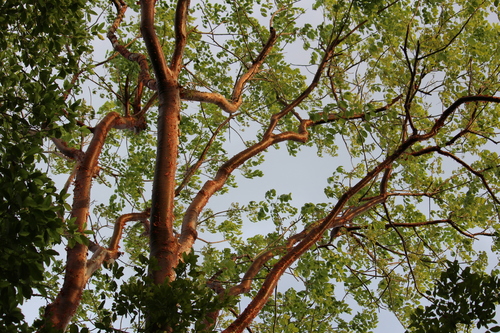
(c) Ricard Busquets Reverte, some rights reserved (CC BY), uploaded by Ricard Busquets Reverte
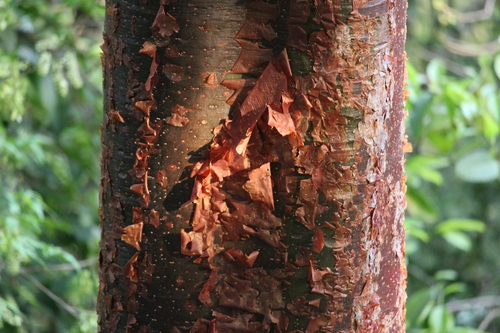
(c) Ricard Busquets Reverte, some rights reserved (CC BY), uploaded by Ricard Busquets Reverte
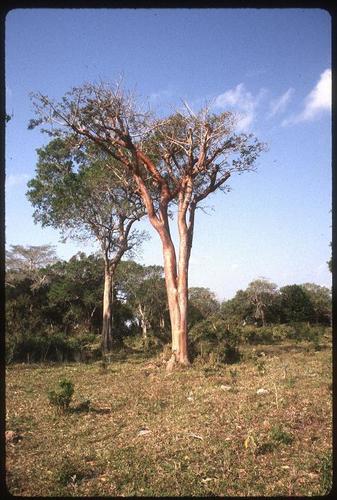
(c) Douglas Goldman, some rights reserved (CC BY-SA), uploaded by Douglas Goldman
What to Eat
Edible parts: Leaves - tea
Edible Parts: Leaves Edible Uses: Gum Tea Edible portion: Leaves - tea. The leaves are used as a tea substitute.
Known Hazards
Where to Find It
A tropical plant. It is native to tropical America. It usually grows along the coast close to the tidal limit. In Costa Rica it grows from sea level up to 1,100 m altitude. It grows in mangroves. It suits hardiness zones 10-12. At ECHO.
Amazon, Antigua and Barbuda, Asia, Bahamas, Barbados, Belize, Brazil, Central America*, Colombia, Costa Rica, Cuba, Dominican Republic, El Salvador, Guiana, Guatemala, Guyana, Haiti, Honduras, Indonesia, Mexico*, Nicaragua, North America, Panama, SE Asia, South America, St. Kitts and Nevis, Trinidad & Tobago, USA, Venezuela, West Indies,
How to Identify
A deciduous tree. It grows up to 18-25 m tall. It has a single trunk and deep taproot. The trunk is smooth and red. The wood is spongy and has resin. The limbs are thick and covered with a rusty red skin. This peels off in thin sheets. The leaves have leaflets along the stalk and are bright green. The leaflets are about 8 cm long. The flowers are creamy white and fairly showy. They are held in thin spreading panicles. The fruit are succulent red berries. They are 1.3 cm across. They are in clusters. The fruit are 3 angled. They are edible.
How to Grow
Plants can be grown by seed.
Propagation: Seed. Forty per cent germination occurs within 20 days. Seed storage behaviour is orthodox. Seeds remain viable for 10 months. Cuttings root easily. Even large branches 1 - 3 metres long will produce roots.
Medicinal Uses
Diaphoretic Diuretic Dysentery Purgative Vulnerary The resin obtained from the bark is diaphoretic, diuretic, purgative and vulnerary. It is used in the treatment of dropsy, dysentery and yellow fever. It is an effective vulnerary.
Other Uses
Adhesive Biomass Charcoal Fencing Fuel Furniture Gum Incense Preservative Repellent Resin Varnish Wood Other uses rating: High (4/5). Seaside, Street tree, Massed as an accent, Xerophytic. Agroforestry Uses: Trees are used as living fence to delimit pastures, using stakes 1 - 3 metres long, 10 - 15cm thick, and spaced 3 metres or more apart. Other Uses The bark yields a balsam resin known as American elemi, cachibok or gomart. It is used in varnishes and as a substitute for gum arabic (from Acacia spp.). It is painted on canoes to preserve the wood from insects etc. It is also used as a glue for mending broken china and glass. Used by the Maya as an incense since ancient times, it is still concentrated, dried and used in modern South America as incense in churches. The aromatic resin is a natural insect repellent, and no pests or diseases are reported for this species. The heartwood is white, yellowish, or light brown; it is not differentiated from the sapwood. Both the heartwood and sapwood are often discoloured to a gray by sap-staining fungi. The texture is fine to medium; the grain fairly straight; lustre is moderate and there is no distinctive taste or odour. The wood is soft, light in weight, firm, tough, not very durable in contact with the soil. It works easily with all types of tools and machines; saws cleanly; planes to a smooth finish; drills cleanly with some tearing at the exit side; and turns readily on the lathe. The wood takes all stains and polishes well and holds nails firmly without splitting. It is used for veneer, as plywood for interior use, in rustic furniture, for rough boxes and crates, as handles for tools, as soles for sandals, for match sticks and toothpicks, to build cabinets, to make decorative articles. When thoroughly dry, the wood is used as firewood or charcoal. This plant is attractive to bees, butterflies and/or birds Special Uses Carbon Farming Coppice
Wikipedia
Source ↗Bursera simaruba, commonly known as gumbo-limbo, the tourist tree, copperwood, almácigo, chaca, West Indian birch, naked Indian, and turpentine tree, is a tree species in the family Burseraceae, native to the Neotropics, from South Florida to Mexico and the Caribbean to Brazil, Nicaragua, and Venezuela. Bursera simaruba is prevalent in the Petenes mangroves ecoregion of the Yucatán, where it is a subdominant plant species to the mangroves. In the United States, specimens may be found in the Gulf of Mexico along the western coast of Florida.
Notes
There are about 100 Bursera species. The wood has been used for incense. It has anticancer properties.
Names & Synonyms
Aceitero, Almaciga, Almacigo, Carana, Carano, Chaca, Chacah, Copon, Copperwood tree, Incense tree, Indio pelado, Jinote, Indio desnudo, Mararo, Pohon wisata, West Indian birch
References (19)
- Barwick, M., 2004, Tropical and Subtropical Trees. A Worldwide Encyclopedic Guide. Thames and Hudson p 72
- Brown, D., 2002, The Royal Horticultural Society encyclopedia of Herbs and their uses. DK Books. p 148
- Condit, R., et al, 2011, Trees of Panama and Costa Rica. Princeton Field Guides. p 106
- Etherington, K., & Imwold, D., (Eds), 2001, Botanica's Trees & Shrubs. The illustrated A-Z of over 8500 trees and shrubs. Random House, Australia. p 149
- Ekman Herbarium records Haiti
- Facciola, S., 1998, Cornucopia 2: a Source Book of Edible Plants. Kampong Publications, p 62
- Garden & Forest 3:260. 1890
- Grandtner, M. M., 2008, World Dictionary of Trees. Wood and Forest Science Department. Laval University, Quebec, Qc Canada. (Internet database http://www.WDT.QC.ca)
- Grandtner, M. M. & Chevrette, J., 2013, Dictionary of Trees, Volume 2: South America: Nomenclature, Taxonomy and Ecology. Academic Press p 81
- Hedrick, U.P., 1919, (Ed.), Sturtevant's edible plants of the world. p 139 (As Bursera gummifera)
- http://en.hortipedia.com
- Kintzios, S. E., 2006, Terrestrial Plant-Derived Anticancer Agents and Plant Species Used in Anticancer research. Critical Reviews in Plant Sciences. 25: pp 79-113
- Mutchnick, P. A. and McCarthy, B. C., 1997, An Ethnobotanical Analysis of the Tree Species Common to the Subtropical Moist Forests of the Peten, Guatemala. Economic Botany, Vol. 51, No. 2, pp. 158-183
- Piedra-Malagón, E. M. et al, 2022, Edible native plants of the Gulf of Mexico Province. Biodiversity Data Journal 10: e80565 p 15
- Plants of Haiti Smithsonian Institute http://botany.si.edu
- Roa, J. A. G. & Boada, D. S. G., 2018, Fundación para el Fortalecimiento de la Fruticultura y Plantas Alimenticias no Convencionales en Colombia.
- Sukarya, D. G., (Ed.) 2013, 3,500 Plant Species of the Botanic Gardens of Indonesia. LIPI p 166
- Tanaka,
- Zuchowski W., 2007, Tropical Plants of Costa Rica. A Zona Tropical Publication, Comstock Publishing. p 213


