Capraria biflora
Linn.
Jamaica tea
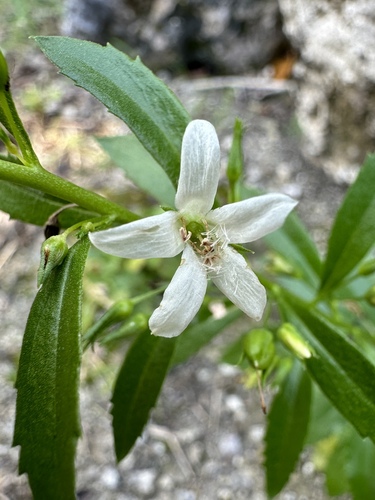
(c) Matt Berger, some rights reserved (CC BY), uploaded by Matt Berger
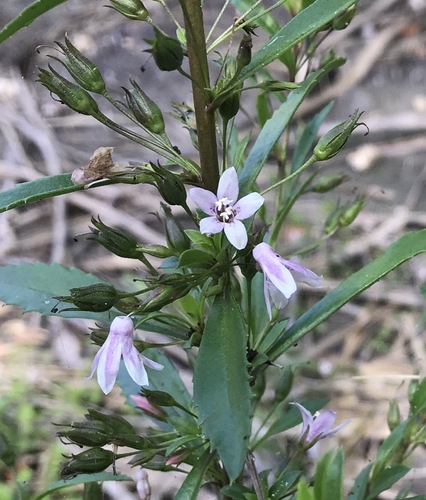
(c) Alan R. Franck, some rights reserved (CC BY-NC), uploaded by Alan R. Franck
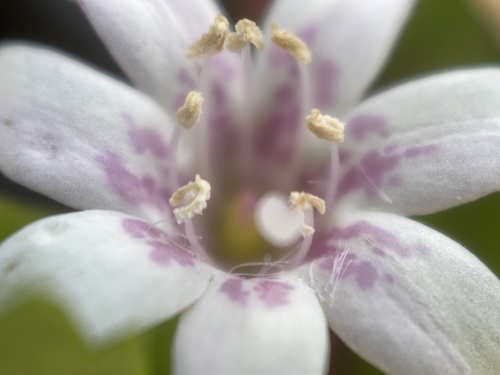
(c) ecobc, some rights reserved (CC BY-NC), uploaded by ecobc
What to Eat
Edible parts: Leaves - tea
The aerial parts of the plant are used to make a tea. The flowering stems are used. A very agreeable substitute for tea. Some caution is advised, however, since it can be a dangerous depressant in large quantities.
Known Hazards
Where to Find It
A tropical plant. It grows in tropical America.
Africa, Anguilla, Argentina, Bahamas, Bermuda, Bolivia, Brazil, Caribbean, Central America*, Cuba*, Dominican Republic, Guiana, Guianas, Guyana, Haiti, Jamaica, Lesser Antilles*, North America, Paraguay, Puerto Rico, South America*, St Lucia, Suriname, USA, Venezuela, Virgin Islands, West Indies*,
How to Identify
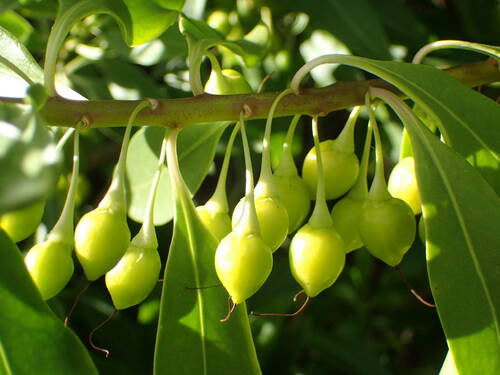
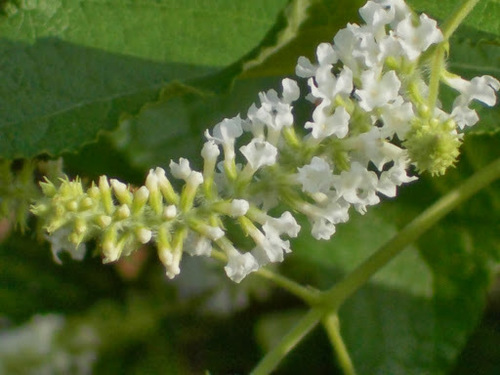
An erect herb. The leaves are sword shaped and have teeth along the edge. The flowers are small and white.
How to Grow
A plant of lowland areas in the tropics and subtropics, where it can be found at elevations up to 1,000 metres. In Puerto Rico, it occurs in areas that receive from 750 - 1,700mm of precipitation a year. Requires a sunny position. The plant grows on soils derived from both sedimentary and igneous rocks in a wide range of soil textures and fertility but requires well-drained conditions. The plant flowers and produces seed all year round. Plants readily sprout from the lower stem or root when they have been cut or burned.
Propagation: Seed - best surface sown because it is so small. Press the seed gently into the soil and make sure it does not dry out. In one germination test, 21% of the seed germinated within 10 - 35 days.
Medicinal Uses
The plant is often used in traditional medicine. Research has shown that it contains several medically active compounds, including alkaloids and sesquiterpenes. Some caution should be exercised, however, since overindulgence can result in stupor, disorientation, and paralysis. The alkaloid biflorine, present in the leaves, has demonstrated antibiotic properties The plant is antibiotic, cholagogue, digestive, diuretic and tonic. An infusion also has an antispasmodic action, especially if taken after a violent purgative. A saline decoction is used as a vermifuge. An infusion is used as a general tonic; to aid in recovery after childbirth; and to treat fever, flu, vomiting, diarrhoea, haemorrhoids, rheumatism, urinary problems, swellings etc. A tea prepared from the leaves is used externally as an eyewash and to soothe skin itch. The young plant is pulverised and mixed with soft grease and sugar in a poultice which is applied to hard boils to bring them to a point.
Other Uses
A number of compounds in the aerial parts of the plant, comprising sesquiterpenoids and caprariolides A and B, have demonstrated strong insecticidal activity against adult sweet potato weevils, Cylas formicarius elegantulus. Goatweed helps revegetate disturbed areas, protects the soil, and furnishes cover for wildlife.. It is a nectar source for butterflies and is recommended in natural landscaping. Once established, goatweed competes relatively well with grass, weeds, and low brush.
Names & Synonyms
Dite pyi, Goat-weed, Goatweed, Smart weed, Te de Santa Maria, West Indian tea
References (9)
- Bircher, A. G. & Bircher, W. H., 2000, Encyclopedia of Fruit Trees and Edible Flowering Plants in Egypt and the Subtropics. AUC Press. p 81
- Ekman Herbarium records Haiti
- Facciola, S., 1998, Cornucopia 2: a Source Book of Edible Plants. Kampong Publications, p 229
- Hedrick, U.P., 1919, (Ed.), Sturtevant's edible plants of the world. p 152
- Kermath, B. M., et al, 2014, Food Plants in the Americas: A survey of the domesticated, cultivated and wild plants used for Human food in North, Central and South America and the Caribbean. On line draft. p 176
- Plants of Haiti Smithsonian Institute http://botany.si.edu/antilles/West Indies
- Tanaka,
- Wiersema, J. H. & Leon, B., 2013, World Economic Plants. A Standard Reference CRC Press. 2nd Ed. p 140
- World Checklist of Useful Plant Species 2020. Royal Botanic Gardens, Kew