Vasconcellea microcarpa
(Jacq.) A. DC.
Wapai, Tsambunumi
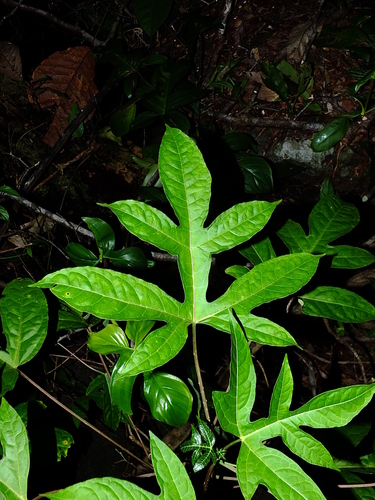
(c) Sébastien SANT, some rights reserved (CC BY-NC), uploaded by Sébastien SANT
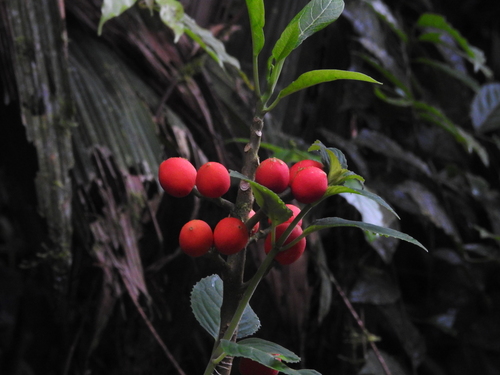
(c) hippiejulian, some rights reserved (CC BY-NC), uploaded by hippiejulian
What to Eat
Edible parts: Fruit, Leaves
The fruit can be eaten raw or cooked and is used in salads and soups. The leaves are eaten cooked.
Where to Find It
It is a tropical plant.
Amazon, Andes, Bolivia, Brazil, Central America, Colombia, Ecuador, Guiana, Mexico, Panama, Peru, South America, Venezuela,
How to Identify
A tree like plant. It grows 3 m tall. The trunk is 10-20 cm across. The leaves are simple and alternate. They are 40 cm long. The flowers are yellow. The fruit are the size of a cherry and 2.5 cm across. They are red or orange.
How to Grow
Plants can be grown from seeds and seedlings transplanted.
Propagation: Seed - sow in individual containers or in a nursery seedbed in light shade. Germination can be slow and difficult, taking about 30 days. Seedlings can be planted out when 4 - 6 months old.
Other Information
It is cultivated.
Notes
There are at least 22-40 species of Carica.
Names & Synonyms
Airo huati jico, Chunta ruku papaya, Col de monte, Ikiam tsampu, Kenegapoka, Papailla, Pundu papaya, Sacha papaya, Taruku papaya, Tsambunumi, Wapai
References (17)
- Badillo, V.M. 1993. Caricaceae. Segundo esquema. Revista de la Facultad de Agronomía de la Universidad Central de la Universidad Central de Venezuela. Alcance 43.
- Bendezu, Y. F., 2018, Arboles nativos de lad Region Ucayali. Instituto Nacional de Innovacion Agraria. p 84
- Duchelle, A. E., 2007, Observations on Natural Resource use and Conservation by the Shuar In Ecuador's Cordillera del Condor. Ethnobotany Research & Applications 5:005-023
- Etkin, N.L. (Ed.), 1994, Eating on the Wild Side, Univ. of Arizona. p 137
- Ferns, Tropical plants
- Flores, Y., 2018, Arboles nativos de la Region Ucayili. Estacion Experimental Agragia Pucallpa. Pucallpa Peru, 375 p. p 84
- Grandtner, M. M. & Chevrette, J., 2013, Dictionary of Trees, Volume 2: South America: Nomenclature, Taxonomy and Ecology. Academic Press p 686
- Hedrick, U.P., 1919, (Ed.), Sturtevant's edible plants of the world. p 162
- Kermath, B. M., et al, 2014, Food Plants in the Americas: A survey of the domesticated, cultivated and wild plants used for Human food in North, Central and South America and the Caribbean. On line draft. p 901
- Penafield Anchundia, D. D., 2017, Traditional food consumption and its nutritional contribution in Guasaganda, Central Ecuador. PhD Ghent University p 71
- Pl. hort. schoenbr. 3:32, t. 309-310. 1798
- Roa, J. A. G. & Boada, D. S. G., 2018, Fundación para el Fortalecimiento de la Fruticultura y Plantas Alimenticias no Convencionales en Colombia.
- Segura, S., et al, 2018, The edible fruit species in Mexico. Genet Resour Crop Evol (2018) 65:1767–1793
- Torre, de la, L., et al, 2008, Enciclopedia de las Plantas Útiles del Ecuador. Herbario QCA. Pontificia Universidad Católica del Ecuador. p 275
- Van den Eynden, V., E. Cueva and O. Cabrera. 1999. Plantas silvestres comestibles del sur del Ecuador – Wild edible plants of southern Ecuador. Ediciones Abya-Yala, Quito, Ecuador.
- Van den Eynden, V., et al, 2003, Wild Foods from South Ecuador. Economic Botany 57(4): 576-603
- Van den Eynden, V., et al, 2004, Regional and ecological variations of wild edible plants in southern Ecuador. Lyonia. 7(2)


