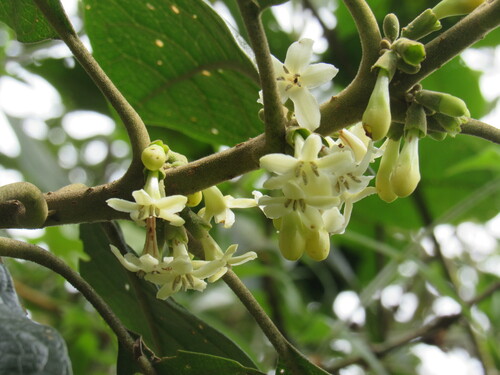
Agastache cana
(Hook.) Wooton & Standl.
Hoary balm of Gilead

(c) Mike Finn, some rights reserved (CC BY)

(c) jimmy thomas, some rights reserved (CC BY-NC-SA)
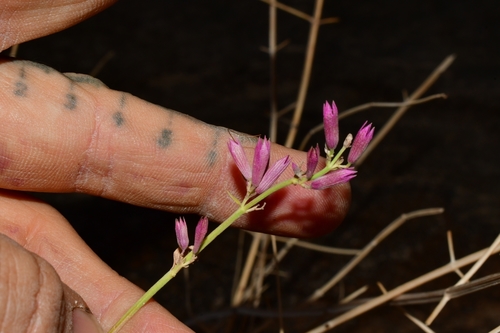
(c) Joey Santore, some rights reserved (CC BY-NC)
What to Eat
Edible parts: Herb, Leaves - flavouring
The leaves are used as a flavouring condiment and have a very fragrant flavour.
Where to Find It
It is a tropical plant.
Central America, Mexico, North America, USA,
How to Identify
Evergreen perennial reaching 0.8 m tall and 0.3 m wide. Flowers from July to August with seeds ripening August to September. Hermaphroditic and self-fertile, pollinated by bees. Hardy to UK zone 9. Requires full sun and well-drained soil; tolerates light sandy to medium loamy soils with mildly acid to basic pH. Adapts to dry or moist conditions. Noted for attracting wildlife.
How to Grow
Propagation: Seed — sow in spring in a greenhouse, just barely covering the seed. Germination usually occurs within 1–3 months at 13°C. Prick out seedlings into individual pots when large enough to handle and grow on in the greenhouse for the first year, then plant out in late spring or early summer. Division in spring is fairly simple; large divisions can be planted directly into permanent positions. Basal cuttings of young shoots can be taken in spring when shoots are about 10–15cm tall; pot up in a lightly shaded greenhouse position, where they should root within 3 weeks, then plant out in summer or the following spring.
Medicinal Uses
None known.
Other Uses
None known.
Wikipedia
Source ↗Agastache cana, more commonly known as the mosquito plant, Texas hummingbird mint, and double bubble mint, is a hardy perennial belonging to the genus Agastache (pronounced ). The genus name Agastache is derived from the Greek word meaning "a lot of", and stachy, meaning "spike", which refers to the flower's 12 terminal spikes that decorate the plant. These spikes remain through the growing season from early summer to late fall. The Mosquito Plant is native to New Mexico and western Texas, where it grows in mountainous areas at altitudes of 6,000 feet.
Notes
There are 30 Agastache species.
Names & Synonyms
Double-bubble mint, Mosquito plant, Wild hyssop
References (4)
- Contr. U.S. Natl. Herb. 16:166. 1913
- Facciola, S., 1998, Cornucopia 2: a Source Book of Edible Plants. Kampong Publications, p 125
- Hedrick, U.P., 1919, (Ed.), Sturtevant's edible plants of the world. p 177 (As Cedronella cana)
- Kermath, B. M., et al, 2014, Food Plants in the Americas: A survey of the domesticated, cultivated and wild plants used for Human food in North, Central and South America and the Caribbean. On line draft. p 24