Cleome chelidonii
Linn. f.
Spider-flower
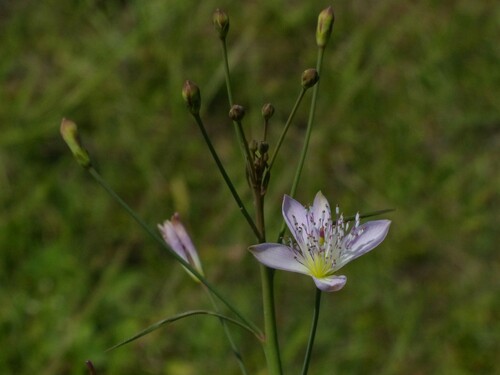
(c) Radha Veach, some rights reserved (CC BY-NC), uploaded by Radha Veach
What to Eat
Edible parts: Seeds, Spice, Leaves
Young leaves are eaten. The seeds are used as a spice in curries.
Where to Find It
A tropical plant.
Asia, India, Indochina, Laos, SE Asia, Vietnam,
How to Identify
A herb. It grows 20-40 cm tall. It grows each year from seed. The flowers are blue to violet.
How to Grow
A plant of heavy clay soils and often quite wet conditions. Often found in its native habitat as a weed of cultivated fields, where it can be so abundant that the field is coloured reddish-purple by the flowers.
Medicinal Uses
The heated sap from the leaves is dropped into the ear to cure infections. An infusion of the whole plant is used as a remedy for skin complaints. The root is used as an anthelmintic.
Wikipedia
Source ↗Cleome chelidonii is a species of plant in the family Cleomaceae. It is native to India, Sri Lanka, Southeast Asia, and Java.
Names & Synonyms
Mangmang tim
References (2)
- Hedrick, U.P., 1919, (Ed.), Sturtevant's edible plants of the world. p 203
- Thoa P. T. K., et al, 2013, Biodiversity indices and utilization of edible wild plants: a case study of the Cham Island in Quang Nam Province, Vietnam. Journal of Research in Environmental Science and Toxicology 2(9) :167-174


