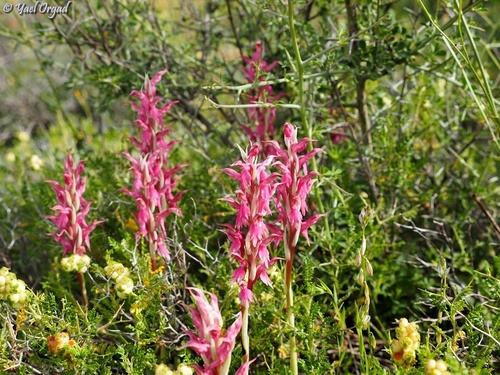
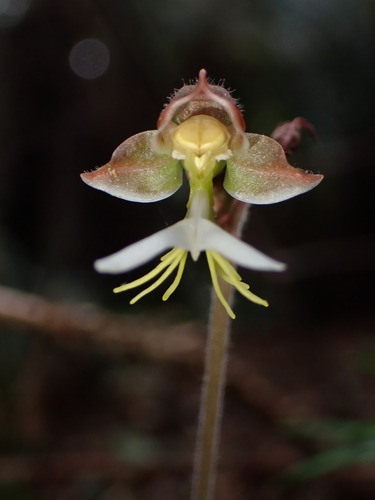
Eulophia herbacea
Lindl.
Salep, Saleb misri
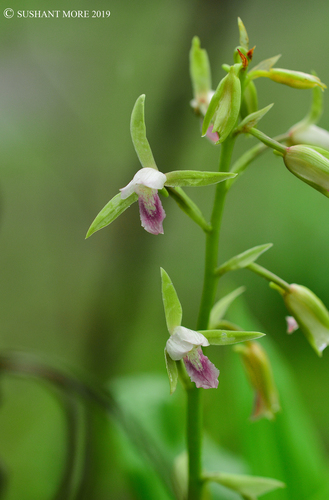
iNaturalist · cc0
no rights reserved, uploaded by S.MORE
no rights reserved, uploaded by S.MORE

iNaturalist · cc-by-sa
(c) Dinesh Valke, some rights reserved (CC BY-SA)
(c) Dinesh Valke, some rights reserved (CC BY-SA)
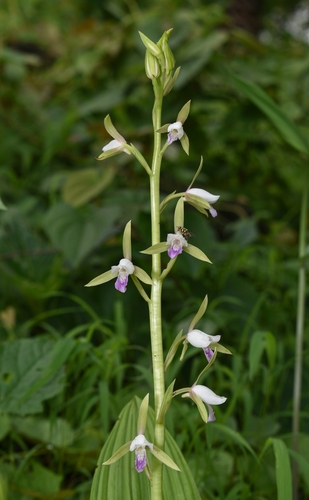
iNaturalist · cc-by-nc
(c) Omkar S Damle, some rights reserved (CC BY-NC), uploaded by Omkar S Damle
(c) Omkar S Damle, some rights reserved (CC BY-NC), uploaded by Omkar S Damle
What to Eat
Edible parts: Tubers, Flower
The flowering shoots are cooked and eaten. Tubers and flowers are edible portions.
Where to Find It
It is a tropical plant. It grows in mountain grasslands below 1,500 m above sea level in southern China. In Yunnan.
Asia, Bangladesh, China, Himalayas, India, Indochina, Laos, Nepal, SE Asia, Thailand,
Countries: United Arab Emirates, Afghanistan, Armenia, Azerbaijan, Bangladesh, Bahrain, Brunei, Bhutan, China, Georgia, Indonesia, Israel, India, Iraq, Iran, Jordan, Japan, Kyrgyzstan, Cambodia, North Korea, South Korea, Kuwait, Kazakhstan, Laos, Lebanon, Sri Lanka, Myanmar, Mongolia, Maldives, Malaysia, Nepal, Oman, Philippines, Pakistan, Qatar, Saudi Arabia, Singapore, Syria, Thailand, Tajikistan, Timor-Leste, Turkmenistan, Turkey, Taiwan, Uzbekistan, Vietnam, Yemen
How to Identify
An orchid. It grows 25-50 cm tall. The false bulb is above ground. It is 2 cm long by 1 cm wide. There are 2 or 3 leaves. They are sword shaped and 15-29 cm long by 2-6 cm wide. They taper into a long leaf like stalk. This is 6-25 cm long.
Names & Synonyms
Masina, Waghmodhu
References (3)
- Behera K. K., et al, 2008, Wild Edible Plants of Mayurbhanj District, Orissa, India. J. Econ. Taxon. Bot. Vol. 32 (Suppl.) pp 305-314
- Chauhan, S. H., et al, 2018, Consumption patterns of wild edibles by the Vasavas: a case study from Gujarat, India. Journal of Ethnobiology and Ethnomedicine (2018) 14:5
- Hedrick, U.P., 1919, (Ed.), Sturtevant's edible plants of the world. p 302