Bonellia frutescens
(Mill.) B. Stahl & Kallersjo
PrimulaceaeFruit
iNaturalist · cc-by-nc-sa
(c) Mateo Hernandez Schmidt, some rights reserved (CC BY-NC-SA), uploaded by Mateo Hernandez Schmidt
(c) Mateo Hernandez Schmidt, some rights reserved (CC BY-NC-SA), uploaded by Mateo Hernandez Schmidt

iNaturalist · cc-by-nc
(c) Juan Camilo Muñoz, some rights reserved (CC BY-NC)
(c) Juan Camilo Muñoz, some rights reserved (CC BY-NC)

iNaturalist · cc-by-nc
(c) Juan Camilo Muñoz, some rights reserved (CC BY-NC)
(c) Juan Camilo Muñoz, some rights reserved (CC BY-NC)
What to Eat
Edible parts: Fruit
The sweet, fleshy pulp of the fruit is eaten.
Where to Find It
A tropical plant. It grows from sea level to 700 m above sea level.
Colombia, South America, Venezuela,
How to Identify
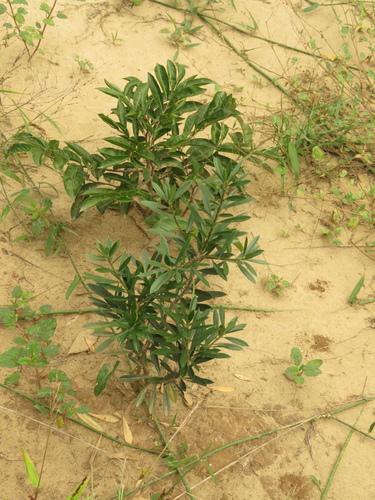
A tree. It grow 8 m tall. The trunk can be 35 cm across. Young shoots and branches have white hairs. The leaves are alternate and 3-6 cm long by 1-2 cm wide. The fruit are oval and dull orange. They are 1-2.5 cm long by 1-1.5 cm wide. There are 3-10 seeds.
Notes
There are 32 Jacquinia species. They grow in Central America. Also put in the family Theophrastaceae.
Names & Synonyms
Ruutkuu
Jacquinia aciculata Mez.Jacquinia aristata Jacq.Jacquinia carasana KunthJacquinia frutescens (Mill.) B StahlJacquinia geniculata MezJacquinia gracilis MezJacquinia ovalifolia MezRuscus frutescens Mill.
References (2)
- Hedrick, U.P., 1919, (Ed.), Sturtevant's edible plants of the world. p 361 (As Jacquinia caracasana)
- Kermath, B. M., et al, 2014, Food Plants in the Americas: A survey of the domesticated, cultivated and wild plants used for Human food in North, Central and South America and the Caribbean. On line draft. p 136