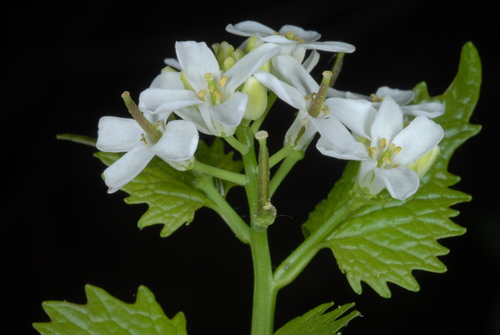
Matthiola livida
(Del.) DC.
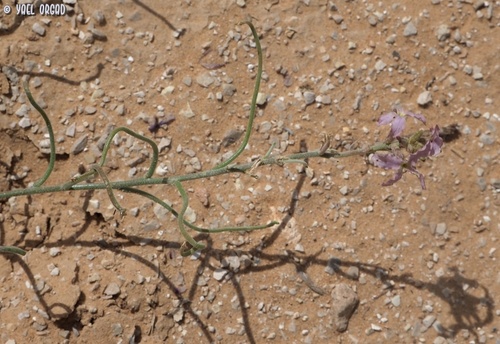
iNaturalist · cc-by-nc
(c) Yael Orgad, some rights reserved (CC BY-NC)
(c) Yael Orgad, some rights reserved (CC BY-NC)
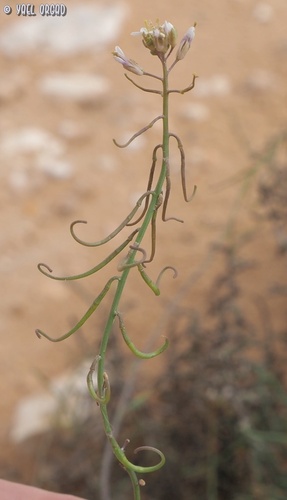
iNaturalist · cc-by-nc
(c) Yael Orgad, some rights reserved (CC BY-NC)
(c) Yael Orgad, some rights reserved (CC BY-NC)
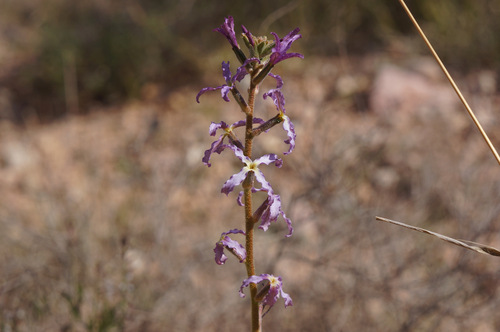
iNaturalist · cc-by-nc
(c) Paul Herment, some rights reserved (CC BY-NC)
(c) Paul Herment, some rights reserved (CC BY-NC)
What to Eat
Edible parts: Plant, Flowers, Stems
The plant, flowers, and stems are eaten.
Where to Find It
It is a Mediterranean plant. It will grow in salty soils. It can grow in arid places.
Africa, Algeria, Arabia, Egypt, Egypt, Israel, Kuwait, Libya, Mediterranean, Middle East, Morocco, North Africa, Sinai,
Countries: United Arab Emirates, Albania, Angola, Bosnia & Herzegovina, Burkina Faso, Bahrain, Burundi, Benin, Botswana, Congo (DRC), Central African Republic, Congo (Republic), Cote d'Ivoire, Cameroon, Cape Verde, Cyprus, Djibouti, Algeria, Egypt, Eritrea, Spain, Ethiopia, France, Gabon, Ghana, Gambia, Guinea, Equatorial Guinea, Greece, Guinea-Bissau, Croatia, Israel, Iraq, Iran, Italy, Jordan, Kenya, Comoros, Kuwait, Lebanon, Liberia, Lesotho, Libya, Morocco, Monaco, Montenegro, Madagascar, Mali, Mauritania, Malta, Mauritius, Malawi, Mozambique, Namibia, Niger, Nigeria, Oman, Qatar, Rwanda, Saudi Arabia, Seychelles, Sudan, Slovenia, Sierra Leone, Senegal, Somalia, South Sudan, Sao Tome & Principe, Syria, Eswatini, Chad, Togo, Tunisia, Turkey, Tanzania, Uganda, Yemen, South Africa, Zambia, Zimbabwe
How to Identify
A Mediterranean herb in the cabbage family (Brassicaceae) that tolerates salty and arid soils. It is used as a famine food.
Other Information
It is a famine food.
Names & Synonyms
Shugayrih
References (4)
- Bailey, C. and Danin, A., 1981, Bedouin Plant Utilization in Sinai and the Negev. Economic Botany 35(2): 145-162
- Hedrick, U.P., 1919, (Ed.), Sturtevant's edible plants of the world. p 406
- Rivera, D. et al, 2006, Gathered Mediterranean Food Plants - Ethnobotanical Investigations and Historical Development, in Heinrich M, Müller WE, Galli C (eds): Local Mediterranean Food Plants and Nutraceuticals. Forum Nutr. Basel, Karger, 2006, vol 59, pp 18–74
- Royal Botanic Gardens, Kew (1999). Survey of Economic Plants for Arid and Semi-Arid Lands (SEPASAL) database. Published on the Internet; http://www.rbgkew.org.uk/ceb/sepasal/internet [Accessed 15th April 2011]