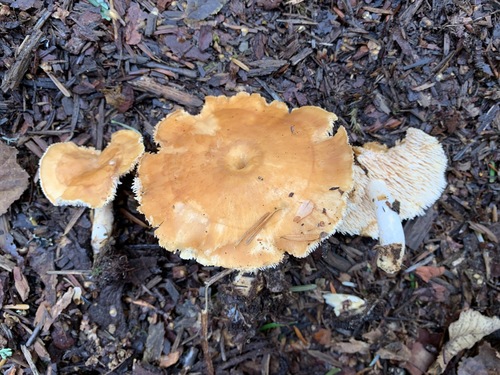
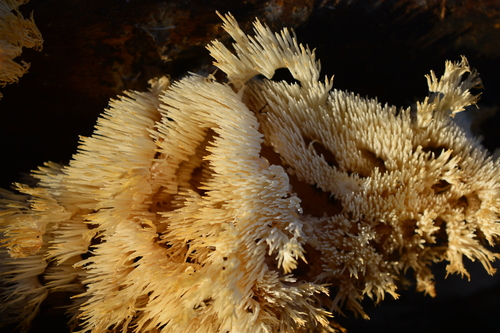
Hydnum rufescens
Sch. ex Fr.
Reddening hedgehog mushroom

(c) Kari Pihlaviita, some rights reserved (CC BY-NC)
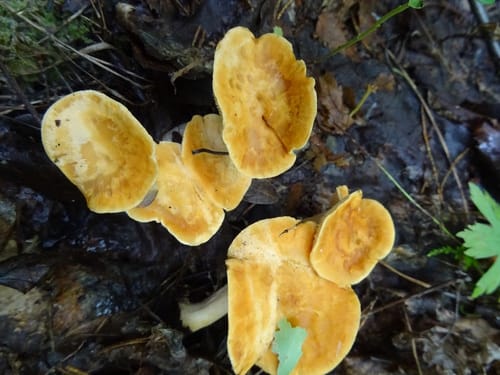
(c) Наталья Коротких, some rights reserved (CC BY)
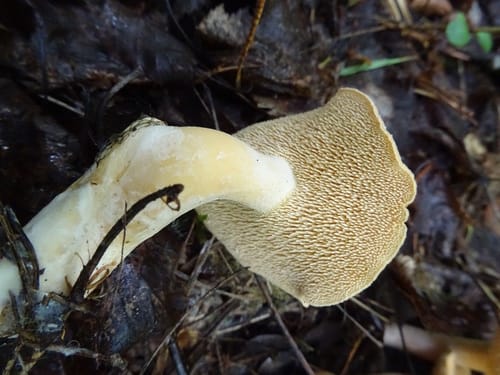
(c) Наталья Коротких, some rights reserved (CC BY)
What to Eat
Edible parts: Mushroom, Fungus
The mushroom is edible.
Where to Find It
It is a temperate plant. It often grows in conifer woods.
Europe, Finland, Italy, Mediterranean, Scandinavia, Sicily, Spain, Sweden,
How to Identify
A temperate mushroom in the Hydnaceae family that commonly grows in conifer woods.
Wikipedia
Source ↗Hydnum rufescens, commonly known as the terracotta hedgehog, is an edible basidiomycete of the family Hydnaceae. It belongs to the small group of mushrooms often referred to as the tooth fungi, which produce fruit bodies whose cap undersurfaces are covered by hymenophores resembling spines or teeth, and not pores or gills. It is very similar to the more common hedgehog fungus (Hydnum repandum), and was previously sometimes considered a variety of that species. However, the following differences have been noted: the cap of H. rufescens is russet rather than beige, the overall dimensions are smaller and more regular in shape, with a central stipe, the spines are not decurrent, and the spores are slightly larger. Both species are found in European coniferous and deciduous forests growing on soil. It is reportedly ectomycorrhizal with Picea abies, Pinus sylvestris, Fagus sylvatica and Quercus robur.
Names & Synonyms
Rodgul taggsvamp
References (4)
- Kaufmann, B. et al, 1999, The Great Encyclopedia of Mushrooms. Konemann. p 211
- Lentini, F. and Venza, F., 2007, Wild food plants of popular use in Sicily. J Ethnobiol Ethnomedicine. 3: 15
- Pelkonen, R., et al, 2008, Element Concentrations in Wild Edible Mushrooms in Finland. The Finnish Environment 25
- Svanberg, I., & Lindh, H., 2019, Mushroom hunting and consumption in twenty-first century post-industrial Sweden. Journal of Ethnobiology and Ethnomedicine (2019) 15:42