Betula pendula
Roth.
European Birch, Silver Birch
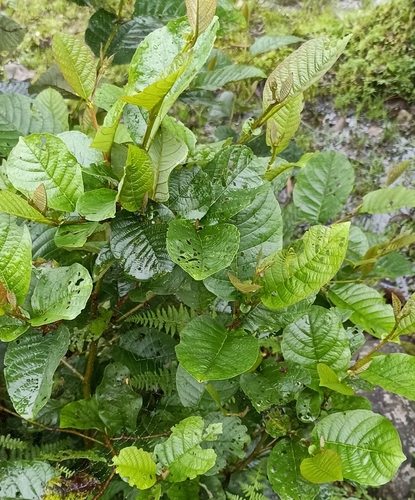
(c) Полина Яковлевна Нехаева (Лихачева), some rights reserved (CC BY-NC), uploaded by Полина Яковлевна Нехаева (Лихачева)

(c) Нурхайдарова Татьяна, some rights reserved (CC BY)

(c) Oleg Kosterin, some rights reserved (CC BY)
What to Eat
Edible parts: Flowers, Leaves, Sap - wine, Bark
Edible Parts: Flowers Inner bark Leaves Sap Edible Uses: Tea Inner bark - cooked or dried and ground into a meal. It can be added as a thickener to soups etc or can be mixed with flour for making bread, biscuits etc. Inner bark is generally only seen as a famine food, used when other forms of starch are not available or are in short supply[115, 177, K]. Sap - raw or cooked. A sweet flavour. It is harvested in early spring, before the leaves unfurl, by tapping the trunk. It makes a pleasant drink. It is often concentrated into a syrup by boiling off the water. Between 4 and 7 litres can be drawn off a mature tree in a day and this will not kill the tree so long as the tap hole is filled up afterwards. However, prolonged or heavy tapping will kill the tree. The flow is best on sunny days following a frost. The sap can be fermented into a beer. An old English recipe for the beer is as follows:- "To every Gallon of Birch-water put a quart of Honey, well stirr'd together; then boil it almost an hour with a few Cloves, and a little Limon-peel, keeping it well scumm'd. When it is sufficiently boil'd, and become cold, add to it three or four Spoonfuls of good Ale to make it work...and when the Test begins to settle, bottle it up . . . it is gentle, and very harmless in operation within the body, and exceedingly sharpens the Appetite, being drunk ante pastum.". Young leaves - raw or cooked. Young catkins. No more details are given. A tea is made from the leaves and another tea is made from the essential oil in the inner bark.
Known Hazards
Where to Find It
It is a temperate plant. It is native to North Asia and Europe. It grows in temperate broad-leaved forests between 500–2300 m altitude in China. It can grow in many soil types. It is very hardy. It needs to be in full sun. It does best in sandy soils with a pH below 6.5. It does poorly in alkaline soils. It suits hardiness zones 2-9. Tasmania Herbarium. Arboretum Tasmania. National Arboretum Canberra.
Andorra, Argentina, Asia, Australia, Balkans, Belarus, Bosnia, Britain*, Canada, Caucasus, Central Asia, China, Czech Republic, Denmark, Estonia, Europe, France, Georgia, Germany, Greece, Hungary, Iraq, Kazakhstan, Korea, Latvia, Lithuania, Luxembourg, Macedonia, Mediterranean, Middle East, Mongolia, North America, Norway, Poland, Romania, Russia, Scandinavia, Serbia, Siberia, Slovakia, Slovenia, South America, Spain, Sweden, Switzerland, Tajikistan, Tasmania, Turkey, Türkiye, Ukraine, USA,
How to Identify
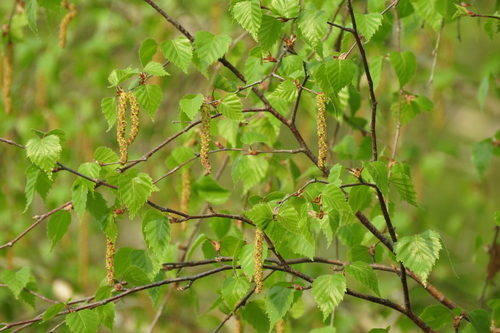
A deciduous tree. It grows 15-25 m tall. It spreads to 6-9 m wide. The bark is white. The branches hang downwards. It loses its leaves during the year. The leaves are diamond shape. Some have deeply lobed leaves. The leaves are 3-7 cm long. There is a tapering tip. The male or pollen catkins are in groups of 2-4. The mature seed catkins are 2-4 cm long. They hang down. They are at the end of twigs. The female catkins are upright.
How to Grow
A very easily grown plant, it tolerates most soils including poor ones, sandy soils and heavy clays. It prefers a well-drained loamy soil in a sunny position. It is occasionally found on calcareous soils in the wild but it generally prefers a pH below 6.5, doing well on acid soils. Fairly wind tolerant though it becomes wind shaped when exposed to strong winds. The silver birch is a very ornamental tree with many named varieties. It also has a very wide range of economic uses. It is a fast growing tree, increasing by up to 1 metre a year, but is short-lived. It is often one of the first trees to colonize open land and it creates a suitable environment for other woodland trees to follow. These trees eventually out-compete and shade out the birch trees. It makes an excellent nurse tree for seedling trees, though its fine branches can cause damage to nearby trees when blown into them by the wind. Trees take about 15 years from seed to produce their own seed. Although closely related, it does not usually hybridize with B. pubescens. It often hybridizes with B. pubescens according to another report. A superb tree for encouraging wildlife, it has 229 associated insect species. A good plant to grow near the compost heap, aiding the fermentation process. It is also a good companion plant, its root action working to improve the soil. Trees are notably susceptible to honey fungus.
Propagation: Seed - best sown as soon as it is ripe in a light position in a cold frame. Only just cover the seed and place the pot in a sunny position. Spring sown seed should be surface sown in a sunny position in a cold frame. If the germination is poor, raising the temperature by covering the seed with glass can help. When they are large enough to handle, prick the seedlings out into individual pots and grow them on in a cold frame for at least their first winter. Plant them out into their permanent positions in late spring or early summer, after the last expected frosts. If you have sufficient seed, it can be sown in an outdoor seedbed, either as soon as it is ripe or in the early spring - do not cover the spring sown seed. Grow the plants on in the seedbed for 2 years before planting them out into their permanent positions in the winter.
Medicinal Uses
Anticholesterolemic Antiinflammatory Antirheumatic Antiseborrheic Antiseptic Astringent Bitter Cholagogue Diaphoretic Diuretic Eczema Laxative Lithontripic Miscellany Skin Urinary Anti-inflammatory, cholagogue, diaphoretic. The bark is diuretic and laxative. An oil obtained from the inner bark is astringent and is used in the treatment of various skin afflictions, especially eczema and psoriasis. The bark is usually obtained from trees that have been felled for timber and can be distilled at any time of the year. The inner bark is bitter and astringent, it is used in treating intermittent fevers. The vernal sap is diuretic. The buds are balsamic. The young shoots and leaves secrete a resinous substance which has acid properties, when combined with alkalis it is a tonic laxative. The leaves are anticholesterolemic and diuretic. They also contain phytosides, which are effective germicides. An infusion of the leaves is used in the treatment of gout, dropsy and rheumatism, and is recommended as a reliable solvent of kidney stones. The young leaves and leaf buds are harvested in the spring and dried for later use. A decoction of the leaves and bark is used for bathing skin eruptions. Moxa is made from the yellow fungous excrescences of the wood, which sometimes swell out of the fissures. The German Commission E Monographs, a therapeutic guide to herbal medicine, approve Betula species for infections of the urinary tract, kidney and bladder stones, rheumatism (see for critics of commission E).
Other Uses
Adhesive Besom Charcoal Compost Dye Essential Fibre Fungicide Hair Miscellany Paper Pioneer Polish Repellent Tannin Thatching Waterproofing Wood The bark is used to make drinking vessels, canoe skins, roofing tiles etc. It is waterproof, durable, tough and resinous. Only the outer bark is removed, this does not kill the tree. It is most easily removed in late spring to early summer. A pioneer species, it readily invades old fields, cleared or burnt-over land and creates conditions suitable for other woodland trees to become established. Since it is relatively short-lived and intolerant of shade, it is eventually out-competed by these trees. A tar-oil is obtained from the white bark in spring. It has fungicidal properties and is also used as an insect repellent. It makes a good shoe polish. Another report says that an essential oil is obtained from the bark and this, called 'Russian Leather' has been used as a perfume. A decoction of the inner bark is used to preserve cordage, it contains up to 16% tannin. An oil similar to Wintergreen oil (obtained from Gaultheria procumbens) is obtained from the inner bark. It is used medicinally and also makes a refreshing tea. The resin glands (the report does not say where these glands are found) are used to make a hair lotion. A brown dye is obtained from the inner bark A glue is made from the sap. Cordage can be made from the fibres of the inner bark. This inner bark can also be separated into thin layers and used as a substitute for oiled paper. The young branches are very flexible and are used to make whisks, besoms etc. They are also used in thatching and to make wattles. The leaves are a good addition to the compost heap, improving fermentation. Wood - soft, light, durable. It is used for a wide range of purposes including furniture, tool handles, toys and carving. A high quality charcoal is obtained from the bark. It is used by artists, painters etc. The wood is also pulped and used for making paper. Special Uses Attracts Wildlife Dynamic accumulator Food Forest Scented Plants
Wikipedia
Source ↗Betula pendula, commonly known as silver birch, warty birch, European white birch, or East Asian white birch, is a species of tree in the family Betulaceae, native to Europe and parts of Asia, though in southern Europe, it is only found at higher altitudes. Its range extends into Siberia, China, and southwest Asia in the mountains of northern Turkey, the Caucasus, and northern Iran. It has been introduced into North America, where it is known as the European white birch or weeping birch and is considered invasive in some states in the United States and parts of Canada. The silver birch is a medium-sized deciduous tree that owes its common name to the white peeling bark on the trunk. The twigs are slender and often pendulous and the leaves are roughly triangular with doubly serrate margins and turn yellow and brown in autumn before they fall. The flowers are catkins and the light, winged seeds get widely scattered by the wind. The silver birch is a hardy tree, a pioneer species, and one of the first trees to appear on bare or fire-swept land. Many species of birds and animals are found in birch woodland, the tree supports a wide range of insects and the light shade it casts allows shrubby and other plants to grow beneath its canopy. It is planted decoratively in parks and gardens and is used for forest products such as joinery timber, firewood, tanning, racecourse jumps, and brooms. Various parts of the tree are used in traditional medicine and the bark contains triterpenes, which have been shown to have medicinal properties.
Production
It is fast growing. Trees can yield 82 litres per tree during a week in early spring.
Other Information
The sap is drunk or frozen by children.
Notes
There are about 60 Betula species. They grow in cool north temperate climates.
Names & Synonyms
Berzs, Biaroza, Breza, Briza belokora, Chui zhi hua, European white birch, Jajaknamu, Lady of the woods, Majfa, Navadna breza, Nyir, Nyirfa, Weeping birch
References (43)
- Beckstrom-Sternberg, Stephen M., and James A. Duke. "The Foodplant Database." http://probe.nalusda.gov:8300/cgi-bin/browse/foodplantdb.(ACEDB version 4.0 - data version July 1994) (As Betula alba)
- Bodkin, F., 1991, Encyclopedia Botanica. Cornstalk publishing, p 144 (Also as Betula alba)
- Bremness, L., 1994, Herbs. Collins Eyewitness Handbooks. Harper Collins. p 39
- Brown, D., 2002, The Royal Horticultural Society encyclopedia of Herbs and their uses. DK Books. p 142
- Bussman, R. W., et al, 2016, A comparative ethnobotany of Khevsureti, Samtskhe-Javakheti, Tusheti, Svaneti, and Racha-Lechkhumi, Republic of Georgia (Sakartvelo), Caucasus. Journal of Ethnobiology and Ethnomedicine (2016) 12:4
- Cerne, M., 1992, Wild Plants from Slovenia used as Vegetables. Acta Horticulturae 318.
- Coombes, A.J., 2000, Trees. Dorling Kindersley Handbooks. p 123
- Cundall, P., (ed.), 2004, Gardening Australia: flora: the gardener's bible. ABC Books. p 236
- Denes, A., et al, 2012, Wild plants used for food by Hungarian ethnic groups living in the Carpathian Basin. Acta Societatis Botanicorum Poloniae 81 (4): 381-396
- Duke, J.A., 1992, Handbook of Edible Weeds. CRC Press. p 48 (As Betula alba)
- Etherington, K., & Imwold, D., (Eds), 2001, Botanica's Trees & Shrubs. The illustrated A-Z of over 8500 trees and shrubs. Random House, Australia. p 131
- Harris, E & J., 1983, Field Guide to the Trees and Shrubs of Britain. Reader's Digest. p 28
- Hedrick, U.P., 1919, (Ed.), Sturtevant's edible plants of the world. p 107 (As Betula alba)
- Heywood, V.H., Brummitt, R.K., Culham, A., and Seberg, O. 2007, Flowering Plant Families of the World. Royal Botanical Gardens, Kew. p 61
- Hibbert, M., 2002, The Aussie Plant Finder 2002, Florilegium. p 43 (As Betula alba)
- Irving, M., 2009, The Forager Handbook, A Guide to the Edible Plants of Britain. Ebury Press p 62
- Janaćković, P. et al, 2019, Traditional knowledge on plant use from Negotin Krajina (Eastern Serbia): An ethnobotanical study. Indian Journal of Traditional Knowledge Vol 18 (1), pp 25-33
- Joyce, D., 1998, The Garden Plant Selector. Ryland, Peters and Small. p 107
- Kim, H. & Song, M., 2013, Ethnobotanical analysis for traditional knowledge of wild edible plants in North Jeolla Province (Korea). Genetic. Resour. Crop Evol. (2013) 60:1571-1585
- Li Peiqiong; Alexei K. Skvortsov, BETULACEAE, Flora of China
- Little, E.L., 1980, National Audubon Society Field Guide to North American Trees. Alfred A. Knopf. p 369
- Lord, E.E., & Willis, J.H., 1999, Shrubs and Trees for Australian gardens. Lothian. p 48
- Luczaj, L., 2012, Ethnobotanical review of wild edible plants of Slovakia. Acta Societatis Botanicorum Poloniae 81(4):245-255
- Luczaj, L., et al, 2015, Wild food plants and fungi used by Ukrainians in the western part of the Maramureş region in Romania. Acta Soc Bot Pol 84(3):339–346
- Lyle, S., 2006, Discovering fruit and nuts. Land Links. p 93
- Miskoska-Milevska, E. et al, 2020, Traditional uses of wild edible plants in the Republic of North Macedonia. PHYTOLOGIA BALCANICA 26(1): 155–162, Sofia, 2020 p 158
- Pieroni, A. & Soukand, R., 2017, Are Borders more Important than Geographical Distance? The Wild Food Ethnobotany of the Boykos and its Overlap with that of the Bukovinian Hutsuls in Western Ukraine. Journal of Ethnobiology 37(2): 326–345
- Plants for a Future database, The Field, Penpol, Lostwithiel, Cornwall, PL22 0NG, UK. http://www.scs.leeds.ac.uk/pfaf/
- Postman, J. D., et al, 2012, Recent NPGS Coordinated Expeditions in the Trans-Caucasus Region to Collect Wild Relatives of Temperate Fruit and Nut Crops. In Acta Horticulturae Number 948 p 191-198
- Prakofjewa, J., et al, 2023, Boundaries Are Blurred: Wild Food Plant Knowledge Circulation across the Polish-Lithuanian-Belarusian Borderland. Biology 2023, 12, 571.
- Pruse, B., et al, 2021, Active Wild Food Practices among Culturally Diverse Groups in the 21st Century across Latgale, Latvia. Biology 2021, 10, 551.
- Redzic, S. J., 2006, Wild Edible Plants and their Traditional Use in the Human Nutrition in Bosnia-Herzegovina. Ecology of Food and Nutrition, 45:189-232
- Sfikas, G., 1984, Trees and shrubs of Greece. Efstathiadis Group. Athens. p 132
- Shikov, A. N. et al, 2017, Traditional and Current Food Use of Wild Plants Listed in the Russian Pharmacopoeia. Frontiers in Pharmacology. Vol. 8 Article 841
- Simkova, K. et al, 2014, Ethnobotanical review of wild edible plants used in the Czech Republic. Journal of Applied Botany and Food Quality 88, 49-67
- Slocum, P.D. & Robinson, P., 1999, Water Gardening. Water Lilies and Lotuses. Timber Press. p 112
- Soukand, R., et al, 2017, Multi-functionality of the few: current and past uses of wild plants for food and healing in Liubań region, Belarus. Journal of Ethnobiology and Ethnomedicine (2017) 13:10
- Tent. fl. Germ. 1:405. 1788
- Toupal, R. S. & Hollenback, K., 2009, An Ethnobotany of Indiana Dunes National Lakeshore: Plant Uses of the Ojibwa People. Bureau of Applied Research in Anthropology. University of Arizona
- Urgamal, M., Oyuntsetseg, B., Nyambayar, D. & Dulamsuren, Ch. 2014. Conspectus of the vascular plants of Mongolia. (Editors: Sanchir, Ch. & Jamsran, Ts.). Ulaanbaatar, Mongolia. “Admon“ Press. 334pp. (p. 143-158).
- World Checklist of Useful Plant Species 2020. Royal Botanic Gardens, Kew
- www.eFloras.org Flora of China
- Young, J., (Ed.), 2001, Botanica's Pocket Trees and Shrubs. Random House. p 139