Corynocarpus similis
Hemsley
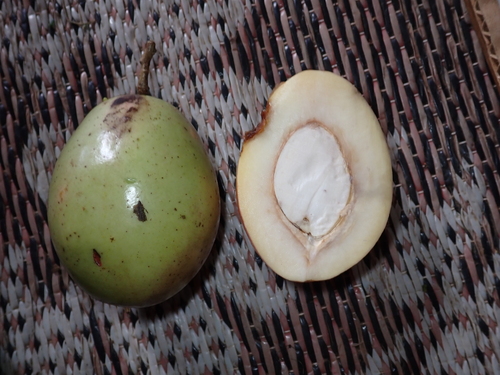
(c) Dominik Maximilián Ramík, some rights reserved (CC BY), uploaded by Dominik Maximilián Ramík
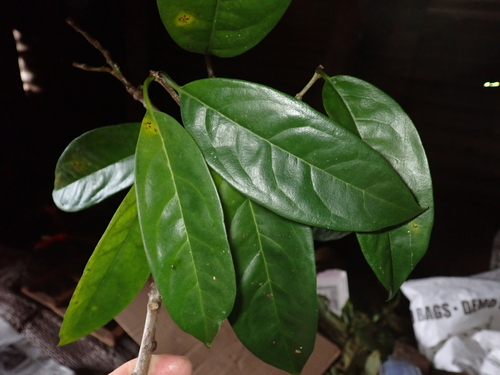
(c) Dominik Maximilián Ramík, some rights reserved (CC BY)
What to Eat
Edible parts: Fruit
The fruit are eaten cooked while slightly unripe and raw when fully ripe. It serves as a famine food.
Known Hazards
Where to Find It
A tropical plant. It grows well with humidity and shade. In Vanuatu it grows up to 1,300 m altitude.
Pacific, Solomon Islands, Vanuatu,
How to Identify
A tree. It grows 12 m tall. The leaves are simple and dark green above but lighter green underneath. The leaves are broadly oval and 8-20 cm long by 5-10 cm wide. There are 6-10 pairs of veins. The leaf stalk is 2-3 cm long. The flowers are in a group at the ends of branches. These are 10 cm long. The flowers are white and small. The fruit are green, white or pale red. They are round or oval and 3-5 cm long by 2-3 cm wide. The flesh is juicy.
Medicinal Uses
Corynocarpus similis's seeds contain poisonous glucosides compounds of 3-nitropropionic acid, which are similar to those found in C. laevigatus.
Wikipedia
Source ↗Corynocarpus similis is a species of tree in the family Corynocarpaceae, reaching 13 metres (40 feet) in height. It is endemic to Vanuatu. It was first described by the British botanist William Hemsley in 1904 in his revision of the Corynocarpus genus. It is most closely related to C. laevigatus and C. disimilis, but differs due to its wider leaves and their shape. C. similis's seeds contain poisonous glucosides compounds of 3-nitropropionic acid, which are similar to those found in C. laevigatus.
Other Information
It is a famine food.
Names & Synonyms
Asme, Gamea, Nakavika blong tevel, Tangbuiri, Watangbui
References (5)
- Cabalion, P. and Morat, P., 1983, Introduction le vegetation, la flore et aux noms vernaculaires de l'ile de Pentcoste (Vanuatu), In: Journal d'agriculture traditionnelle et de botanique appliquee JATBA Vol. 30, 3-4
- Heywood, V.H., Brummitt, R.K., Culham, A., and Seberg, O. 2007, Flowering Plant Families of the World. Royal Botanical Gardens, Kew. p 113
- Lebot, V. & Sam, C., Green desert or ‘all you can eat’? How diverse and edible was the flora of Vanuatu before human introductions?. Terra australis 52 p 408
- Paper on Agroforestry on Aneityum and Tanna, Vanuatu by R. Thaman and W. Clarke from Internet
- Walter, A. & Sam C., 2002, Fruits of Oceania. ACIAR Monograph No. 85. Canberra. p 152, 279


