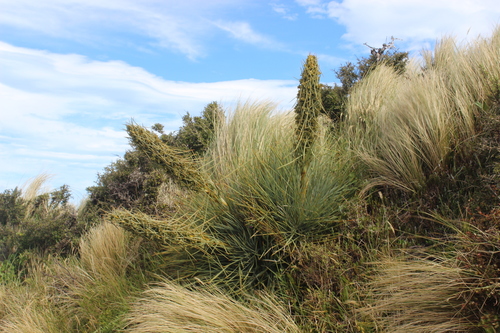
Bilacunaria microcarpa
(M. Beib) Pimenov & V. N. Tikhom.
Small-fruited Bilacunaria.

iNaturalist · cc-by-nc
(c) Alenka Mihoric, some rights reserved (CC BY-NC)
(c) Alenka Mihoric, some rights reserved (CC BY-NC)

iNaturalist · cc-by-nc
(c) Alenka Mihoric, some rights reserved (CC BY-NC)
(c) Alenka Mihoric, some rights reserved (CC BY-NC)
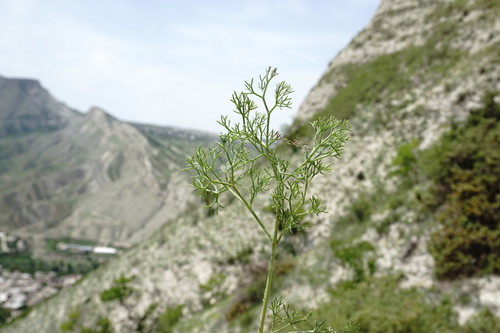
iNaturalist · cc-by-nc
(c) Сергей, some rights reserved (CC BY-NC)
(c) Сергей, some rights reserved (CC BY-NC)
What to Eat
Edible parts: Leaves, Stems
The young leaves and stems are pickled for consumption and are sold in local markets.
Where to Find It
It is a temperate plant. In Turkey it grows between 1,100-2,700 m above sea level.
Armenia, Azerbaijan, Caucasus, Europe, Georgia, Iran, Iraq, Lebanon, Mediterranean, Middle East, Russia, Syria, Turkey, Türkiye,
Countries: Andorra, United Arab Emirates, Albania, Austria, Bosnia & Herzegovina, Belgium, Bulgaria, Bahrain, Belarus, Switzerland, Cyprus, Czechia, Germany, Denmark, Algeria, Estonia, Egypt, Spain, Finland, France, United Kingdom, Greece, Croatia, Hungary, Ireland, Israel, Iraq, Iran, Iceland, Italy, Jordan, Kuwait, Lebanon, Liechtenstein, Lithuania, Luxembourg, Latvia, Libya, Morocco, Monaco, Moldova, Montenegro, North Macedonia, Malta, Netherlands, Norway, Oman, Poland, Portugal, Qatar, Romania, Serbia, Russia, Saudi Arabia, Sweden, Slovenia, Slovakia, San Marino, Syria, Tunisia, Turkey, Ukraine, Yemen
How to Identify
A herb or shrub. It grows 90-120 cm tall. The stems are angular with lines along them. The flowers are yellow. The fruit are 4-6 mm long by 6-7 mm wide.
How to Grow
Plants are grown from seed. They need cold treatment.
Other Information
It is sold in local markets.
Notes
Essential oils are extracted from the fruit and flowers.
Names & Synonyms
Caksir tur, Casir tur, Sarunotu, Zhakh
Cachrys microcarpa M. Bieb.Hippomarathrum microcarpum Petrovand others
References (8)
- Bussman, R. W., et al, 2016, A comparative ethnobotany of Khevsureti, Samtskhe-Javakheti, Tusheti, Svaneti, and Racha-Lechkhumi, Republic of Georgia (Sakartvelo), Caucasus. Journal of Ethnobiology and Ethnomedicine (2016) 12:43 (As Hippomarathrum microcarpum)
- Feddes Repert. 94:152. 1983
- Hovsepyan, R., et al, 2016, Food as a marker for economy and part of identity: traditional vegetal food of Yezidis and Kurds in Armenia. Journal of Ethnic Foods. 3:32-41 (As Cachrys microcarpa)
- Ibadullayeva, S., et al, 2011, Protection of some rare and endangered vegetable plants in the flora of the Nakhichevan AR. International Journal of Biodiversity and Conservation Vol. 3(6), pp. 224-229
- Nanagulyan, S., et al, 2020, Wild plants and fungi sold in the markets of Yerevan (Armenia). Journal of Ethnobiology and Ethnomedicine 16:26
- Pieroni, A., et al, 2020, Wild food plants traditionally gathered in central Armenia: archaic ingredients or future sustainable foods? Environment, Development and Sustainability. Springer p 10
- USDA, ARS, National Genetic Resources Program. Germplasm Resources Information Network - (GRIN). [Online Database] National Germplasm Resources Laboratory, Beltsville, Maryland. Available: www.ars-grin.gov/cgi-bin/npgs/html/econ.pl (10 April 2000)
- World Checklist of Useful Plant Species 2020. Royal Botanic Gardens, Kew