Vasconcellea cauliflora
(Jacq.) A. DC.
Kegema, Mountain pawpaw
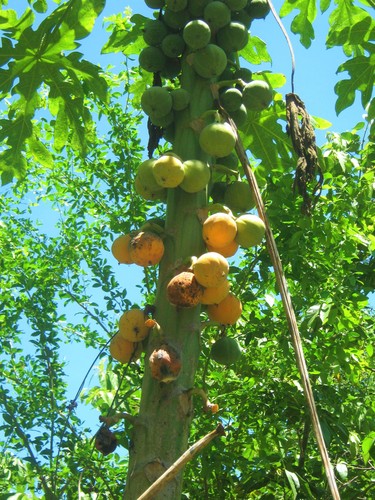
(c) Pablo Galán, some rights reserved (CC BY-NC), uploaded by Pablo Galán
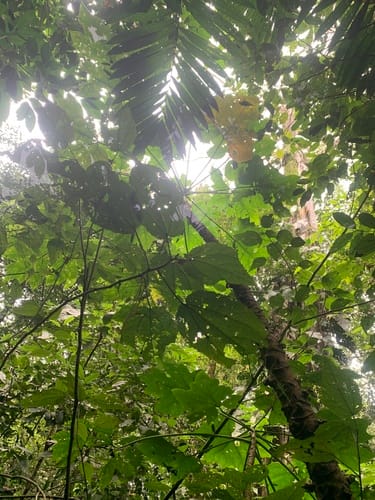
(c) Jacob Martin, some rights reserved (CC BY-NC)
What to Eat
Edible parts: Fruit
Fruit. The fruits are not eaten raw. However, the pulp of papaya d montana fruits is used by local people for making candy, jams, cakes, and salted preparations. Sherbets are also made from the pulp.
Where to Find It
It is a tropical plant.
Amazon, Andes, Belize, Caribbean, Central America, Colombia, Costa Rica, Guatemala, Honduras, Mexico, Nicaragua, North America, Panama, South America, Trinidad-Tobago, Venezuela,
How to Identify
A small tree without branches. It grows 3.5 m tall. The leaves are large with several lobes. Plants are separately male and female. Male plants produce white flowers on long stalks. The female flowers have shorter stalks. The fruit are oval and 7 cm long by 4 cm wide. They are yellow.
How to Grow
Plants can be grown from seeds. Seeds take 30 days to germinate. Plants can be put in a nursery and transplanted.
Propagation: Seed - sow in individual containers or in a nursery seedbed in light shade. Germination can be slow and difficult, taking about 30 days. Seedlings can be planted out when 4 - 6 months old.
Other Information
It is a cultivated food plant.
Notes
There are at least 22-40 species of Carica.
Names & Synonyms
Bonete, Molocoton, Oreja de mico, Papaisis, Papaya cimarrona, Papaya de monte, Papaita, Tapaculo, Zonzapote
References (16)
- Castaneda, H., & Stepp, J. R., 2007, Ecosystems as Sources of Useful Plants for the Guaymi People of Costa Rica. Ethnobotany Journal. 5:249-257 (As Vasconcellea cauliflora)
- D'Ambrosio, U., & Puri, R. K., 2016, Foodways in transition: food plants, diet and local perceptions of change in a Costa Rican Ngäbe community. Journal of Ethnobiology and Ethnomedicine (2016) 12:3 p 22
- Etkin, N.L. (Ed.), 1994, Eating on the Wild Side, Univ. of Arizona. p 137
- INFOODSUpdatedFGU-list.xls
- Kapelle, M., et al, 2000, Useful plants within a Campesino Community in a Costa Rican Montane Cloud Forest. Mountain Research and Development, 20(2): 162-171. (As Carica pennata)
- Kermath, B. M., et al, 2014, Food Plants in the Americas: A survey of the domesticated, cultivated and wild plants used for Human food in North, Central and South America and the Caribbean. On line draft. p 900
- Langlois, H. C., 2004, Ethnobotanical analysis of different successional stages as sources of wild edible plants for the Guaymi people in Costa Rica. M. Sc. thesis University of Florida.
- Lopez-Diago, D. & Garcia, N., 2021, Wild edible fruits of Colombia. Biota ColomBiana 22 (2) p 34
- Martin, F. W., et al, 1987, Perennial Edible Fruits of the Tropics. USDA Handbook 642 p 90
- Piedra-Malagón, E. M. et al, 2022, Edible native plants of the Gulf of Mexico Province. Biodiversity Data Journal 10: e80565 p 17
- Pl. hort. schoenbr. 3:33, t. 311. 1798
- Reis, S. V. and Lipp, F. L., 1982, New Plant Sources for Drugs and Foods from the New York Botanical Garden herbarium. Harvard. p 199 (As Carica cauliflora)
- Roa, J. A. G. & Boada, D. S. G., 2018, Fundación para el Fortalecimiento de la Fruticultura y Plantas Alimenticias no Convencionales en Colombia.
- Segura, S., et al, 2018, The edible fruit species in Mexico. Genet Resour Crop Evol (2018) 65:1767–1793 (As Carica cauliflora)
- Turreira-Garcia, N., et al, 2015, Wild edible plant knowledge, distribution and transmission: a case study of the Achi Mayans of Guatemala. Journal of Ethnobiology and Ethnomedicine. 11:52
- Useful Tropical Plants.


