Grevillea glauca
J. Banks & D Solander ex J. Knight
Bushmans' clothes-peg, Nut Wood

(c) Russell Cumming, some rights reserved (CC BY-NC), uploaded by Russell Cumming
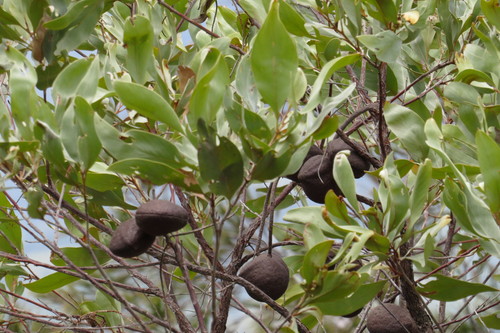
(c) coenobita, some rights reserved (CC BY), uploaded by coenobita
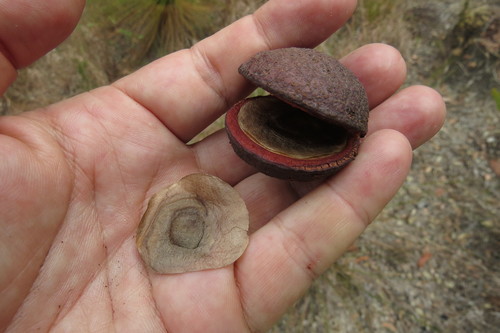
(c) coenobita, some rights reserved (CC BY), uploaded by coenobita
What to Eat
Edible parts: Seeds
The seeds are eaten raw by indigenous peoples.
Where to Find It
A tropical plant. It suits hot humid summers and mild dry winters. It grows in areas with a 500-1500 mm summer rainfall. It grows in a range of soil types. It can be in open forest, grassland or in waterlogged soils at low altitudes. It regrows after fire.
Asia, Australia, Indonesia, Pacific, Papua New Guinea, PNG, SE Asia,
How to Identify
A large shrub or small tree. It has a single stem. It grows 3-15 m high. The bark is dark grey and has furrows. The leaves are 6-20 cm long and 1.5-6.5 cm wide. They are narrowly oval and have leaf stalks. They point upwards. The flowers are in a curve or hanging head. This is 8-18 cm long by 2-3 cm wide. The flowers are creamy white or greenish white. The fruit are 2.5-4 cm long and 2.5-4 cm wide. They are lens shaped. The seed are 7-15 mm long and wide.
How to Grow
Plants can be grown from seed sown fresh. The seed are best nicked to allow water to enter. Seed can be soaked in hot water.
Wikipedia
Source ↗Grevillea glauca, commonly known as bushman's clothes peg, cobblers peg tree, beefwood tree, nut wood, nalgo, or kawoj in New Guinea, is a species of flowering plant in the family Proteaceae and is native to Papua New Guinea and north-eastern Queensland. It is an erect, spindly shrub or small tree with narrowly egg-shaped to elliptic leaves, and cylindrical clusters of cream-coloured to greenish-white flowers.
Names & Synonyms
Kawoj, Nalgo
References (1)
- Olde, P & Marriott, N., 1995, The Grevillea Book. Kangaroo Press. Vol 2. p 177
More from Proteaceae


