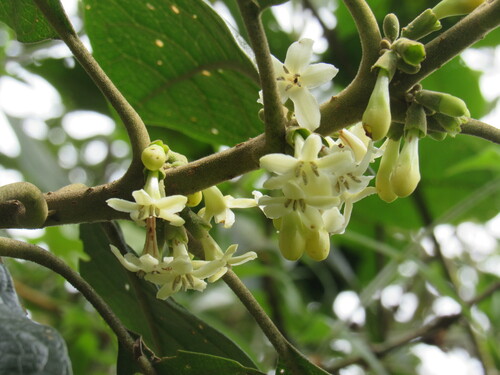
Mentha cervina
L.
Hart's pennyroyal, Holt's pennyroyal

(c) User:Mike Peel/Attribution|other_authors=, some rights reserved (CC BY-SA)

(c) Carles Fabregat, some rights reserved (CC BY-NC)
What to Eat
Edible parts: Leaves - tea
The leaves have a strong spearmint fragrance and can be brewed into a herb tea.
Known Hazards
Where to Find It
It is a Mediterranean plant.
Europe, Slovenia, Spain,
How to Identify
A perennial mint reaching 0.3 m (1 ft) tall, hardy to UK zone 7 and frost-hardy. It thrives in light sandy, medium loamy, and heavy clay soils across a range of pH levels, tolerating semi-shade or full sun and preferring moist conditions. The plant attracts insects and wildlife.
How to Grow
Succeeds in most soils and situations so long as the soil is not too dry. Prefers a slightly acid soil. Grows well in heavy clay soils. A sunny position is best for production of essential oils, but it succeeds in partial shade. Most mints have fairly aggressive spreading roots and, unless you have the space to let them roam, they need to be restrained by some means such as planting them in containers that are buried in the soil. Hybridizes freely with other members of this genus. The leaves have a strong peppermint smell. The flowers are very attractive to bees and butterflies. A good companion plant for growing near cabbages and tomatoes, helping to deter insect pests. Members of this genus are rarely if ever troubled by browsing deer.
Propagation: Sow seed in spring in a cold frame; germination is usually fairly quick. Prick seedlings into individual pots when large enough and plant out in summer. Note that Mentha species hybridise readily, so seed cannot be relied upon to come true, and seedlings will vary in medicinal oil content. For plants of a specific aroma, propagate by division instead. Division can be done at almost any time of year, though spring or autumn is preferable. Virtually any piece of root can grow into a new plant. Larger divisions can go straight into permanent positions, or for maximum increase, cut roots into sections no shorter than 3cm, pot in light shade in a cold frame, and plant out in summer once established.
Medicinal Uses
A tea made from the leaves has traditionally been used to treat fevers, headaches, digestive disorders, and minor ailments. Harvest the leaves as the plant comes into flower; they can be dried for later use. The essential oil in the leaves is antiseptic, though it is toxic in large doses.
Other Uses
An essential oil is obtained from the whole plant. Rats and mice intensely dislike the smell of mint, so the plant was historically used as a strewing herb in homes and spread in granaries to deter rodents from grain stores. The plant also attracts wildlife.
Wikipedia
Source ↗Mentha cervina, commonly known as hart's pennyroyal, is a perennial herbaceous plant of the Mentha (mint) genus. It is native to the western Mediterranean Sea region, growing naturally from southwestern France to the Iberian Peninsula, and south to Azores, Morocco and Algeria. Its common name reflects a traditional association with the separate species Mentha pulegium or pennyroyal. The plants were associated due to their shared high pulegone content, which gives them both a distinctive, strong aroma. A sprawling herb growing up to 30 cm tall, Mentha cervina has been used both whole and as its essential oil in a variety of culinary and traditional medical contexts. More recently, research has examined its constituent chemicals' potential antioxidant, antibacterial and antifungal abilities. Due to overall declines in its population and localized extinctions, Mentha cervina has been assessed as a Near Threatened species on the IUCN Red List.
Names & Synonyms
Jelenja meta
References (5)
- Facciola, S., 1998, Cornucopia 2: a Source Book of Edible Plants. Kampong Publications, p 128
- Gonzalez, J. A., et al, 2011, The consumption of wild and semi-domesticated edible plants in the Arribes del Duero (Salamanca-Zamora, Spain): an ananalysis of traditional knowledge. Genetic Resources and Crop Evolution 58:991-1006
- http://www.botanic-gardens-ljubljana.com/en/plants
- Romanowski, N., 2007, Edible Water Gardens. Hyland House. p 109
- Sp. pl. 2:578. 1753