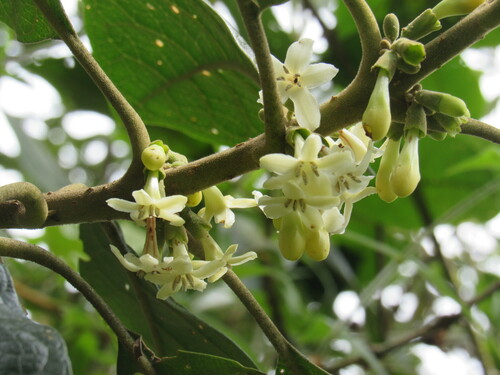
Salvia azurea
Benth.
Pitcher sage, Azure sage
LamiaceaeSeeds/Nuts

iNaturalist · cc-by-nc-nd
(c) Brian Peterson, some rights reserved (CC BY-NC-ND)
(c) Brian Peterson, some rights reserved (CC BY-NC-ND)

iNaturalist · pd
Hardyplants, no known copyright restrictions (public domain)
Hardyplants, no known copyright restrictions (public domain)

iNaturalist · cc-by-nc
(c) Mikael Behrens, some rights reserved (CC BY-NC), uploaded by Mikael Behrens
(c) Mikael Behrens, some rights reserved (CC BY-NC), uploaded by Mikael Behrens
What to Eat
Edible parts: Seeds
The seeds are eaten raw, roasted, popped, ground into flour, or cooked with other grains.
Where to Find It
It is a temperate plant.
North America, USA,
Countries: Antigua & Barbuda, Barbados, Bahamas, Belize, Canada, Costa Rica, Cuba, Dominica, Dominican Republic, Grenada, Guatemala, Honduras, Haiti, Jamaica, St Kitts & Nevis, St Lucia, Mexico, Nicaragua, Panama, Puerto Rico, El Salvador, Trinidad & Tobago, United States, St Vincent
How to Identify
A temperate herb in the mint family (Lamiaceae) with edible seeds.
Wikipedia
Source ↗Salvia azurea, the blue sage or azure sage, is a herbaceous perennial in the genus Salvia that is native to Central and Eastern North America.
Names & Synonyms
Several
References (2)
- A. L. P. P. de Candolle, Prodr. 12:302. 1848
- Facciola, S., 1998, Cornucopia 2: a Source Book of Edible Plants. Kampong Publications, p 134