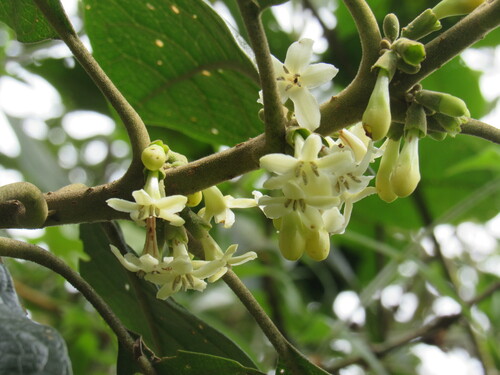
Clinopodium vimineum
(L.) Kuntze
Costa Rican mint bush
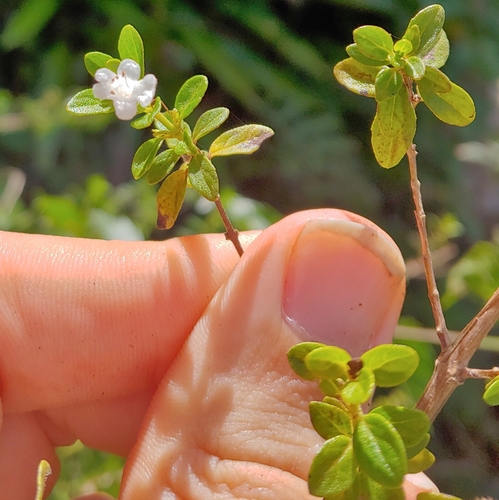
iNaturalist · cc-by-nc
(c) Kurt Miller, some rights reserved (CC BY-NC)
(c) Kurt Miller, some rights reserved (CC BY-NC)
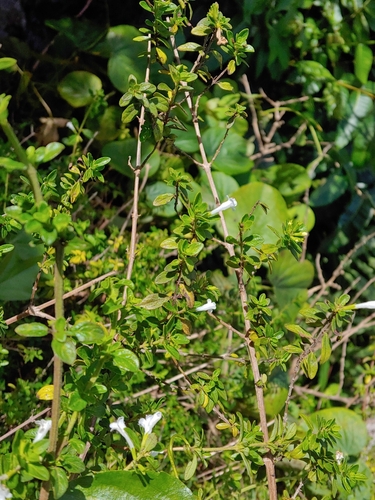
iNaturalist · cc-by-nc
(c) Kurt Miller, some rights reserved (CC BY-NC)
(c) Kurt Miller, some rights reserved (CC BY-NC)
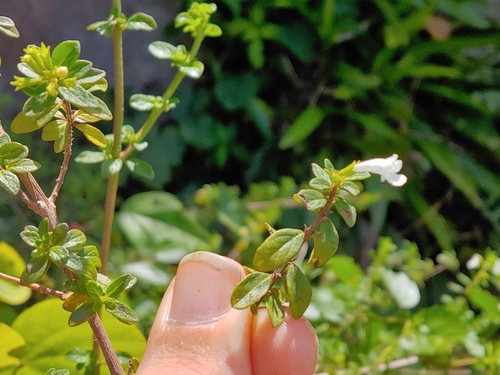
iNaturalist · cc-by-nc
(c) Kurt Miller, some rights reserved (CC BY-NC)
(c) Kurt Miller, some rights reserved (CC BY-NC)
What to Eat
Edible parts: Leaves - flavouring, Leaves - tea
Leaves - cooked. A strong, pennyroyal-like flavour and aroma, they are used as a flavouring. The leaves are used to make an aromatic tea.
Where to Find It
A tropical plant.
Central America, Costa Rica, Cuba, Dominican Republic, Hispaniola, Jamaica, West Indies,
Countries: Antigua & Barbuda, Barbados, Bahamas, Belize, Costa Rica, Cuba, Dominica, Dominican Republic, Grenada, Guatemala, Honduras, Haiti, Jamaica, St Kitts & Nevis, St Lucia, Nicaragua, Panama, Puerto Rico, El Salvador, Trinidad & Tobago, St Vincent
How to Identify
A shrub that keeps growing from year to year. The leaves are small and bright green.
Names & Synonyms
Jamaican mint bush, Serpentine savory, Shrubby savory
Micromeria obovata (Willd.) Benth.Micromeria viminea (L.) DruceNostelis viminea (L.) Raf.Satureja viminea L.Xenopoma obovatum Willd.Zygis aromatica Desv.
References (4)
- Facciola, S., 1998, Cornucopia 2: a Source Book of Edible Plants. Kampong Publications, p 136 (As Satureja viminea)
- Hedrick, U.P., 1919, (Ed.), Sturtevant's edible plants of the world. p 414 (As Micromeria obovata)
- Kermath, B. M., et al, 2014, Food Plants in the Americas: A survey of the domesticated, cultivated and wild plants used for Human food in North, Central and South America and the Caribbean. On line draft. p 245
- Lab. Gen. Et Sp. 381. 1834 (As Micromeria obovata)