Lindera communis
Hemsl.
Ta-hsiang-yieh-tzu-shu
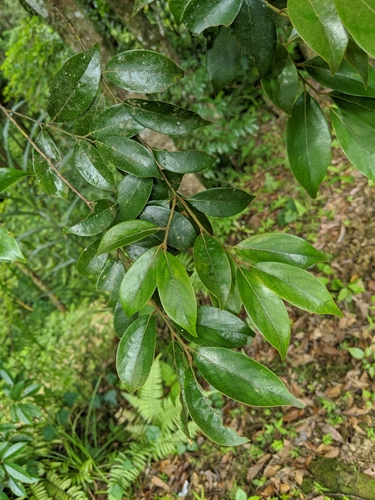
(c) 傻子, some rights reserved (CC BY-NC)
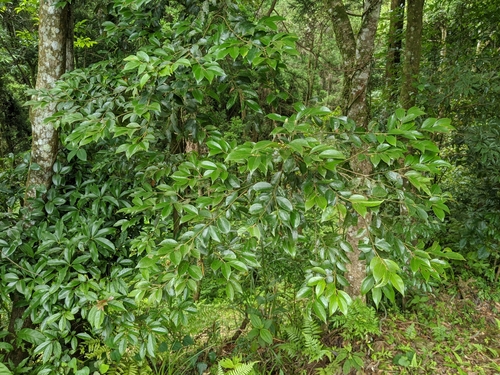
(c) 傻子, some rights reserved (CC BY-NC)
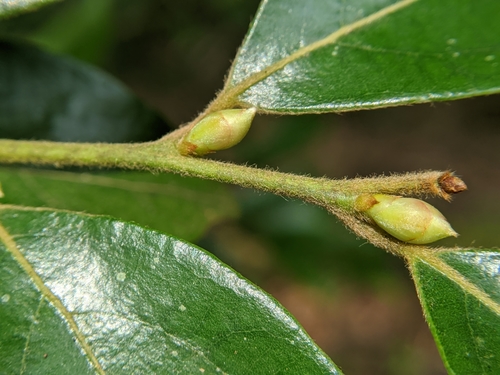
(c) 傻子, some rights reserved (CC BY-NC)
What to Eat
Edible parts: Leaves - flavouring, Seeds - oil
The leaves are occasionally used as a condiment. The dried, powdered leaves and twigs are added to rice bouillon for flavour. An edible oil is obtained from the seed.
Where to Find It
It is a tropical plant. It grows in broad-leaved evergreen forests in China. It grows in dry sandy places. In Sichuan and Yunnan.
Asia, Cambodia, China, India, Indochina, Japan, Laos, Myanmar, SE Asia, Thailand, Vietnam,
How to Identify
An evergreen shrub or tree. It grows 3-4 m tall. The trunk can be 25 cm across. Male and female flowers occur on separate plants. The leaves are alternate and yellowish green underneath. They are narrowly oval and 4-9 cm long by 2-3 cm wide. The fruit are oval and 1 cm long. They are red at maturity.
How to Grow
Plants can be grown by seed or by cuttings.
Medicinal Uses
The leaves and seed oil have traditional uses as flavouring and food ingredient.
Other Uses
The pericarp contains an essential oil. An oil obtained from the seed oil is edible and is also used for making soap and machine oil.
Names & Synonyms
Liendan thongthuong, Xiang ye shu
References (8)
- Brown, D., 2002, The Royal Horticultural Society encyclopedia of Herbs and their uses. DK Books. p 263
- Facciola, S., 1998, Cornucopia 2: a Source Book of Edible Plants. Kampong Publications, p 139
- Fern, K., 2012, Tropical Species Database http://theferns.info/tropical/
- F. B. Forbes & W. B. Hemsley, J. Linn. Soc., Bot. 26:387. 1891
- Tanaka,
- Wiersema, J. H. & Leon, B., 2013, World Economic Plants. A Standard Reference CRC Press. 2nd Ed. p 407
- World Checklist of Useful Plant Species 2020. Royal Botanic Gardens, Kew
- www.efloras.org Flora of China Volume 7


