Lysimachia nummularia
L.
Moneywort, Creeping Jenny

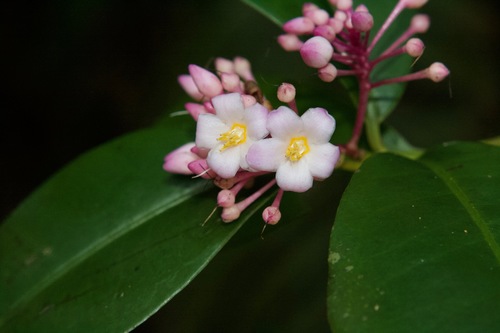
(c) miroslavamalovcova, some rights reserved (CC BY-NC)
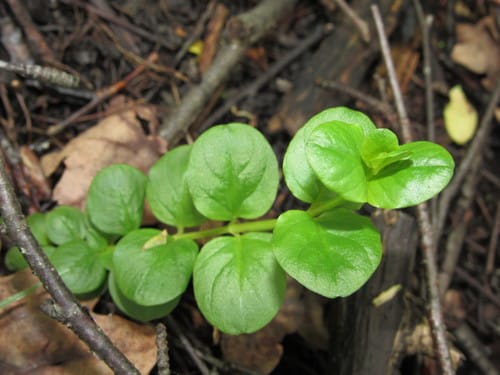
(c) Denys Davydov, some rights reserved (CC BY-NC)
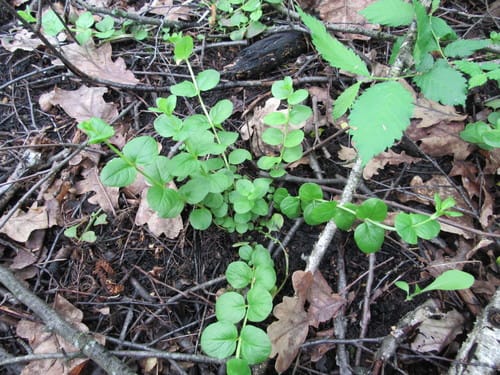
(c) Denys Davydov, some rights reserved (CC BY-NC)
What to Eat
Edible parts: Leaves - tea
A tea is made from the leaves and flowers.
Where to Find It
It is a temperate plant. It grows on river banks and flood plains.
Australia, Estonia, Europe, Luxembourg, Tasmania,
How to Identify
A herb that keeps growing from year to year. The stems are creeping. They can be 60 cm long. The leaves are opposite and have short stalks. The leaf blade is oval and 1.5-2.5 cm long.
How to Grow
An easily grown plant, succeeding in a moist loamy soil. Grows well in heavy clay soils. Grows well in marshy soil and in shallow water in pond margins. Prefers a shady position but also succeeds in full sun. Plants are hardy to at least -25°c. Most species in this genus seem to be immune to the predations of rabbits. A very ornamental plant.
Propagation: Sow seed in spring or autumn in a cold frame, noting that this species rarely sets seed in Britain. Prick seedlings into individual pots when large enough to handle and plant out in summer. Divide in spring or autumn; larger clumps can go directly into permanent positions, while smaller clumps are best potted up and grown on in a cold frame until rooting well before planting out in spring.
Medicinal Uses
The whole herb, used fresh or dried, is antiscorbutic, mildly astringent, diuretic, and vulnerary. When harvesting for drying, the herb is collected in June. Creeping Jenny is a particularly good wound herb — fresh leaves are bruised and applied directly to affected areas. An infusion is used internally to treat bleeding and diarrhoea.
Other Uses
The plant makes a useful ground cover in moist soils, though it requires weeding for the first year or so. Space plants about 60cm apart each way; they will spread and root to form a dense carpet.
Wikipedia
Source ↗Lysimachia nummularia is a species of flowering plant in the primrose family Primulaceae. Its common names include moneywort, creeping jenny, herb twopence and twopenny grass.
Names & Synonyms
Trudamorda
References (5)
- Curtis, W.M., 1993, The Student's Flora of Tasmania. Part 3 St David's Park Publishing, Tasmania, p 467
- Facciola, S., 1998, Cornucopia 2: a Source Book of Edible Plants. Kampong Publications, p 188
- Kalle, R. & Soukand, R., 2012, Historical ethnobotanical review of wild edible plants of Estonia (1770s-1960s) Acta Societatis Botanicorum Poloniae 81(4):271-281
- Sp. pl. 1:148. 1753
- Uphof,