Vitis shuttleworthii
House
Calloosa grape, Leatherleaf
(c) Jay Horn, some rights reserved (CC BY)
(c) Jay Horn, some rights reserved (CC BY)
(c) Jay Horn, some rights reserved (CC BY)
What to Eat
Edible parts: Fruit, Leaves, Sap
The ripe fruit are eaten raw or used to make jelly. The young leaves and stems are cooked and eaten. Sap from old stems is drunk.
Dangerous Lookalikes
This plant can be confused with the following toxic species. Always verify identification carefully before consuming any wild plant.


Canadian Moonseed: No tendrils, single crescent/moon-shaped seed, leaf stem attaches to underside of leaf.
Calloosa grape: Vine with tendrils, round seeds, leaf stem at edge of leaf, bark that peels.
Where to Find It
It is a temperate plant.
North America, USA,
How to Identify
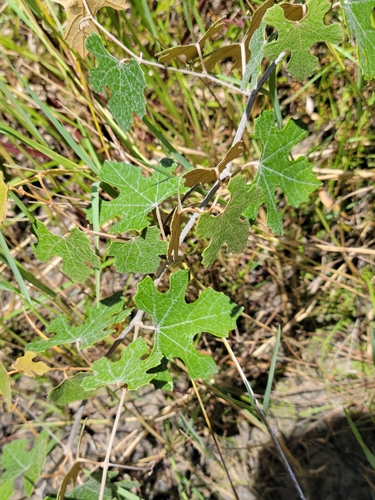
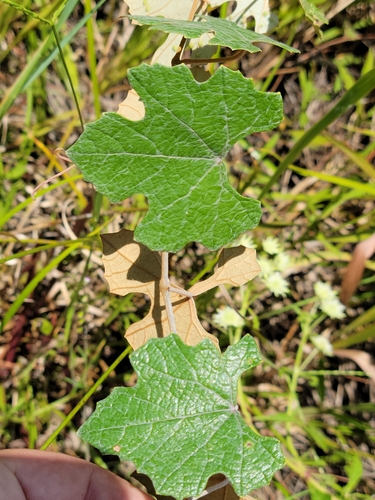
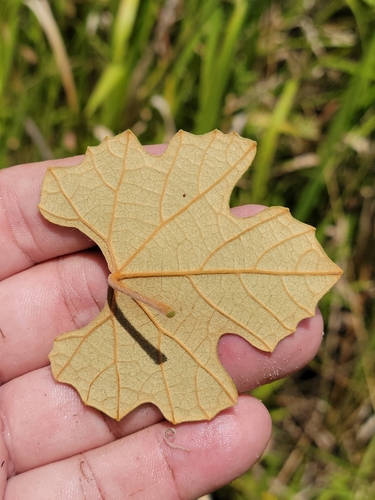
A climbing plant. The branches shed their bark. The leaves are heart shaped and 4-12 cm long. They sometimes have 3-5 lobes. The flowering shoots are 4-10 cm long. The fruit are dark red to purple-black. They are round and 12 mm across.
Wikipedia
Source ↗Vitis shuttleworthii is a North American liana (woody vine) in the grape family commonly known as the calloose grape or bear grape (alternatively referred as calusa grape). The name refers to the group of Native American people that resided in southwest Florida, the Calusa. It is native to south and central Florida, with isolated populations in southern Alabama. The species was first described in 1887 using the name Vitis coriacea. However, this name had already been used for an Asian plant, so it was necessary to coin another name of the American species, now called V. shuttleworthii.
References (4)
- Amer. Midl. Naturalist 7:129. 1921
- Facciola, S., 1998, Cornucopia 2: a Source Book of Edible Plants. Kampong Publications, p 246
- Kermath, B. M., et al, 2014, Food Plants in the Americas: A survey of the domesticated, cultivated and wild plants used for Human food in North, Central and South America and the Caribbean. On line draft. p 923
- Morton,


