Caryocar microcarpum
Ducke
Water sawarri
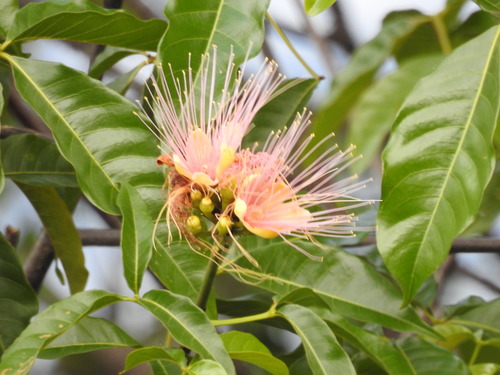
(c) Rogério Gribel, some rights reserved (CC BY-NC-ND), uploaded by Rogério Gribel
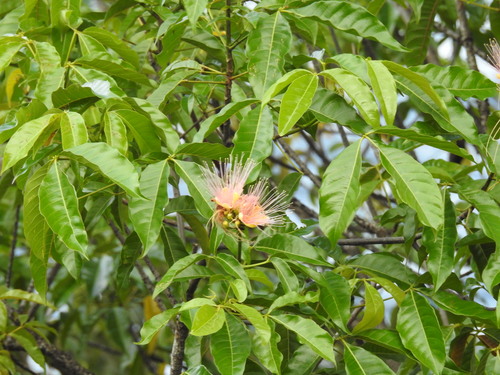
(c) Rogério Gribel, some rights reserved (CC BY-NC-ND), uploaded by Rogério Gribel
What to Eat
Edible parts: Fruit, Kernel, Seeds
Fruit - raw or cooked. A fleshy pulp with a sweet flavour. Not as tasty as some other members of the genus, it is more commonly cooked in various ways prior to eating. The fruit is around 4cm in diameter, containing 1 - 2 spiny seeds. Seed.
Known Hazards
Where to Find It
A tropical plant. It grows in the Amazon in Brazil. It is in forests that are sometimes flooded.
Amazon, Bolivia, Brazil*, Colombia, French Guiana, Guianas, Guyana, Martinique, Peru, South America, Suriname, Venezuela,
How to Identify
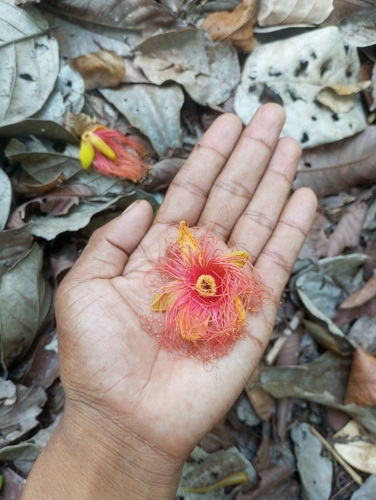
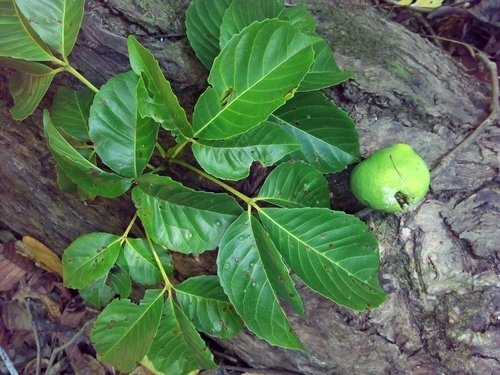
A tree. It grows 20-30 m tall. The crown is wide and round. The trunk is upright and 70-90 cm across. The bark is thick and in irregular plates. The leaves are compound with 3 leaflets. The leaves have long stalks and the leaflets have short stalks. The flowers are in small groups and 2.5 cm long. The fruit is oval and fleshy with a hard stone inside.
How to Grow
Plants are grown from seed. The ripe fruit are harvested and the seeds removed. Seeds are only viable for a very short time. Fresh seed should be planted. They germinate in 30-60 days.
Propagation: Seed - best sown as soon as ripe in individual containers in partial shade. A high germination rate can be expected, with the seeds sprouting within 30 - 60 days.
Medicinal Uses
The bark is mixed in water with the leaves of Elephantopus scaber and Lagenaria siceraria, then used as a foot-bath remedy for microfilarial worms. The bark is used to treat back pain. The stem and leaves contain triterpene saponins, free triterpenes and tannins.
Other Uses
The fruit contains ichthyotoxic and ant-repellent chemicals. The crushed leaves are used as a soap substitute. The wood is medium-textured, cross-grained, heavy, very hard and very resistant to rot and wood eating insects. Moderately easy to work with, it is used in general construction, to build the ribs and decks of boats, cart bodies, posts and poles, railway ties etc.
Production
Plants can reach 2 m in 2 years.
Notes
The Caryocaraceae occur in tropical America. There are 16 Caryocar species.
Names & Synonyms
Aloe koemali, Arukumari, Chawari, Kapikola, Kasanjan, Kobo, Kola, Kula, Pegui, Pequia-amarelo, Pequia-bravo, Pequia, Pequiarana-da-varzea, Pequiarana, Petia, Peuqiarana-do-igapo, Sawarri, Ruwbast sopo-oedoe, Vinagreira
References (8)
- Andel T. van, Non-timber forest products of the North-West District of Guyana. Part 2. A Field Guide. Tropenbos-Guyana Programme. p 257
- Bircher, A. G. & Bircher, W. H., 2000, Encyclopedia of Fruit Trees and Edible Flowering Plants in Egypt and the Subtropics. AUC Press. p 87
- Grandtner, M. M. & Chevrette, J., 2013, Dictionary of Trees, Volume 2: South America: Nomenclature, Taxonomy and Ecology. Academic Press p 104
- Johnson, M. and Colquhoun, A., 1996, Preliminary Ethnobotanical Survey of Kurupukari: An Amerindian Settlement of Central Guyana. Economic Botany, Vol. 50, No. 2, pp. 182-194
- Lorenzi, H., 2002, Brazilian Trees. A Guide to the Identification and Cultivation of Brazilian Native Trees. Vol. 02 Nova Odessa, SP, Instituto Plantarum p 78
- Lorenzi, H., Bacher, L., Lacerda, M. & Sartori, S., 2006, Brazilian Fruits & Cultivated Exotics. Sao Paulo, Instituto Plantarum de Estuados da Flora Ltda. p 112
- Roa, J. A. G. & Boada, D. S. G., 2018, Fundación para el Fortalecimiento de la Fruticultura y Plantas Alimenticias no Convencionales en Colombia.
- van Roosmalen, M.G.M., 1985, Fruits of the Guianan Flora. Utrecht Univ. & Wageningen Univ. p 72