Simarouba versicolor
A. St. Hil.

(c) Célio Moura Neto, some rights reserved (CC BY-NC), uploaded by Célio Moura Neto
(c) alexandre callou sampaio, some rights reserved (CC BY-NC)

(c) Célio Moura Neto, some rights reserved (CC BY-NC)
What to Eat
Edible parts: Fruit
The fruit is eaten.
Known Hazards
Where to Find It
It is a tropical plant.
Bolivia, Brazil, South America,
How to Identify
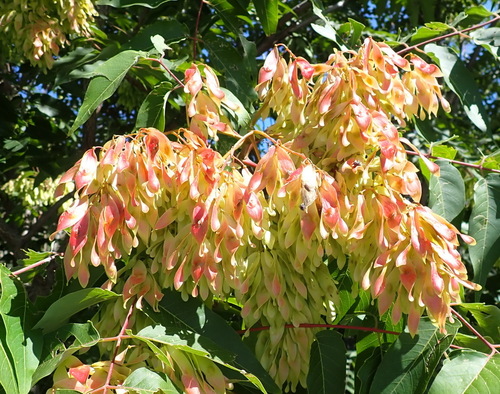
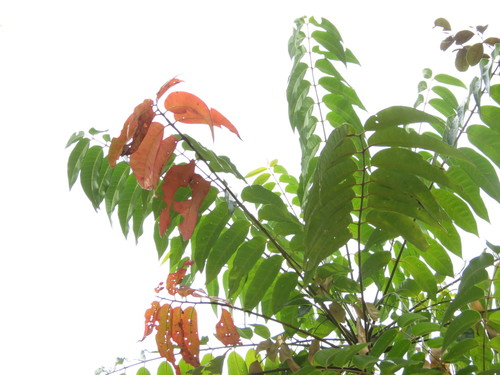
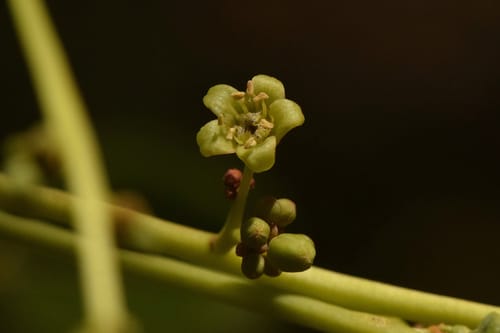
A tree. It grows 5-11 m tall. The crown is round. The trunk is short and 30-60 cm across. The bark is thick and fibrous with cracks along it. The leaves are compound with leaflets along the stalk. The leaves are alternate. There are 5-7 leaflets with the central vein easily visible. The leaves are 8-16 cm long on leaf stalks 4-6 cm long. The leaflets are 3-9 cm long and 2-3 cm wide. The flowers are in a compound group at the ends of the branches. These are 25-35 cm long. The fruit is oval and fleshy. There is one seed.
How to Grow
Plants are grown from seed. Ripe fruit are harvested and put in plastc bags until they soften then the seeds are removed. The fresh seed are planted and germinate in 4-6 weeks Seedlings can be planted in the field after 6-7 months.
Propagation: Seed - best sown as soon as it is ripe. Sow in a sunny position in nursery seedbeds or individual pots, covering the seed with 1cm of compost. Germination rates are usually low, occurring in 4 - 6 weeks. Pot seedlings up when 5 - 6cm tall , they should be ready to plant out about 6 - 7 months later.
Medicinal Uses
The bark is anthelmintic. It is used in the treatment of intestinal worms and also in the treatment of snake bites.
Other Uses
A fibre obtained from the bark is used for making ropes, oakum and paper. An insecticide can be obtained from the bark. The powdered bark can be used. The wood is light, porous, with poor mechanical properties, not durable when exposed to the elements but resistant to the attacks of termites. It is used for internal carpentry, toys, coffins, toothpicks and plywood interiors.
Production
Plants grow at a moderate rate.
Names & Synonyms
Caiceta, Caraiba, Mata-cachorro, Mata-menino, Paparauba, Paraiba, Pau-caixeta, Pau-paraiba, Perdiz, Pe-de-perdiz, Pitombeira-de-marajo, Simaruba-do-brasil
References (2)
- Grandtner, M. M. & Chevrette, J., 2013, Dictionary of Trees, Volume 2: South America: Nomenclature, Taxonomy and Ecology. Academic Press p 605
- Lorenzi, H., 2002, Brazilian Trees. A Guide to the Identification and Cultivation of Brazilian Native Trees. Vol. 02 Nova Odessa, SP, Instituto Plantarum p 340