Laurus azorica
(Seub.) Franco
Canary Island bay tree

(c) Ixitixel, some rights reserved (CC BY-SA)
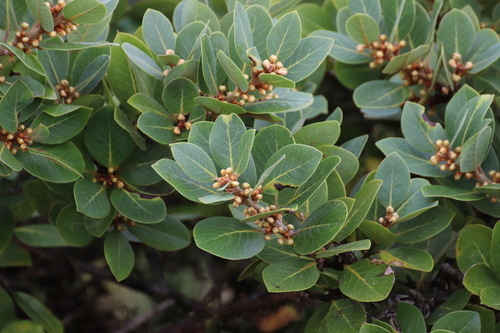
(c) bornfeta, some rights reserved (CC BY-NC)
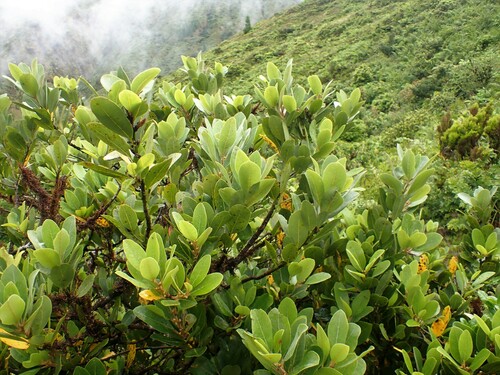
(c) Louis Imbeau, some rights reserved (CC BY), uploaded by Louis Imbeau
What to Eat
Edible parts: Leaves - flavouring, Fruit
The leaves and fruit are used to flavour a range of dishes.
Where to Find It
It is a temperate plant. It grows in forests.
Africa, Asia, Australia, Canary Island*, Europe, Indonesia, Mediterranean, Morocco, North Africa, Portugal, Scandinavia, SE Asia, Spain, USA, Sweden,
How to Identify
A tree. It can grow 10-15 m tall. The leaves are larger than common bay leaves. The shoots are hairy. The leaves are alternate and narrowly oval. They are shiny and dark green. The flowers are creamy white and 1 cm across. They are in pairs beside the leaf. The fruit is a black berry 1-2 cm long.
How to Grow
Plants can be grown from seeds. Trees can be pruned to shape.
Wikipedia
Source ↗Laurus azorica, the Azores laurel or Macaronesian laurel, is a small, evergreen tree in the laurel family (Lauraceae), found only on the Azores island group in the North Atlantic.
Notes
There are 2 Laurus species.
Names & Synonyms
Asa sidna, Moussa, Perdu bei
References (4)
- Nassif, F., & Tanji, A., 2013, Gathered food plants in Morocco: The long forgotten species in Ethnobotanical Research. Life Science Leaflets 3:17-54
- Phillips, R. & Rix, M., 2002, The Botanical Garden Vol. 1. Trees and Shrubs. MacMillan. p 66
- Ryan, S., 2008, Dicksonia. Rare Plants Manual. Hyland House. p 36
- Sukarya, D. G., (Ed.) 2013, 3,500 Plant Species of the Botanic Gardens of Indonesia. LIPI p 658


