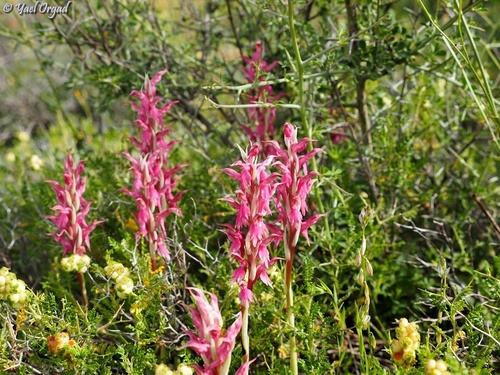
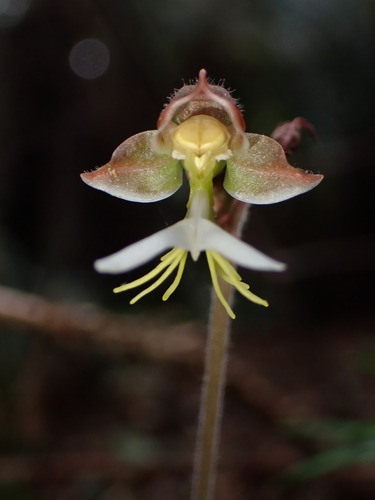
Eulophia graminea
Lindl.

(c) Yanuar Ishaq Dc, some rights reserved (CC BY-NC-SA), uploaded by Yanuar Ishaq Dc
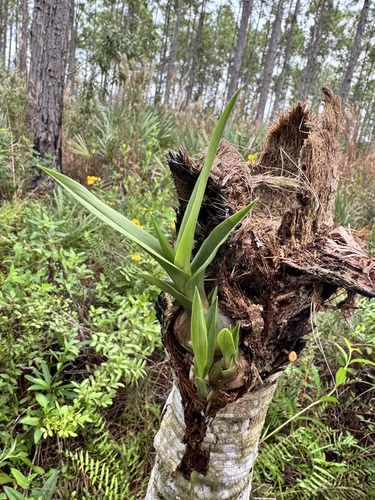
(c) aojoel, some rights reserved (CC BY-NC)
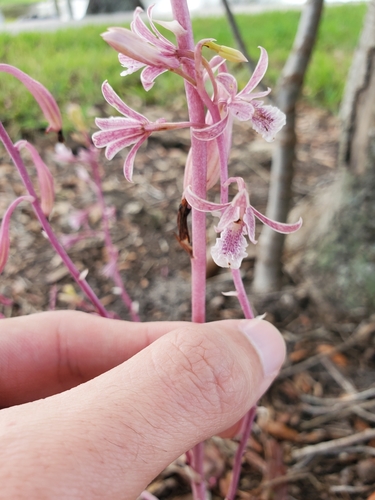
(c) Steven, some rights reserved (CC BY-NC)
What to Eat
Edible parts: Tubers
The tubers are used to make a high-calorie soup-like drink.
Where to Find It
It is a tropical plant. It grows on grassy places in open forests and along sandy beaches between 900-2,100 m above sea level.
Asia, China, Himalayas, India, Indochina, Indonesia, Japan, Laos, Malaysia, Myanmar, Nepal, North America, Pakistan, Philippines, SE Asia*, Singapore, Sri Lanka, Taiwan, Thailand, USA, Vietnam,
How to Identify
An orchid. It grows 40-80 cm tall. The false bulb is above ground. It is 3-7 cm long by 2-4 cm wide. The shoot has many narrow leaves. There are 3-5 leaves. They are 13-35 cm long by 1 cm wide.
Wikipedia
Source ↗Eulophia graminea, the Chinese crown orchid, is a species of orchid native to Asia. It often develops a pseudobulb. It is considered invasive in Florida and spreads with wood chip mulch. Flowers are green and brownish purple.
References (2)
- Flora of Pakistan. www.eFloras.org
- Singapore Botanical Gardens