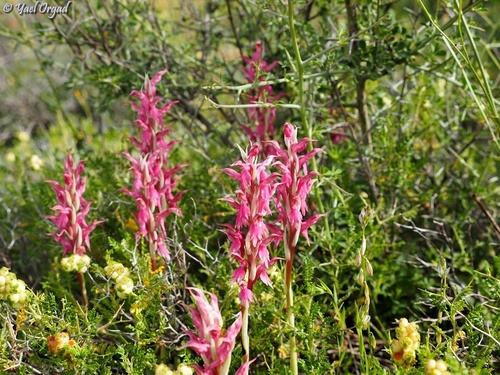
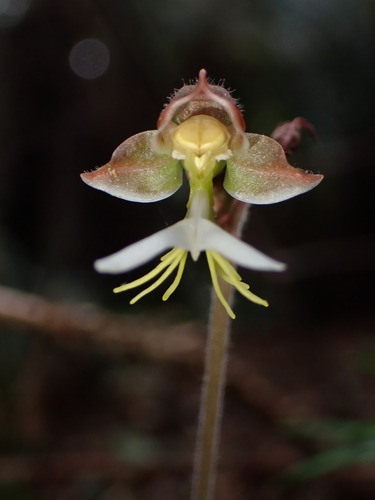
Brachycorythis pubescens
Harv.
OrchidaceaeRoots

iNaturalist · cc-by-nc
(c) Ansell Matcher, some rights reserved (CC BY-NC), uploaded by Ansell Matcher
(c) Ansell Matcher, some rights reserved (CC BY-NC), uploaded by Ansell Matcher
iNaturalist · cc-by-nc
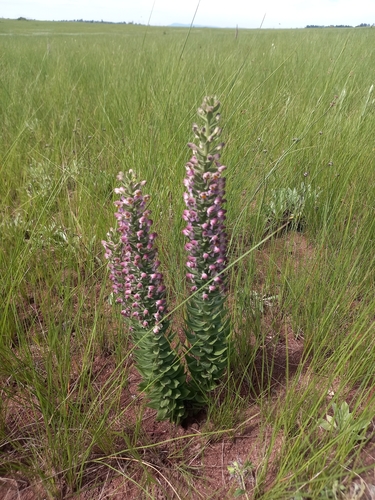
(c) kevinjolliffe, some rights reserved (CC BY-NC), uploaded by kevinjolliffe
(c) kevinjolliffe, some rights reserved (CC BY-NC), uploaded by kevinjolliffe

iNaturalist · cc-by-nc
(c) Ansell Matcher, some rights reserved (CC BY-NC), uploaded by Ansell Matcher
(c) Ansell Matcher, some rights reserved (CC BY-NC), uploaded by Ansell Matcher
What to Eat
Edible parts: Root, Tuber
The roots and tubers are edible.
Where to Find It
It is a tropical plant. It grows in grassland and open woodland. It grows between 500-2,250 m above sea level.
Africa, Central Africa, East Africa, Eswatini, Malawi, Mozambique, South Africa, Southern Africa, Swaziland, Tanzania, Zambia,
Countries: Angola, Burkina Faso, Burundi, Benin, Botswana, Congo (DRC), Central African Republic, Congo (Republic), Cote d'Ivoire, Cameroon, Cape Verde, Djibouti, Algeria, Egypt, Eritrea, Ethiopia, Gabon, Ghana, Gambia, Guinea, Equatorial Guinea, Guinea-Bissau, Kenya, Comoros, Liberia, Lesotho, Libya, Morocco, Madagascar, Mali, Mauritania, Mauritius, Malawi, Mozambique, Namibia, Niger, Nigeria, Rwanda, Seychelles, Sudan, Sierra Leone, Senegal, Somalia, South Sudan, Sao Tome & Principe, Eswatini, Chad, Togo, Tunisia, Tanzania, Uganda, South Africa, Zambia, Zimbabwe
How to Identify
A ground orchid. It is a herb. It grows 15-75 cm tall. The roots are fleshy, woolly and tuber like. It has short downy hairs. There are many overlapping leaves. The leaves are 5 cm long by 1 cm wide. The flowering stalks are 4-35 cm long by 2-4 cm wide. There are many flowers densely arranged. The flowers are pink, mauve or purple.
Names & Synonyms
Kikanda
Brachycorythis goetzeana Kraenzl.Brachycorythis hispidula (Rendle) Schltr.Brachycorythis kassneriana Kraenzl.Brachycorythis stolzii Schltr.Peristylus hispidulus Rendle
References (5)
- Herb., 1981,
- Malaisse, F., 1997, Se nourrir en floret claire africaine. Approche ecologique et nutritionnelle. CTA., p 59 (Brachycorythis spp.)
- Malaisse, F., 2010, How to live and survive in Zambezian open forest (Miombo Ecoregion). Les Presses Agronomiques de Gembloux.
- Peters, C. R., O'Brien, E. M., and Drummond, R.B., 1992, Edible Wild plants of Sub-saharan Africa. Kew. p 36
- Swaziland's Flora Database http://www.sntc.org.sz/flora