Rourea orientalis
Baill.
Short-pod
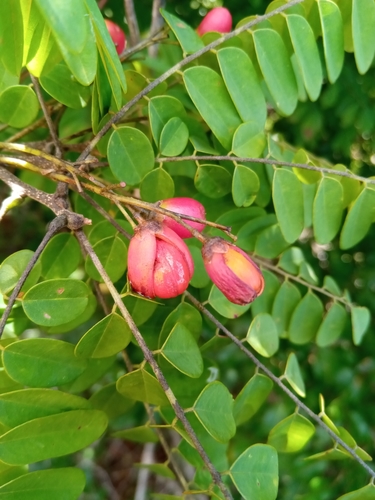
(c) David Rabehevitra, some rights reserved (CC BY-NC), uploaded by David Rabehevitra
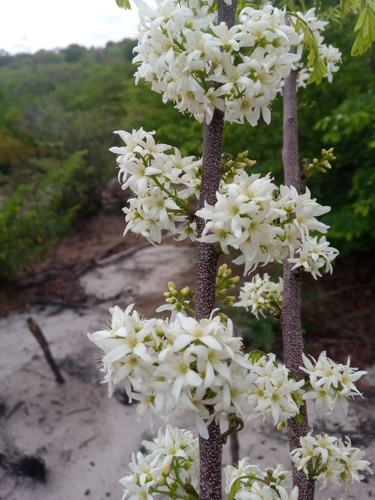
(c) merveille, some rights reserved (CC BY-NC), uploaded by merveille
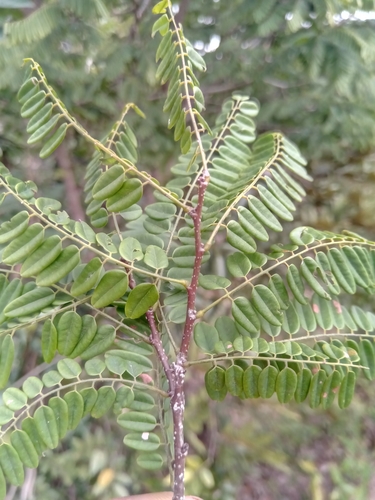
(c) Solofo Eric Rakotoarisoa, some rights reserved (CC BY-NC), uploaded by Solofo Eric Rakotoarisoa
What to Eat
Edible parts: Leaves, Roots, Tubers, Vegetable
The dried leaves are prepared by sun-drying, pounding, and sieving into a powder, which is then stirred into hot water and boiled to make a thick vegetable paste eaten with other foods. Roots and tubers are also edible. The plant is a popular vegetable in some regions.
Known Hazards
Where to Find It
It is a tropical plant. It grows in dry thickets and forests. It grows between 200-1,600 m altitude. It grows on termite mounds.
Africa, Angola, Botswana, Central Africa, Congo, East Africa, Kenya, Madagascar, Malawi, Mozambique, Namibia, Southern Africa, Tanzania, Zambia, Zimbabwe,
How to Identify
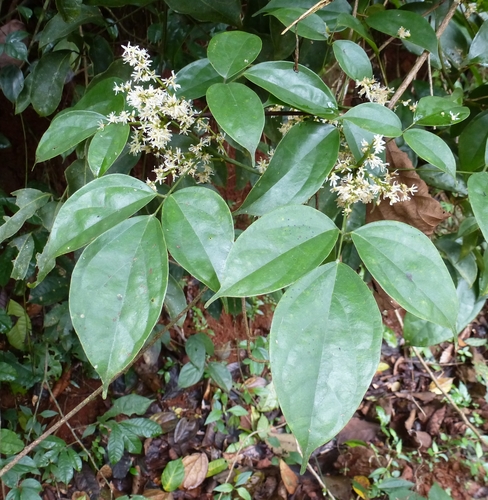
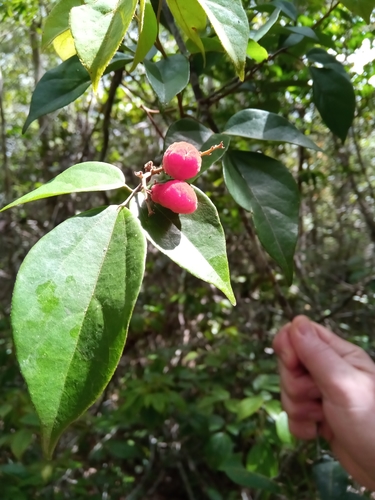
A climbing shrub. It loses its leaves during the year. It grows 6 m high or higher. It can lie along the ground. There are 8-16 pairs of leaflets. They are 2-4 cm long by 1-2 cm wide. The flowering stalk is 6 cm long. The flowers have a sweet lemon scent. The petals are white to yellow. The fruit is a follicle. It is reddish-brown. It is 2 cm long by 1 cm wide. The seed is 1.6 cm long by 0.8 cm wide. It has a bright red layer around it.
How to Grow
Plants can be grown by seeds or cuttings.
Propagation: Seed - Cuttings.
Medicinal Uses
A decoction of the roots is used as a remedy for diarrhoea, STDs and blockage of the urethra. It is also used as a prophylactic against tick fever and for treating headaches.
Other Uses
The wood is used for fuel.
Production
In Tanzania the leaves are collected from November to June. The powdered form can be stored for several months.
Other Information
It is a popular vegetable in some places.
Names & Synonyms
Hombo kisogo, Kamenambuzi, Kapakati, Kisogo, Liyenzi, Marumoro, Mhombo, Msalanjazi, Mudzumamuriro, Musunzi, Ntandanyerere, Sonange
References (20)
- Flora Zambesiaca. http://apps.kew.org/efloras
- Fowler, D. G., 2007, Zambian Plants: Their Vernacular Names and Uses. Kew. p 21
- Grubben, G. J. H. and Denton, O. A. (eds), 2004, Plant Resources of Tropical Africa 2. Vegetables. PROTA, Wageningen, Netherlands. p 564
- Harkonen, M. & Vainio-Mattila, K., 1998, Some examples of Natural Products in the Eastern Arc Mountains. Journal of East African Natural History 87:265-278
- http://www.fao.org/forestry/25323-096344a3de335832e8f363c3ac5184a66.pdf (As Byrsocarpus orientalis)
- Malaisse, F., 1997, Se nourrir en floret claire africaine. Approche ecologique et nutritionnelle. CTA., p 91.
- Mannheimer, C. A. & Curtis. B.A. (eds), 2009, Le Roux and Muller's Field Guide to the Trees and Shrubs of Namibia. Windhoek: Macmillan Education Namibia. p 76
- Msuya, T. S., et al, 2010, Availability, Preference and Consumption of Indigenous Foods in the Eastern Arc Mountains, Tanzania, Ecology of Food and Nutrition, 49:3, 208-227
- Norton, et al, 1987,
- Peters, C. R., O'Brien, E. M., and Drummond, R.B., 1992, Edible Wild plants of Sub-saharan Africa. Kew. p 94
- Pickering, H., & Roe, E., 2009, Wild Flowers of the Victoria Falls Area. Helen Pickering, London. p 52
- Reis, S. V. and Lipp, F. L., 1982, New Plant Sources for Drugs and Foods from the New York Botanical Garden herbarium. Harvard. p 110 (As Byrsocarpus orientalis)
- Ruffo, C. K., Birnie, A. & Tengnas, B., 2002, Edible Wild Plants of Tanzania. RELMA p 572
- Ruiters-Welcome, A. K., 2019, Food plants of southern Africa. Ph.D. thesis. Univ. of Johannesburg p 45
- Vainio-Mattila, K., 2000, Wild vegetables used by the Sambaa in the Usumbara Mountains, NE Tanzania. Ann. Bot. Fennici 37:57-67
- Welcome, A. K. & Van Wyk, B.-E., 2019, An inventory and analysis of the food plants of southern Africa. South African Journal of Botany 122 (2019) 136–179
- White, F., Dowsett-Lemaire, F. and Chapman, J. D., 2001, Evergreen Forest Flora of Malawi. Kew. p 210
- Williamson, J., 2005, Useful Plants of Malawi. 3rd. Edition. Mdadzi Book Trust. p 48 (As Byrsocarpus orientalis)
- World Checklist of Useful Plant Species 2020. Royal Botanic Gardens, Kew
- www.zimbabweflora.co.zw 2011