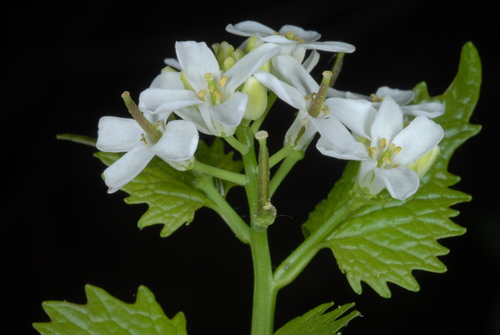
Rorippa nudiuscula
Thell.
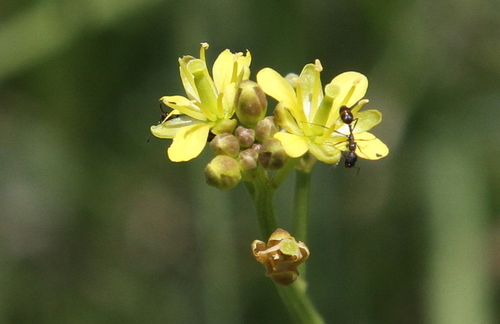
iNaturalist · cc-by-nc
(c) fayne, some rights reserved (CC BY-NC), uploaded by fayne
(c) fayne, some rights reserved (CC BY-NC), uploaded by fayne
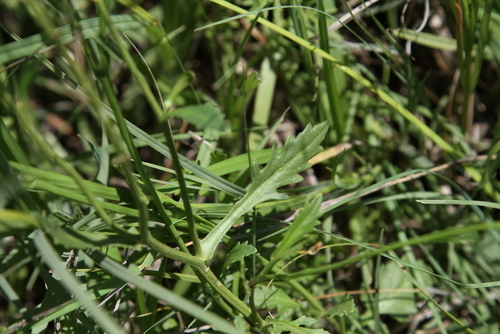
iNaturalist · cc-by-nc
(c) fayne, some rights reserved (CC BY-NC), uploaded by fayne
(c) fayne, some rights reserved (CC BY-NC), uploaded by fayne

iNaturalist · cc-by-nc
(c) marikav, some rights reserved (CC BY-NC)
(c) marikav, some rights reserved (CC BY-NC)
What to Eat
Edible parts: Leaves
Young plants are eaten as a potherb.
Where to Find It
It is a subtropical plant.
Africa, East Africa, Lesotho, South Africa, Southern Africa, Zimbabwe,
Countries: Angola, Burkina Faso, Burundi, Benin, Botswana, Congo (DRC), Central African Republic, Congo (Republic), Cote d'Ivoire, Cameroon, Cape Verde, Djibouti, Algeria, Egypt, Eritrea, Ethiopia, Gabon, Ghana, Gambia, Guinea, Equatorial Guinea, Guinea-Bissau, Kenya, Comoros, Liberia, Lesotho, Libya, Morocco, Madagascar, Mali, Mauritania, Mauritius, Malawi, Mozambique, Namibia, Niger, Nigeria, Rwanda, Seychelles, Sudan, Sierra Leone, Senegal, Somalia, South Sudan, Sao Tome & Principe, Eswatini, Chad, Togo, Tunisia, Tanzania, Uganda, South Africa, Zambia, Zimbabwe
How to Identify
A herb. It keeps growing from year to year. The stems are 50 cm long. The leaves at the base are in a ring. The blades are 7 cm long by 2.5 cm wide. There are irregular teeth around the edge. The flowers are in groups at the ends of stems. They are yellow. The fruit are long and thin like a pod and 3.8 cm long. The seeds are in 2 rows
Nutrition Score: 39/100
| Part | Moisture | kJ | kcal | Protein | Vit A | Vit C | Iron | Zinc |
|---|---|---|---|---|---|---|---|---|
| Leaves | 82.4 | 197 | 47 | 3.2 | — | — | 12.5 | 1 |
Other Information
It is a reasonably commonly used food plant.
Names & Synonyms
Papasane
Nasturtium elongatum E. Mey. ex Burtt DavyNasturtium fluviatile var. brevistylum Sond.Nasturtium integrifolium Szyszyl.Nasturtium nudiusculum (E. Mey. ex Sond.) O. E. Schulz
References (7)
- Fox, F. W. & Young, M. E. N., 1982, Food from the Veld. Delta Books. p 139
- Marker & Sheape,
- Letsela, T., et al, 2003, Plant Resources Used for Subsistence in Tsehlanyane and Boking in Lesotho. Economic Botany 57(4): 619-639
- Peters, C. R., O'Brien, E. M., and Drummond, R.B., 1992, Edible Wild plants of Sub-saharan Africa. Kew. p 98
- Ruiters-Welcome, A. K., 2019, Food plants of southern Africa. Ph.D. thesis. Univ. of Johannesburg p 40
- Wehmeyer, A. S, 1986, Edible Wild Plants of Southern Africa. Data on the Nutrient Contents of over 300 species
- Welcome, A. K. & Van Wyk, B.-E., 2019, An inventory and analysis of the food plants of southern Africa. South African Journal of Botany 122 (2019) 136–179