Brassica juncea
(L.) Czerniak & Cass
Indian mustard, Leaf mustard, Chinese mustard

Walther Otto Müller (via Wikimedia Commons)

Dalgial (via Wikimedia Commons)

Anna Frodesiak (via Wikimedia Commons)

(c) Dinesh Valke, some rights reserved (CC BY-NC-SA)

(c) Trevor Crosby, some rights reserved (CC BY-NC), uploaded by Trevor Crosby

(c) Biopix, some rights reserved (CC BY-NC)
What to Eat
Edible parts: Leaves, Seeds - oil, Spice, Vegetable, Flowers
Edible Parts: Flowers Leaves Oil Root Seed Edible Uses: Condiment Oil Leaves - raw or cooked. A peppery flavour that can range from mild to hot, this is one of the most highly prized cooked vegetables in the Orient. The leaves can also be eaten raw, when finely shredded they make a very acceptable addition to mixed salads. The protein extracted from the leaves mixes well with banana pulp and is well adapted as a pie filling. Flowers and young flowering stems - raw or cooked. Sweet and succulent. An edible semi-drying oil is obtained from the seed. The seed contains 25 - 30% oil. The seed is used as a mustard flavouring. It is the source of 'brown mustard', a prepared mustard that is milder than that produced from other species. Pungency of mustard develops when cold water is added to the ground-up seed - an enzyme (myrosin) acts on a glycoside (sinigrin) to produce a sulphur compound. The reaction takes 10 - 15 minutes. Mixing with hot water or vinegar, or adding salt, inhibits the enzyme and produces a mild bitter mustard. Black mustard comes from B. nigra and white mustard from Sinapis alba. The seed is also used whole in curries and pickles. They are often heated in oil to destroy their pungency and give them a nutty flavour. The root of some forms of this species is edible. Sprouted seeds can be added to salads.
Known Hazards
Where to Find It
A warm temperate plant. It is grown in some highland areas in the tropics. It is often grown as a cool season crop. Most varieties are not frost tolerant. It needs a fertile, well drained soil. A pH of 5.5-6.8 is suitable. It can tolerate poor soils. In the Himalayas in summer it grows to 3,600 m altitude. It can grow in arid places. It suits hardiness zones 9-11. Tasmania Herbarium. In Yunnan.
Afghanistan, Africa, Argentina, Asia, Australia, Austria, Balkans, Bangladesh, Bhutan, Botswana, Brazil, Britain, Bulgaria, Cambodia, Cameroon, Canada, Cape Verde, Caucasus, Central Africa, Central America, Central Asia, China, Congo DR, Costa Rica, Côte d'Ivoire, Cuba, Denmark, East Africa, East Timor, Egypt, Ethiopia, Europe, Fiji, Finland, Georgia, Germany, Guiana, Guinea, Guinée, Guinea-Bissau, Guyana, Haiti, Hawaii, Himalayas, Hungary, India, Indochina, Indonesia, Iran, Iraq, Ireland, Ivory Coast, Japan, Kenya, Kiribati, Korea, Kuwait, Madagascar, Malawi, Malaysia, Marquesas, Middle East, Mongolia, Mozambique, Myanmar, Namibia, Nauru, Nepal, New Caledonia, New Zealand, Nigeria, Niue, Norfolk Island, North Africa, North America, Northeastern India, Oman, Pacific, Pakistan, Papua New Guinea, PNG, Paraguay, Philippines, Puerto Rico, Reunion, Romania, Russia, Sao Tome and Principe, Scandinavia, SE Asia, Siberia, Sierra Leone, Sikkim, South Africa, Southern Africa, South America, Spain, Sri Lanka, Sweden, Taiwan, Tajikistan, Tanzania, Tasmania, Thailand, Timor-Leste, Trinidad-Tobago, Turkey, Türkiye, Tuvalu, USA, Vanuatu, Vietnam, West Africa, West Indies, Yemen, Zambia, Zimbabwe,
How to Identify
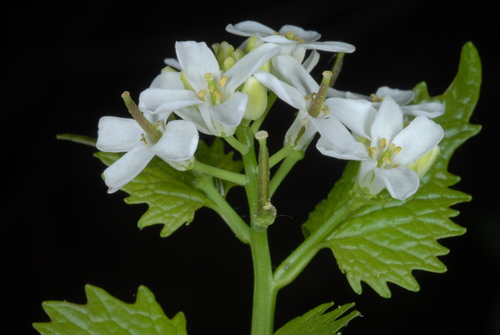
It is an erect leafy annual cabbage plant. It grows to about 1 m high. The plant can vary a lot. The leaves are elliptical and deeply divided. They are dark green. The end segment of the leaves is oval. The leaves taper towards the stem and have a strong mustard flavour. The flowers are pale yellow. They have 4 petals. It produces a flower and seed pods at the top. The seed pod is long and narrow. It is 3-5 cm long. The seeds are reddish-brown.
Nutrition Score: 73/100
| Part | Moisture | kJ | kcal | Protein | Vit A | Vit C | Iron | Zinc |
|---|---|---|---|---|---|---|---|---|
| Seeds | 6.9 | 1964 | 469 | 24.9 | — | 3 | 10 | — |
| Leaves | 92 | 108 | 26 | 2.4 | 31 | 73 | 2.7 | — |
| Sprouts | — | — | — | — | — | — | — | — |
How to Grow
The seed is broadcast. They can be put in a nursery and transplanted. A spacing of 25 cm x 25 cm is suitable. Seed germinate in 5 days at 20-25°C.
Propagation: Seed - sow in situ from early spring to early autumn in order to obtain a succession of edible leaves. Most varieties of Oriental vegetables belonging to this species are best sown from late June to early September otherwise they may bolt. There are about 5,660 - 6,000 per 0.01 kg (1/3 oz).
Medicinal Uses
Anodyne Antibiotic Aperient Diuretic Emetic Galactogogue Rubefacient Stimulant Although not usually used medicinally, the seed is a warming stimulant herb with antibiotic effects. Reported to be anodyne, aperitif, diuretic, emetic, rubefacient, and stimulant, Brown Mustard is a folk remedy for arthritis, foot ache, lumbago, and rheumatism. The seed is used in the treatment of tumours in China. In Korea, the seeds are used in the treatment of abscesses, colds, lumbago, rheumatism, and stomach disorders. The root is used as a galactagogue in Africa. Ingestion may impart a body odour repellent to mosquitoes. Mustard oil is used in the treatment of skin eruptions and ulcers. Believed to be aperient and tonic, the volatile oil is used as a counterirritant and stimulant. In Java the plant is used as an antisyphilitic emmenagogue. Leaves applied to the forehead are said to relieve headache. The Chinese eat the leaves in soups for bladder, inflammation or haemorrhage.
Other Uses
Green manure Oil Repellent There is some evidence that if this plant is grown as a green manure it is effective in reducing soil-borne root rots in pea crops. This is attributed to chemicals that are given off as the plants decay. Brassica juncea is used in phytoremediation to remove heavy metals, such as lead, from the soil in hazardous waste sites because it has a higher tolerance for these substances and stores the heavy metals in its cells. In particular, Schneider et al. found that Brassica juncea was particularly effective at removing cadmium from soil. Special Uses
Wikipedia
Source ↗Brassica juncea, commonly mustard greens, brown mustard, Chinese mustard, Indian mustard, Japanese mustard, Korean green mustard, leaf mustard, Oriental mustard and vegetable mustard, is a species of mustard plant.
Production
Plants grow rapidly. Leaves can be harvested one month after planting. Leaves can be harvested several times. Whole plants can be harvested in about 45 days from transplanting.
Other Information
Only grown occasionally in Papua New Guinea. It is a cultivated plant.
Notes
There are about 30 Brassica species and many cultivated varieties.
Names & Synonyms
Acelga china, A-mothsora, Ananatsongo, Antam, Brown mustard, Cai be-xanh, Cai canh, Dijon mustard, Dongi, Figiri, Gai choi, Jie cai, Kaad khiew, Kaai ts'oi, Kabej-plasas, Kadugu, Kai choy, Karamkala, Kanganje, Karashi-na, Khat naa, Mbumbi, Modo metan, Monnyin-no, Mosita, Mostaza china, Mpatu, Mpiru, Mustasa, Nkofi, Phakkat-khieo, Phakkat-khieopli, Rai, Rai sorisha, Samon-ni, Sarepta mustard, Sawi, Sawi pahit, Se-sawi
References (101)
- Anderson, E. F., 1993, Plants and people of the Golden Triangle. Dioscorides Press. p 204
- Ara, R. I. T., 2015, Leafy Vegetables in Bangladesh. Photon eBooks. p 89
- Arinathan, V., et al, 2007, Wild edibles used by Palliyars of the western Ghats, Tamil Nadu. Indian Journal of Traditional Knowledge. 6(1) pp 163-168
- Bandyopadhyay, S. et al, 2009, Wild edible plants of Koch Bihar district, West Bengal. Natural Products Radiance 8(1) 64-72
- Bircher, A. G. & Bircher, W. H., 2000, Encyclopedia of Fruit Trees and Edible Flowering Plants in Egypt and the Subtropics. AUC Press. p 64 (As Brassica besseriana)
- Bodkin, F., 1991, Encyclopedia Botanica. Cornstalk publishing, p 168
- Bremness, L., 1994, Herbs. Collins Eyewitness Handbooks. Harper Collins. p 234
- Brouk, B., 1975, Plants Consumed by Man. Academic Press, London. p 240
- Brown, D., 2002, The Royal Horticultural Society encyclopedia of Herbs and their uses. DK Books. p 146
- Bull. Soc. Imp. Naturalistes Moscou 33:134. 1860
- Burkill, I.H., 1966, A Dictionary of the Economic Products of the Malay Peninsula. Ministry of Agriculture and Cooperatives, Kuala Lumpur, Malaysia. Vol 1 (A-H) p 365
- Chin, H. F., 1999, Malaysian Vegetables in Colour. Tropical Press. p 18
- Consp. pl. charc. 8. 1859 Mar (E. Cosson, Bull. Soc. Bot. France 6(8):609. 1860 Jan)
- Creasy, R., 2000, The Edible Asian Garden. Periplus p 47
- Cundall, P., (ed.), 2004, Gardening Australia: flora: the gardener's bible. ABC Books. p 255
- Dhyani, S.K., & Sharma, R.V., 1987, Exploration of Socio-economic plant resources of Vyasi Valley in Tehri Garwhal. J. Econ. Tax. Bot. Vol. 9 No. 2 pp 299-310
- Duarte, M. C., et al, 2022, Diversity of Useful Plants in Cabo Verde Islands: A Biogeographic and Conservation Perspective. Plants 2022, 11, 1313 p 10
- Duke, J.A., 1992, Handbook of Edible Weeds. CRC Press. p 50
- Epenhuijsen C.W. van., 1974, Growing Native vegetables in Nigeria. FAO Rome, p 42
- Facciola, S., 1998, Cornucopia 2: a Source Book of Edible Plants. Kampong Publications, p 53
- Flora of Australia, Volume 8, Lecythidales to Batales, Australian Government Publishing Service, Canberra (1982) p 238
- Flora of Australia Volume 49, Oceanic Islands 1, Australian Government Publishing Service, Canberra. (1994) p 135
- Flora of China. www.eFloras.org Volume 8
- French, B.R., 1986, Food Plants of Papua New Guinea, A Compendium. Asia Pacific Science Foundation p 114
- Grubben, G. J. H. and Denton, O. A. (eds), 2004, Plant Resources of Tropical Africa 2. Vegetables. PROTA, Wageningen, Netherlands. p 123
- Guite, C., 2016, A study of wild edible plants associated with the Paite tribe of Manipur, India, International Journal of Current Research. Vol. 8, Issue, 11, pp. 40927-40932
- Harkonen, M. & Vainio-Mattila, K., 1998, Some examples of Natural Products in the Eastern Arc Mountains. Journal of East African Natural History 87:265-278
- Hedrick, U.P., 1919, (Ed.), Sturtevant's edible plants of the world. p 121
- Hemingway, J.S., 1979, Mustards, in Simmonds N.W.,(ed), Crop Plant Evolution. Longmans. London. p 56
- Hemphill, I, 2002, Spice Notes. Macmillan. p 249
- Hussey, B.M.J., Keighery, G.J., Cousens, R.D., Dodd, J., Lloyd, S.G., 1997, Western Weeds. A guide to the weeds of Western Australia. Plant Protection Society of Western Australia. p 113
- Hutton, W., 1997, Tropical Herbs and Spices of Indonesia. Periplus. p 42
- Hu, Shiu-ying, 2005, Food Plants of China. The Chinese University Press. p 407
- Hwang, H., et al, 2013, A Study on the Flora of 15 Islands in the Western Sea of Jeollanamdo Province, Korea. Journal of Asia-Pacific Biodiversity Vol. 6, No. 2 281-310
- Jardin, C., 1970, List of Foods Used In Africa, FAO Nutrition Information Document Series No 2.p 60
- Jha, P. K., et al, 1996, Plant genetic resources of Nepal: A guide for plant breeders of agricultural, horticultural and forestry crops. Euphytica 87:189-210
- Kapelle, M., et al, 2000, Useful plants within a Campesino Community in a Costa Rican Montane Cloud Forest. Mountain Research and Development, 20(2): 162-171.
- Khodram,S. D., et al, 2019, Local knowledge of edible flowers used in Mizoram. Indian Journal of Traditional Knowledge Vol 18(40 pp 715-723
- Kiple, K.F. & Ornelas, K.C., (eds), 2000, The Cambridge World History of Food. CUP p 1819, 1820
- Kumar, S. A., Manus, D. & Mallika, M., 2018, Impact of non-timber forest products on Forest and in Livelihood Economy of the People of Adjoining Areas of Jalpaiguri Forest Division, West Bengal, India. Int. J. of Life Sciences, 2018; 6 (2):365-385
- Kuo, W. H. J., (Ed.) Taiwan's Ethnobotanical Database (1900-2000), http://tk.agron.ntu.edu.tw/ethnobot/DB1.htm
- Larkcom, J., 1991, Oriental Vegetables, John Murray, London, p 39
- Latham, P., 2004, Useful Plants of Bas-Congo province. Latham & DFID p 55
- Latham, P. & Mbuta, A. K., 2014, Useful Plants of Bas-Congo Province, Democratic Republic of Congo. Volume 1. Salvation Army. p 83
- Lazarides, M. & Hince, B., 1993, Handbook of Economic Plants of Australia, CSIRO. p 37
- Liu, Yi-tao, & Long, Chun-Lin, 2002, Studies on Edible Flowers Consumed by Ethnic Groups in Yunnan. Acta Botanica Yunnanica. 24(1):41-56
- Low, T., 1991, Wild Herbs of Australia and New Zealand. Angus & Robertson. p 51 (Drawing)
- Low, T., 1992, Bush Tucker. Australia’s Wild Food Harvest. Angus & Robertson. p
- Malaisse, F., 1997, Se nourrir en floret claire africaine. Approche ecologique et nutritionnelle. CTA., p 59
- Malaisse, F., 2010, How to live and survive in Zambezian open forest (Miombo Ecoregion). Les Presses Agronomiques de Gembloux.
- Malezas Comestibles del Cono Sur, INTA, 2009, Buernos Aires
- Martin, F.W. & Ruberte, R.M., 1979, Edible Leaves of the Tropics. Antillian College Press, Mayaguez, Puerto Rico. p 110, 188, p 187 (As Brassica rugosa)
- Miguel, E., et al, 1989, A checklist of the cultivated plants of Cuba. Kulturpflanze 37. 1989, 211-357
- Mutie, F. M., et al, 2023, Important Medicinal and Food Taxa (Orders and Families) in Kenya, Based on Three Quantitative Approaches. Plants 2023, 12, 1145
- Ochse, J.J. et al, 1931, Vegetables of the Dutch East Indies. Asher reprint. p 163
- Paczkowska, G. & Chapman, A.R., 2000, The Western Australian Flora. A Descriptive Catalogue. Western Australian Herbarium. p 185
- Peduruhewa, P. S., et al, 2021, Potential of Underutilized Wild Edible Plants as the Food for the Future – A Review. Journal of Food Security, Vol. 9, No. 4, 136-147
- Polunin, O., & Stainton, A., 2006, Flowers of the Himalaya, Oxford India Paperbacks. p 43
- PROSEA handbook Volume 13 Spices. p 274
- Mulherin, J., 1994, Spices and natural flavourings. Tiger Books, London. p 62
- Omawale, 1973, Guyana's edible plants. Guyana University, Georgetown p 97
- Oomen, H.A.P.C., & Grubben, G.J.H., 1978, Tropical Leaf Vegetables in Human Nutrition, Communication 69, Department of Agricultural research, RTI Amsterdam, p 36, 66, 89
- Pham-Hoang Ho, 1999, An Illustrated Flora of Vietnam. Nha Xuat Ban Tre. p 603
- Phon, P., 2000, Plants used in Cambodia. © Pauline Dy Phon, Phnom Penh, Cambodia. p 101
- Plants for a Future database, The Field, Penpol, Lostwithiel, Cornwall, PL22 0NG, UK. http://www.scs.leeds.ac.uk/pfaf/
- Plants of Haiti Smithsonian Institute http://botany.si.edu
- Purseglove, J.W., 1968, Tropical Crops Dicotyledons, Longmans. p 91
- Ramachandran,V. S., & Udhayavani, C., 2013, Knowledge and uses of wild edible plants by Paniyas and Kurumbas of Western Nilgiris, Tamil Nadu. Indian Journal of Natural Products and Resources. 4(4) December 2013, pp 412-418
- Rasingam, L., 2012, Ethnobotanical studies on the wild edible plants of Irula tribes of Pillur Valley, Coimbatore district, Tamil Nadu, India. Asian Pacific Journal of Tropical Biomedicine. (2012) S1493-S1497
- Royal Botanic Gardens, Kew (1999). Survey of Economic Plants for Arid and Semi-Arid Lands (SEPASAL) database. Published on the Internet; http://www.rbgkew.org.uk/ceb/sepasal/internet [Accessed 15th April 2011]
- Sarvalingam, A., et al, 2014, Wild edible plant resources used by the Irulas of the Maruthamalai Hills, Southern Western Ghats, Coimbatore, Tamil Nadu. Indian Journal of Natural Products and Resources 5(2):198-201
- Schippers, R.R. & Mnzava, N.A., 2007. Brassica juncea (L.) Czern. [Internet] Record from Protabase. van der Vossen, H.A.M. & Mkamilo, G.S. (Editors). PROTA (Plant Resources of Tropical Africa), Wageningen, Netherlands. < http://database.prota.org/search.htm>. Accessed 14 October 2009.
- Schneider, E., 2001, Vegetables from Amaranth to Zucchini: The essential reference. HarperCollins. p 396
- Seidemann J., 2005, World Spice Plants. Economic Usage, Botany, Taxonomy. Springer. p 69
- Shava, S., et al, 2009, Traditional food crops as a source of community resilience in Zimbabwe. International Journal of the African Renaissance 4(1)
- Siemonsma, J. S. and Piluek, K. (Eds), 1994, Plant Resources of South-East Asia No. 8 Vegetables. Prosea Foundation, Bogor, Indonesia, p 104
- Small, E., 2009, Top 100 Food Plants. The world's most important culinary crops. NRC Research Press. p 362
- Smith, K., 1998. Growing Uncommon Fruits and Vegetables. New Holland. p 57
- Solomon, C., 2001, Encyclopedia of Asian Food. New Holland. p 59, p 241
- Tasmanian Herbarium Vascular Plants list p 16
- Terra, G.J.A., 1973, Tropical Vegetables. Communication 54e Royal Tropical Institute, Amsterdam, p 31 (Also as Brassica rugosa)
- Thaman, R. R., 1987, Plants of Kiribati: A listing and analysis of vernacular names. Atoll Research Bulletin No. 296
- Thaman, R. R, 2016, The flora of Tuvalu. Atoll Research Bulletin No. 611. Smithsonian Institute p 73
- Thokchom, R., et al, 2016, Documentation and assessment of wild medicinal and edible flowers of valley districts of Manipur. International Journal of Research in Applied, Natural and Social Sciences. 4(11):13-20
- Thomson, G. & Morgan, W., (Ed.) 2002, Access to Asian Foods Newsletter, Vic Govt., Australia Issue 53
- Tindall, H.D., 1983, Vegetables in the tropics. Macmillan p. 113
- Tredgold, M.H., 1986, Food Plants of Zimbabwe. Mambo Press. p 38
- Tronickova, E. & Krejcova, Z., 1987, Ortaggi, Instituto Geografico de Agostini, Cecoslovacchia. p 86 (As Sinapis chinensis)
- Tyagi, R. K., et al, 2004, Conservation of Spices Germplasm in India. Indian J. Plant Genet. Resour. 17(3): 163-174
- Urgamal, M., Oyuntsetseg, B., Nyambayar, D. & Dulamsuren, Ch. 2014. Conspectus of the vascular plants of Mongolia. (Editors: Sanchir, Ch. & Jamsran, Ts.). Ulaanbaatar, Mongolia. “Admon“ Press. 334pp. (p. 79-90).
- Van Sam, H. et al, 2008, Uses and Conservation of Plant Species in a National Park. A case study of Ben En, Vietnam. Economic Botany 62:574-593
- van Wyk, B., 2005, Food Plants of the World. An illustrated guide. Timber press. p 95
- Walter, A. & Lebot, V., 2007, Gardens of Oceania. ACIAR Monograph No. 122. p 235
- Wiersema, J. H. & Leon, B., 2013, World Economic Plants. A Standard Reference CRC Press. 2nd Ed. p 112
- Williamson, J., 2005, Useful Plants of Malawi. 3rd. Edition. Mdadzi Book Trust. p 43
- Woodward, P., 2000, Asian Herbs and Vegetables. Hyland House. p 35
- World Checklist of Useful Plant Species 2020. Royal Botanic Gardens, Kew
- Yeshi, K. et al, 2017, Taxonomical Identification of Himalayan Edible Medicinal Plants in Bhutan and the Phenolic Contents and Antioxidant Activity of Selected Plants. TBAP 7 (2) 2017 pp 89 - 106
- Zeven, A. C. & de West, J. M. J., 1982, Dictionary of cultivated plants and their regions of diversity. Wageningen. p 124
- Zhang, L., et al, 2016, Ethnobotanical study of traditional edible plants used by the Naxi people during droughts. Journal of Ethnobiology and Ethnomedicine. 12:39
- Zhou Taiyan, Lu Lianli, Yang Guang, Ihsan A. Al-Shehbaz, BRASSICACEAE (CRUCIFERAE), Flora of China.