Canthium ciliatum
(D. Dietr.) Kuntze
Fringed turkey berry, Dwarf turkey-berry

iNaturalist · cc-by
(c) Alan Manson, some rights reserved (CC BY), uploaded by Alan Manson
(c) Alan Manson, some rights reserved (CC BY), uploaded by Alan Manson

iNaturalist · cc-by-nc
(c) graham_g, some rights reserved (CC BY-NC)
(c) graham_g, some rights reserved (CC BY-NC)
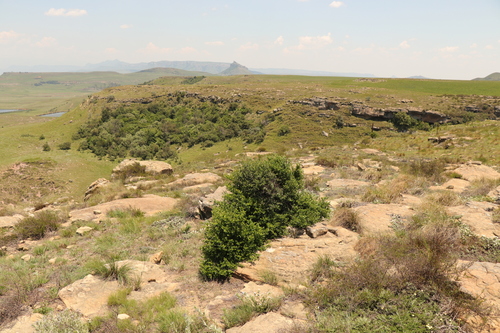
iNaturalist · cc-by-nc
(c) Sandra Falanga, some rights reserved (CC BY-NC), uploaded by Sandra Falanga
(c) Sandra Falanga, some rights reserved (CC BY-NC), uploaded by Sandra Falanga
What to Eat
Edible parts: Fruit, Seed
The fruit and seeds are eaten as a snack.
Where to Find It
It is a subtropical plant.
Africa, Eswatini, South Africa, Southern Africa, Swaziland,
Countries: Angola, Burkina Faso, Burundi, Benin, Botswana, Congo (DRC), Central African Republic, Congo (Republic), Cote d'Ivoire, Cameroon, Cape Verde, Djibouti, Algeria, Egypt, Eritrea, Ethiopia, Gabon, Ghana, Gambia, Guinea, Equatorial Guinea, Guinea-Bissau, Kenya, Comoros, Liberia, Lesotho, Libya, Morocco, Madagascar, Mali, Mauritania, Mauritius, Malawi, Mozambique, Namibia, Niger, Nigeria, Rwanda, Seychelles, Sudan, Sierra Leone, Senegal, Somalia, South Sudan, Sao Tome & Principe, Eswatini, Chad, Togo, Tunisia, Tanzania, Uganda, South Africa, Zambia, Zimbabwe
How to Identify
A shrub. It grows 3 m high. The branches are slender. The leaves are well spaced and in twos or threes. There are slender spines 1.5 cm long in the axils of some leaves. The leaf blade is oval but square at the base and narrowing to the tip. Leaves are 4 cm long by 2.5 cm wide. The flowers occur singly with a slender stalk 1.5 cm long. The flowers are bell shaped.
Notes
There are about 60-200 Canthium species.
Names & Synonyms
Fluweelklipels, Hairy turkey-berry, Mulumekhoda, Mvutfwamini, Mvutwamira
Plectronia ciliata D. Dietr.Psilostoma ciliata Klotzsch ex Eckl. & Zeyh.
References (9)
- Fox, F. W. & Young, M. E. N., 1982, Food from the Veld. Delta Books. p 328
- Long, C., 2005, Swaziland's Flora - siSwati names and Uses http://www.sntc.org.sz/flora/
- Magwede, K., van Wyk, B.-E., & van Wyk, A. E., 2019, An inventory of Vhavenḓa useful plants. South African Journal of Botany 122 (2019) 57–89
- Ogle & Grivetti, 1985,
- Peters, C. R., O'Brien, E. M., and Drummond, R.B., 1992, Edible Wild plants of Sub-saharan Africa. Kew. p 168
- Ruiters-Welcome, A. K., 2019, Food plants of southern Africa. Ph.D. thesis. Univ. of Johannesburg p 95
- Swaziland's Flora Database http://www.sntc.org.sz/flora
- Welcome, A. K. & Van Wyk, B.-E., 2019, An inventory and analysis of the food plants of southern Africa. South African Journal of Botany 122 (2019) 136–179
- www.theplantlist.org


