Pygmaeothamnus chamaedendrum
(Kuntze) Robyns
Pygmy medlar
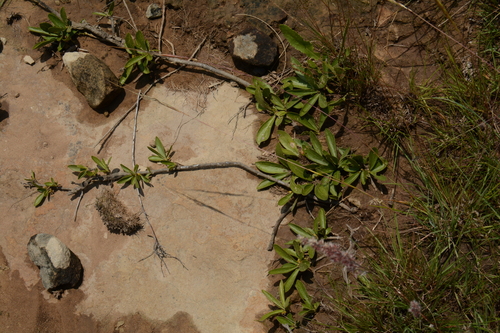
iNaturalist · cc-by-nc
(c) Richard Gill, some rights reserved (CC BY-NC)
(c) Richard Gill, some rights reserved (CC BY-NC)
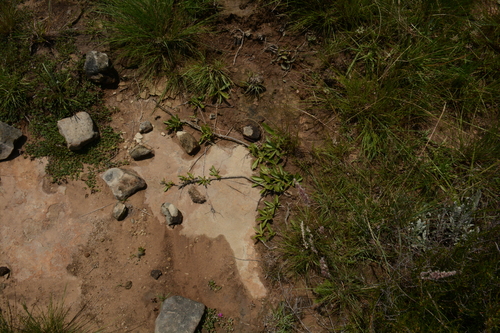
iNaturalist · cc-by-nc
(c) Richard Gill, some rights reserved (CC BY-NC)
(c) Richard Gill, some rights reserved (CC BY-NC)

iNaturalist · cc-by-nc
(c) Kate Braun, some rights reserved (CC BY-NC)
(c) Kate Braun, some rights reserved (CC BY-NC)
What to Eat
Edible parts: Fruit, Leaves
Both the fruit and leaves are edible.
Where to Find It
It is a subtropical plant.
Africa, Eswatini, South Africa, Southern Africa, Swaziland,
Countries: Angola, Burkina Faso, Burundi, Benin, Botswana, Congo (DRC), Central African Republic, Congo (Republic), Cote d'Ivoire, Cameroon, Cape Verde, Djibouti, Algeria, Egypt, Eritrea, Ethiopia, Gabon, Ghana, Gambia, Guinea, Equatorial Guinea, Guinea-Bissau, Kenya, Comoros, Liberia, Lesotho, Libya, Morocco, Madagascar, Mali, Mauritania, Mauritius, Malawi, Mozambique, Namibia, Niger, Nigeria, Rwanda, Seychelles, Sudan, Sierra Leone, Senegal, Somalia, South Sudan, Sao Tome & Principe, Eswatini, Chad, Togo, Tunisia, Tanzania, Uganda, South Africa, Zambia, Zimbabwe
How to Identify
A shrub. It has a stout underground rootstock and it grows from this each year. It grows up to 25 cm high. The stems are woody. The leaves are opposite and are mainly at the tips of the shoots. They are sword shaped or oval and narrow to the base. The flowers are below the leaves. The fruit is fleshy and has 1 or 2 seeds.
Names & Synonyms
Umgulutane, Umkhuma
References (7)
- Long, C., 2005, Swaziland's Flora - siSwati names and Uses http://www.sntc.org.sz/flora/
- Ogle & Grivetti, 1985,
- Peters, C. R., O'Brien, E. M., and Drummond, R.B., 1992, Edible Wild plants of Sub-saharan Africa. Kew. p 174
- Ruiters-Welcome, A. K., 2019, Food plants of southern Africa. Ph.D. thesis. Univ. of Johannesburg p 97
- Swaziland's Flora Database http://www.sntc.org.sz/flora
- Vinnicombe, 1976,
- Welcome, A. K. & Van Wyk, B.-E., 2019, An inventory and analysis of the food plants of southern Africa. South African Journal of Botany 122 (2019) 136–179


