Rutidea orientalis
Bridson
Fringe tail
RubiaceaeFruit

iNaturalist · cc-by-nc
(c) Bart Wursten, some rights reserved (CC BY-NC), uploaded by Bart Wursten
(c) Bart Wursten, some rights reserved (CC BY-NC), uploaded by Bart Wursten

iNaturalist · cc-by-nc
(c) Bart Wursten, some rights reserved (CC BY-NC), uploaded by Bart Wursten
(c) Bart Wursten, some rights reserved (CC BY-NC), uploaded by Bart Wursten
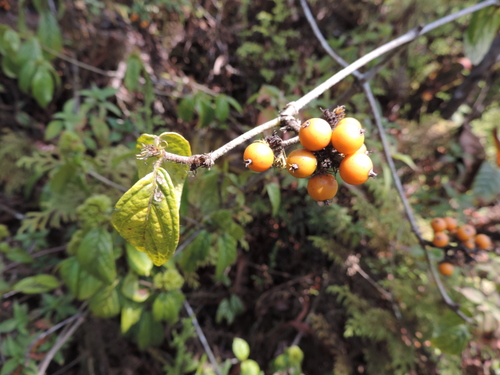
iNaturalist · cc-by-nc-sa
(c) Marco Schmidt, some rights reserved (CC BY-NC-SA), uploaded by Marco Schmidt
(c) Marco Schmidt, some rights reserved (CC BY-NC-SA), uploaded by Marco Schmidt
What to Eat
Edible parts: Fruit
The fruit is used for beer.
Where to Find It
It is a tropical plant. It grow in the rain-forest from lowlands to the mountains. It grows in evergreen rain-forest between 350-1,600 m above sea level. It grows in deep shade along rivers.
Africa, Burundi, Central Africa, Congo, East Africa, Kenya, Malawi, Mozambique, Rwanda, Southern Africa, Uganda, Zimbabwe,
Countries: Angola, Burkina Faso, Burundi, Benin, Botswana, Congo (DRC), Central African Republic, Congo (Republic), Cote d'Ivoire, Cameroon, Cape Verde, Djibouti, Algeria, Egypt, Eritrea, Ethiopia, Gabon, Ghana, Gambia, Guinea, Equatorial Guinea, Guinea-Bissau, Kenya, Comoros, Liberia, Lesotho, Libya, Morocco, Madagascar, Mali, Mauritania, Mauritius, Malawi, Mozambique, Namibia, Niger, Nigeria, Rwanda, Seychelles, Sudan, Sierra Leone, Senegal, Somalia, South Sudan, Sao Tome & Principe, Eswatini, Chad, Togo, Tunisia, Tanzania, Uganda, South Africa, Zambia, Zimbabwe
How to Identify
A climber in the tree canopy. It can be 6 m tall. The leaves are opposite and broadly sword shaped. They are shiny and dark green above and paler with yellow hairs underneath. The flowers are in dense clusters. They are small and white. They have a strong scent. The fruit are 5-9 mm across. They are yellow or orange. They turn purple-black when ripe.
Names & Synonyms
Rutidea syringoides auctt. non (Webb.) Bremek.
References (3)
- Glover, 1967,
- Peters, C. R., O'Brien, E. M., and Drummond, R.B., 1992, Edible Wild plants of Sub-saharan Africa. Kew. p 175
- White, F., Dowsett-Lemaire, F. and Chapman, J. D., 2001, Evergreen Forest Flora of Malawi. Kew. p 494


