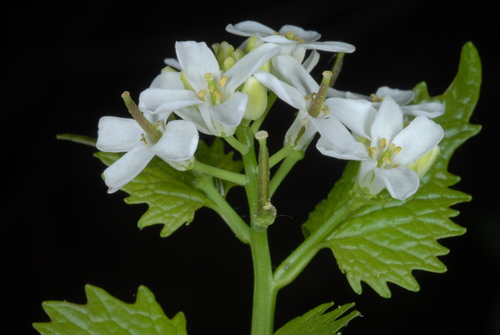
Cochlearia scotica
Druce
Northern Scurvy grass

(c) Marcia Morris, some rights reserved (CC BY-NC)

(c) Charles F Gunn, some rights reserved (CC BY-NC)

Wikimedia Commons - Anne Burgess
What to Eat
Edible parts: Leaves
The plant is used as a spice. No further details are given about which part is used or how it is prepared.
Where to Find It
It is a temperate plant.
Britain, Europe,
How to Identify
A biennial or perennial herb reaching 0.3 m (1 ft) tall. Flowers appear from May to August, with seeds ripening July to September. The plant is self-fertile and attracts bees, flies, and beetles. It thrives in light sandy, medium loamy, and heavy clay soils with good drainage. Tolerates mildly acidic, neutral, and basic soils, including saline conditions. Requires full sun and prefers moist soil. Hardy to maritime exposure.
How to Grow
Prefers a cool shady position. Grows on acid or calcareous soils but avoids shady positions. Prefers a sandy or gritty well-drained soil.
Propagation: Sow seed in spring or autumn in situ. Germination usually takes place within 2–3 weeks at 15°c.
Medicinal Uses
None known
Other Uses
None known Special Uses Attracts Wildlife
Wikipedia
A biennial or perennial herb reaching 0.3 m (1 ft) tall. Flowers appear from May to August, with seeds ripening July to September. The plant is self-fertile and attracts bees, flies, and beetles. It thrives in light sandy, medium loamy, and heavy clay soils with good drainage. Tolerates mildly acidic, neutral, and basic soils, including saline conditions. Requires full sun and prefers moist soil. Hardy to maritime exposure.
Names & Synonyms
References (1)
- Michael, P., 2007, Edible Wild Plants and Herbs. Grub Street. London. p 208