Garcinia intermedia
(Pittier) Hammel
Intermediate garcinia, Lemon drop mangosteen

(c) roycarballo, some rights reserved (CC BY-NC)
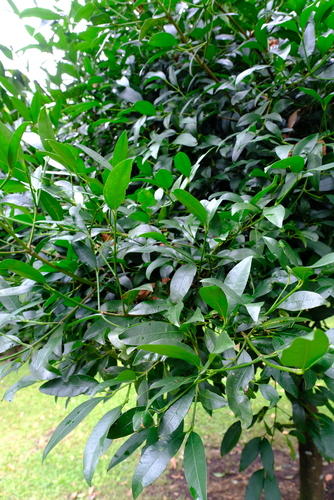
(c) Nick Helme, some rights reserved (CC BY-NC)
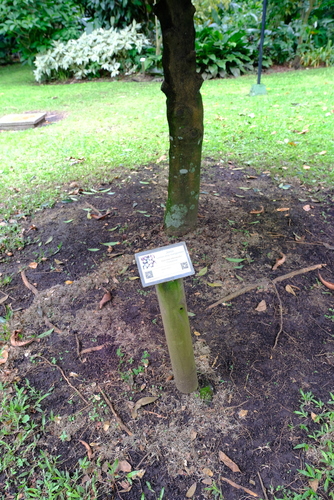
(c) Nick Helme, some rights reserved (CC BY-NC)
What to Eat
Edible parts: Fruit
The fruit can be eaten raw, though they are sour, and are also used to make jam. The fruit have a sweet taste.
Where to Find It
It is a tropical plant. It grows in humid forests from sea level to 1,200 m altitude in Central America.
Andes, Asia, Belize, Brazil, Central America*, Colombia, Costa Rica, Ecuador, El Salvador, Guatemala, Honduras, Mexico, Nicaragua, North America, Pacific, Panama, Philippines, Puerto Rico, SE Asia, South America, USA, West Indies,
How to Identify
An erect tree. It grows 5-12 m tall. It can be 30 m tall. It has yellow latex. The leaves are simple and opposite and narrowly oval.. The leaf blades are 8-25 cm long by 3-9 cm wide. The flowers are clustered in the axils of the leaves. They are greenish white. The fruit are 3-4 cm long. The fruit are oval and yellowish-orange. The flesh is white. There is one seed.
How to Grow
A plant of the warm, humid tropics at elevations up to 1,200 metres. Succeeds in full sun or partial shade. A fairly fast-growing plant, it can commence flowering and fruiting when only 2 - 3 years old from seed. An androdioecious species with some trees producing only male flowers and other trees producing hermaphrodite flowers.
Propagation: Seed - it has a short viability and should not be allowed to dry out. Sow the seed fresh in a partially shaded position in a nursery seedbed. Seeds do not germinate immediately, waiting instead for several months - often well into the rainy season - before initiating growth.
Other Uses
The bark is rich in tannin. The heartwood is rose-yellow, hard, medium-heavy, coarse-textured, with numerous gum ducts, but tough, strong, easy to work, fairly durable. It is valued for construction because it is nearly immune to insects. It is also used for tool handles, fence posts, and temporary railroad ties. We do not have any more information on the wood of this species, but a general description of the wood for trees in the Americas which were formerly considered to be in the genus Rheedia is as follows:- The heartwood is dark yellow-brown, grayish- or pinkish-brown, merging gradually into the sapwood; surfaces are sometimes specked with resinous exudations. The texture is medium to coarse; the grain straight to irregular and roey; luster medium to rather low; it is free from discernible odour or taste. Species in Surinam are rated durable to attack by decay fungi and fairly resistant to dry wood termites. Species in Colombia are resistant to a brown-rot fungus but not the white-rot in a laboratory assay. Under field conditions the wood was susceptible to decay and attack by insects. It dries rapidly, but is reported to be moderately difficult to air season, tending to warp and check. Reports on workability vary with species from moderate to high resistance to cutting to machining fairly well; reports on ease of finishing are also variable. The wood is used for purposes such as furniture, flooring (quarter sawn), heavy construction, and general carpentry.
Wikipedia
Source ↗Garcinia intermedia is a species of tropical American tree which produces edible fruit. In English it is known as the lemon drop mangosteen (a name it shares with the closely related and similarly tasting Garcinia madruno) or sometimes monkey fruit. In Spanish it is called mameyito, though it is known as jorco in Costa Rica. In the Philippines, it is known as berba. In Portuguese it is called achachairu. The name achachairu is also applied to Garcinia humilis, another species native to Bolivia with larger, round or egg-shaped fruit (see Achachairu). G. humilis has been commercialized in Australia under the name Achacha.
Production
Plants produce in about 5 years.
Other Information
Fruit have a sweet taste.
Names & Synonyms
Arrayan, Berba, Cafetillo, Caimito de montana, Chaparron, Chinese santol, Duco, Guo-guo, Jorco, Ka-re-che, Limao do Motto, Limoncillo, Madrono, Mameyito, Nan puka, Naranjillo, Palo de frutilla, Punkara, Punkara muyu, Sakipa, Sastra, Shipijcha kaa pukaka, Toronjil, Waika plum, Wuowo
References (29)
- Ann. Sci. Nat. Bot. ser. 4, 14:310. 1860 (As Rheedia edulis)
- Barcelo, R., 2015, Phytochemical Screening and Antioxidant Activity of Edible Wild Fruits in Benguet, Cordillera Administrative Region, Philippines. Electronic Journal of Biology, 2015, Vol.11(3): 80-89
- Barfod, A. S. & Kvist, L. P., 1996, Comparative Ethnobotanical Studies of the Amerindian Groups in Coastal Ecuador. The Danish Academy of Sciences and Letters. p 77 (As Rheedia edulis)
- Chizmar Fernandez, C., et al, 2009, Plantas comestibles de Centroamerica. Instituto de Biodiversidad, Costa Rica. p 150
- Chua-Barcelo, R. T., 2014, Ethnobotanical survey of edible wild fruits in Benguet, Cordillera administrative region, the Philippines. Asian Pac. J. Trop. Biomed. 4(Suppl. 1):S525-S538
- Condit, R., et al, 2011, Trees of Panama and Costa Rica. Princeton Field Guides. p 136
- Coronel, R.E., 1982, Fruit Collections in the Philippines. IBPGR Newsletter p 8 (As Rheedia edulis)
- Facciola, S., 1998, Cornucopia 2: a Source Book of Edible Plants. Kampong Publications, p 80 (As Rheedia edulis)
- Fouqué, A. 1972. Espèces fruitières d'Amérique tropicale. Institut français de recherches fruitierès outre-mer (As Rheedia edulis)
- Gonzalez-Espinosa, M. et al, 2011, The Red List of Mexican Cloud Forest Trees. Flora and Fauna International, Cambridge. p 97
- Grandtner, M. M., 2008, World Dictionary of Trees. Wood and Forest Science Department. Laval University, Quebec, Qc Canada. (Internet database http://www.wdt.qc.ca)
- Grandtner, M. M. & Chevrette, J., 2013, Dictionary of Trees, Volume 2: South America: Nomenclature, Taxonomy and Ecology. Academic Press p 261
- Hedrick, U.P., 1919, (Ed.), Sturtevant's edible plants of the world. p 556 (As Rheedia edulis)
- Hellmuth, N. M., 2011, Maya Ethnobotany. Complete Inventory of plants. Associacion FLAAR Mesoamerica. Tenth edition.
- Ibarra-Manriquez, G., et al, 1997, Useful Plants of the Los Tuxtlas Rain Forest (Veracruz, Mexico): Considerations of their Market Potential. Economic Botany, Vol. 51, No. 4, pp. 362-376 (As Rheedia edulis)
- INFOODSUpdatedFGU-list.xls (As Rheedia edulis)
- Kew Plants of the World Online
- Lopez-Diago, D. & Garcia, N., 2021, Wild edible fruits of Colombia. Biota ColomBiana 22 (2) p 36
- Martin, F. W., et al, 1987, Perennial Edible Fruits of the Tropics. USDA Handbook 642 p 96 (As Rheedia edulis)
- Morton, J. F., 1987, Fruits of Warm Climates. Wipf & Stock Publishers p 309 (As Rheedia edulis)
- Murilla, E., et al, 2010, Screening of vegetables and fruits from Panama for rich sources of lutein and zeaxanthin. Food Chemistry 122: 167-172
- Piedra-Malagón, E. M. et al, 2022, Edible native plants of the Gulf of Mexico Province. Biodiversity Data Journal 10: e80565 p 17
- Popenoe, (As Rheedia edulis)
- PROSEA No. 2 (As Rheedia edulis)
- Roa, J. A. G. & Boada, D. S. G., 2018, Fundación para el Fortalecimiento de la Fruticultura y Plantas Alimenticias no Convencionales en Colombia.
- Segura, S., et al, 2018, The edible fruit species in Mexico. Genet Resour Crop Evol (2018) 65:1767–1793
- Standley, P. C. & Record, S. J., 1936, The Forests and Flora of British Honduras. (Belize). p 262 (As Rheedia edulis)
- Torre, de la, L., et al, 2008, Enciclopedia de las Plantas Útiles del Ecuador. Herbario QCA. Pontificia Universidad Católica del Ecuador. p 285
- Uphof, (As Rheedia edulis)


