Simaba cedron
Planch.
Cedron simaba
Wikimedia Commons - Simaba_cedron_Planch._-_Flickr_-_Alex_Popovkin,_Bahia,_Brazil_(24).jpg
(c) Jen Schlauch, some rights reserved (CC BY-NC)
(c) Geovane Siqueira, some rights reserved (CC BY-NC)
What to Eat
Edible parts: Fruit
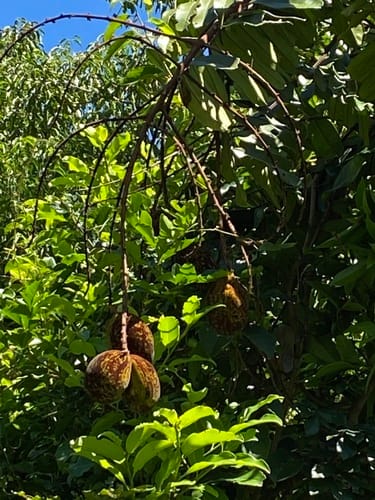
Fruit. The tree bears great quantities of brownish fruits, consisting of the large seed and a layer, 5 - 15mm thick, of reddish yellow flesh which is bitter and acrid. Another report says that it is a popular fruit. The greeny-brown, oval fruit can be 8cm long and 5cm wide.
Known Hazards
Where to Find It
It is a tropical plant. It grows in semi-deciduous forests in the interior and at higher altitudes in Brazil.
Aruba, Bolivia, Brazil, Central America, Colombia, Costa Rica, Ecuador, Guiana, Guyana, Panama, Peru, South America, Venezuela,
How to Identify
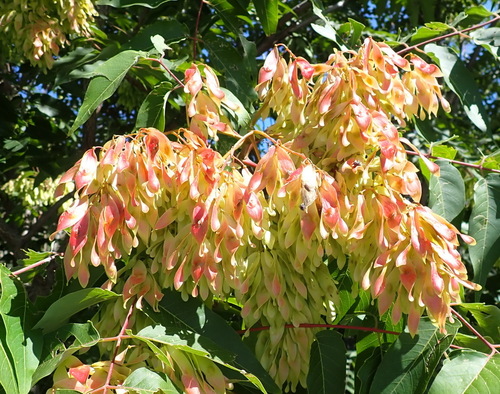
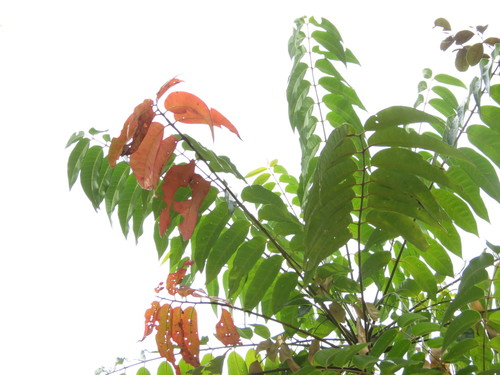
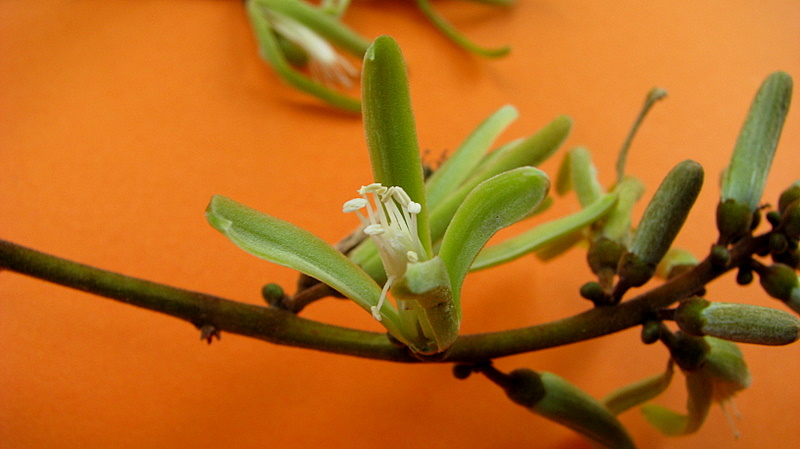
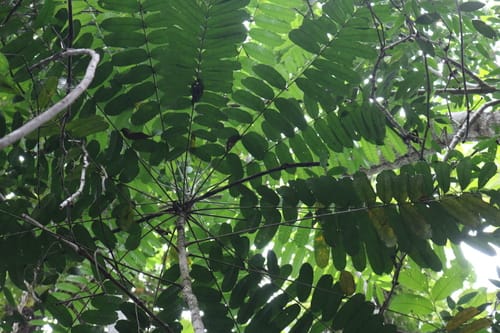
A tree. It loses many leaves during the year. It grows 4-12 m high. The crown is elongated. The trunk is grooved and 15-25 cm across. The bark is light brown and spotted. It flakes off in thin pieces. The leaves are sword shaped and 4-6 cm long by 1-2 cm wide. The fruit is an oval berry. It is 2.7 cm across.
How to Grow
Plants are grown from seeds. The seeds are collected from ripe fruit that have fallen. The fruit are stored in piles and allowed to partly decompose to make it easy to remove the seeds. This is done under running water. The seeds need to be planted fresh and in light shade. The seedlings emerge in 20-35 days.
Propagation: Seed - best sown as soon as it is ripe in a partially shaded position in a nursery seedbed. A germination rate of about 65% can be expected, with the seeds sprouting within 20 - 35 days. Seedlings grow away moderately quickly.
Medicinal Uses
The seeds are intensely bitter, and probably rich in tannins. The cotyledons are used in the treatment of fevers and as an antidote to snake bites. They are also used in the treatment of hydrophobia (rabies) and dysentery. Great care should be used with this remedy, since excessive does can lead to death. The bark is macerated in rum to make a vermifuge, antimalarial and bitter tonic. A decoction of the inner bark is used as a remedy for malaria, as a wash on cutaneous eruptions, and to assist childbirth. An infusion of the bark and seeds is used as an antidote for snakebite and as a febrifuge for mild or intermittent fevers. The seeds contain the quassinoids cedrin, cedronin and cedronylin. The bark and seeds contain the bitter alkaloid cedrine.
Other Uses
The seeds are believed to be rich in tannins. The wood is of average texture, irregular grain, light in weight and slightly susceptible to wood-eating insects. Of low quality, it is only used for fuel and to make charcoal.
Wikipedia
Source ↗Simaba cedron, the cedron, is a member of the quassia family, Simaroubaceae, native to Colombia and Central America.
Production
Plants grow at a moderate rate.
Other Information
The fruit are popular.
Names & Synonyms
Carbon, Casabote, Cedron, Kikuribianda, Palo de vela, Paracata, Paratudo, Pau-paratudo, Una de pereza, Vela de muerto
References (3)
- Grandtner, M. M., 2008, World Dictionary of Trees. Wood and Forest Science Department. Laval University, Quebec, Qc Canada. (Internet database http://www.wdt.qc.ca)
- Grandtner, M. M. & Chevrette, J., 2013, Dictionary of Trees, Volume 2: South America: Nomenclature, Taxonomy and Ecology. Academic Press p 604
- Lorenzi, H., 2009, Brazilian Trees. A Guide to the Identification and Cultivation of Brazilian Native Trees. Instituto Plantarum de Estuados da Flora Ltda. Vol. 3 p 349