Pipturus kauaiensis
A. Heller
Mamaki, Kaui pipturus
iNaturalist · cc-by-nc
(c) Kenneth R. Wood (NTBG), some rights reserved (CC BY-NC), uploaded by Kenneth R. Wood (NTBG)
(c) Kenneth R. Wood (NTBG), some rights reserved (CC BY-NC), uploaded by Kenneth R. Wood (NTBG)
iNaturalist · cc-by-nc
(c) Kenneth R. Wood (NTBG), some rights reserved (CC BY-NC), uploaded by Kenneth R. Wood (NTBG)
(c) Kenneth R. Wood (NTBG), some rights reserved (CC BY-NC), uploaded by Kenneth R. Wood (NTBG)
iNaturalist · cc-by-nc
(c) Kenneth R. Wood (NTBG), some rights reserved (CC BY-NC), uploaded by Kenneth R. Wood (NTBG)
(c) Kenneth R. Wood (NTBG), some rights reserved (CC BY-NC), uploaded by Kenneth R. Wood (NTBG)
What to Eat
Edible parts: Leaves - tea
The leaves are dried and brewed into tea.
Where to Find It
It is a tropical plant.
Hawaii, Pacific,
Countries: Australia, Fiji, Micronesia, Kiribati, Marshall Islands, Nauru, New Zealand, Papua New Guinea, Palau, Solomon Islands, Tonga, Tuvalu, United States, Vanuatu, Samoa
How to Identify
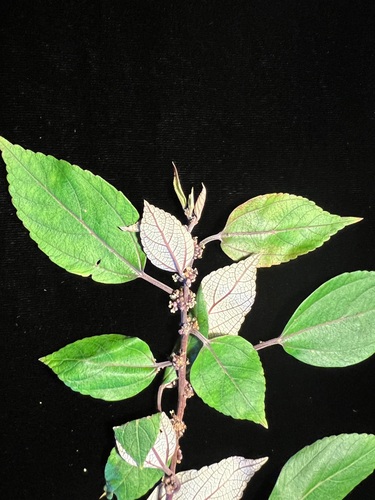
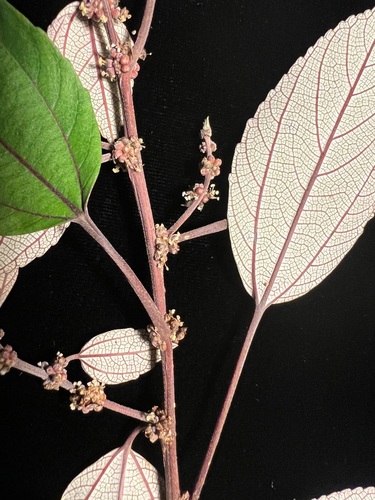
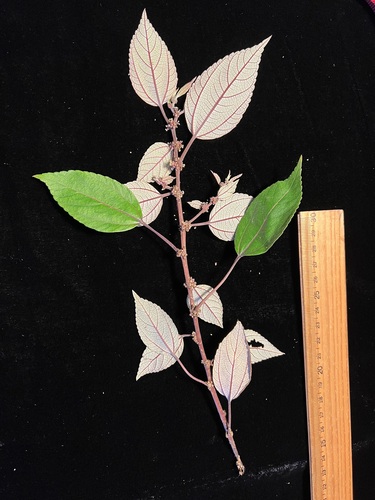
A shrub. It keeps growing from year to year. It grows 2-3 m tall. The leaves are 6-18 cm long and 2-6 cm wide. They have teeth along the edge. The leaves are alternate. The leaves and branches have white hairs. The flowers develop in clusters in the axils of leaves. The flowers are very small.
Names & Synonyms
Pipturus albidus var. grosseserrata
References (1)
- http://www.ntbg.org/plants/plant details.php


