Cyperus rigidifolius
Steud.
Gicha
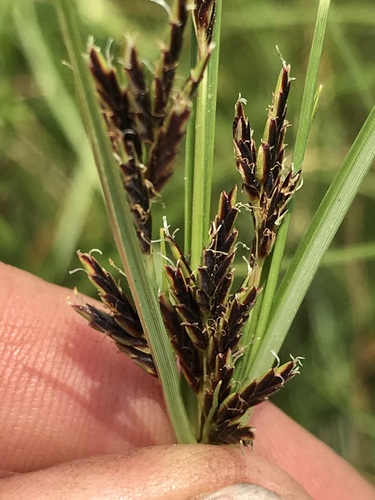
iNaturalist · cc-by-nc-sa
(c) David Hoare, some rights reserved (CC BY-NC-SA), uploaded by David Hoare
(c) David Hoare, some rights reserved (CC BY-NC-SA), uploaded by David Hoare

iNaturalist · cc-by-nc
(c) Dewald du Plessis, some rights reserved (CC BY-NC)
(c) Dewald du Plessis, some rights reserved (CC BY-NC)
What to Eat
Edible parts: Stolon
The stolons are eaten.
Where to Find It
It is a subtropical plant. It grows between 435-2,200 m above sea level.
Africa, East Africa, Eswatini, Ethiopia, South Africa, Southern Africa, Swaziland, Tanzania, Uganda, Zimbabwe,
Countries: Angola, Burkina Faso, Burundi, Benin, Botswana, Congo (DRC), Central African Republic, Congo (Republic), Cote d'Ivoire, Cameroon, Cape Verde, Djibouti, Algeria, Egypt, Eritrea, Ethiopia, Gabon, Ghana, Gambia, Guinea, Equatorial Guinea, Guinea-Bissau, Kenya, Comoros, Liberia, Lesotho, Libya, Morocco, Madagascar, Mali, Mauritania, Mauritius, Malawi, Mozambique, Namibia, Niger, Nigeria, Rwanda, Seychelles, Sudan, Sierra Leone, Senegal, Somalia, South Sudan, Sao Tome & Principe, Eswatini, Chad, Togo, Tunisia, Tanzania, Uganda, South Africa, Zambia, Zimbabwe
How to Identify
A subtropical sedge in the Cyperaceae family that can grow to 50 cm high and persists year to year, found at elevations between 435-2,200 m.
Medicinal Uses
It is used in medicine.
Wikipedia
Source ↗Cyperus rigidifolius is a species of sedge that is native to Africa and the Arabian Peninsula. The species was first formally described by the botanist Ernst Gottlieb von Steudel in 1842.
Notes
Probably edible. It is used in medicine.
Names & Synonyms
Angicha
Cyperus adoensis Hochst. ex A. Rich.Cyperus atrosanguineus Hochst. ex Steud.Cyperus longus var. adoensis (Hochst. ex A. Rich.) BoeckelerCyperus rigidifolius var. intercedens Kuk
References (3)
- Alemneh, D., 2020, Ethnobotany of wild edible plants in Yilmana Densa and Quarit Districts of West Gojjam Zone, Amhara Region, Ethiopia. Ethnobotany Research & Applications. 20:47
- Molla, A., Ethiopian Plant Names. http://www.ethiopic.com/aplants.htm
- Simpson, D. A. & Inglis, C. A., 2001, Cyperaceae of Economic, Ethnobotanical and Horticultural Importance: A checklist. Kew Bulletin Vol. 56, No. 2 (2001), pp. 257-360
More from Cyperaceae

Actinoscirpus grossus
Giant bulrush, Greater club-rush

Actinoscirpus grossus var. kysoor
Amphiscirpus nevadensis
Nevada bulrush, Great basin bulrush

Bolboschoenus caldwellii
Sea club rush, Marsh club rush, Seaside bulrush

Bolboschoenus fluviatilis
Marsh club rush, River bulrush, Kukuraho, Purua grass

Bolboschoenus glaucus