Pentas lanceolata subsp. quartiniana
(A. Rich.) Verdc.

iNaturalist · cc-by-nc-sa
(c) Stefano, some rights reserved (CC BY-NC-SA)
(c) Stefano, some rights reserved (CC BY-NC-SA)
iNaturalist · cc-by-nc
(c) Dylan Roca, some rights reserved (CC BY-NC)
(c) Dylan Roca, some rights reserved (CC BY-NC)
Where to Find It
It is a tropical plant.
Africa, East Africa, Ethiopia, Hawaii, Sudan, Uganda,
Countries: Angola, Burkina Faso, Burundi, Benin, Botswana, Congo (DRC), Central African Republic, Congo (Republic), Cote d'Ivoire, Cameroon, Cape Verde, Djibouti, Algeria, Egypt, Eritrea, Ethiopia, Gabon, Ghana, Gambia, Guinea, Equatorial Guinea, Guinea-Bissau, Kenya, Comoros, Liberia, Lesotho, Libya, Morocco, Madagascar, Mali, Mauritania, Mauritius, Malawi, Mozambique, Namibia, Niger, Nigeria, Rwanda, Seychelles, Sudan, Sierra Leone, Senegal, Somalia, South Sudan, Sao Tome & Principe, Eswatini, Chad, Togo, Tunisia, Tanzania, Uganda, United States, South Africa, Zambia, Zimbabwe
How to Identify
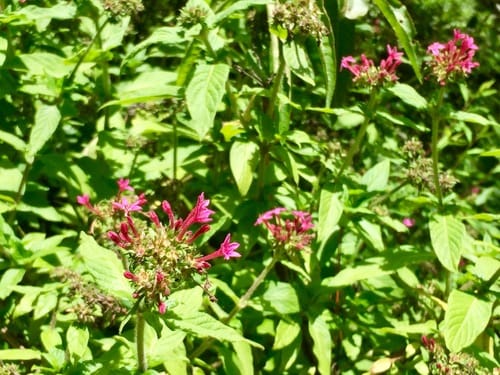
A herb. It grows 1-2 m tall. The leaves are long and oval and hairy. The flowers are in clusters 10 cm across. The flowers have short tubes and are pink to red.
Wikipedia
Source ↗Pentas lanceolata, commonly known as Egyptian starcluster, is a species of flowering plant in the madder family, Rubiaceae that is native to tropical Africa from Sudan to Democratic Republic of the Congo and Mozambique, as well as Saudi Arabia and Yemen on the Arabian Peninsula. It is sometimes planted in butterfly gardens.
Notes
Probably edible. Pentas lanceolata occurs in Yemen, China and Pakistan.
Names & Synonyms
Pentas quartiniana (A. Rich.) Oliv.Pentas verruculosa Chiov.Vignaldia quartiniana A. Rich.
References (1)
- Molla, A., Ethiopian Plant Names. http://www.ethiopic.com/aplants.htm


