Bromus rigidus
Roth.
Ripgut brome

(c) Kathleen Sayce, some rights reserved (CC BY-NC), uploaded by Kathleen Sayce

(c) Matt Lavin, some rights reserved (CC BY-SA)
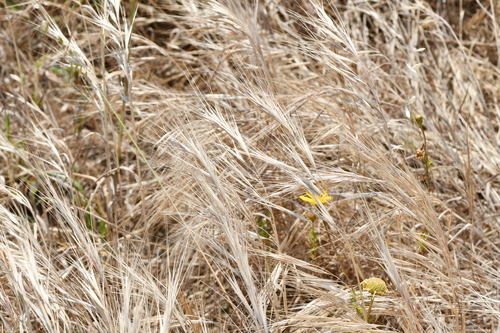
(c) adele_schittone, some rights reserved (CC BY-NC)
What to Eat
Edible parts: Seeds, Cereal
Edible Parts: Seed Edible Uses: Seed. Used as a piñole, or dried and then ground into a powder and mixed with water to make a gruel. The seed is small and would be rather fiddly to use. Ripgut brome is a European species that spread widely across California and the arid Southwest, where it quickly became a common grass of disturbed soils and open rangelands. Despite its sharp, bristly awns that can injure livestock and pets, it was adopted as a traditional grain resource by Native groups, including the Karok, Luiseño, and Miwok Indians of California [2-3]. The seeds were gathered and prepared into mush, much like other wild grasses. Flowering occurs from April to June, with seeds maturing from June through August. While edible, the small grains require careful processing to separate them from the husks and awns, which are not only tough but can also irritate the mouth or digestive tract if not properly removed [2-3]. Caution: The long, barbed awns that give ripgut brome its name pose risks to animals and humans. Foragers must take care to process only the cleaned grains [2-3].
Known Hazards
Where to Find It
It is a temperate plant. It grows near streams and moist places at about 1,000 m above sea level in China.
Africa, Argentina, Asia, Australia, Britain, Chile, China, Europe, Hawaii, Jamaica, Korea, Mediterranean, New Zealand, North Africa, North America, South America, Taiwan, USA, West Indies,
How to Identify
A grass. It grows each year from seeds. It forms tufts. It is erect and 20-70 cm tall. They are hairy. The leaf sheaths have spreading hairs. The leaf blades are 10-25 cm long by 4-6 mm wide. They are hairy.
How to Grow
Succeeds in ordinary well-drained garden soil in a sunny position. The plant has cleistogamous flowers, these flowers do not open but produce seed by means of self-fertilization. USDA Hardiness Zone: 5–9 (adapted to Mediterranean and arid climates). Weed Potential: Ripgut brome is highly invasive in North America, especially in rangelands and disturbed soils. It competes aggressively with native plants and is considered a troublesome weed for ranchers due to its effects on grazing animals.
Propagation: Seed - sow spring or autumn in situ and only just cover. Germination should take place within 2 weeks.
Medicinal Uses
None known
Other Uses
None known Special Uses
Wikipedia
Source ↗Bromus rigidus, the ripgut brome, is a grass native to Eurasia and naturalized in North America. The specific epithet rigidus means rigid or stiff.
Notes
There are about 150 Bromus species. They are temperate.
Names & Synonyms
Bromo rigido, Flechilla
References (5)
- Beckstrom-Sternberg, Stephen M., and James A. Duke. "The Foodplant Database." http://probe.nalusda.gov:8300/cgi-bin/browse/foodplantdb.(ACEDB version 4.0 - data version July 1994)
- Bot. Mag. (Roumer & Usteri) 4(10):21. 1790
- Dashorst, G.R.M., and Jessop, J.P., 1998, Plants of the Adelaide Plains & Hills. Botanic Gardens of Adelaide and State Herbarium. p 182
- Malezas Comestibles del Cono Sur, INTA, 2009, Buernos Aires
- Plants for a Future database, The Field, Penpol, Lostwithiel, Cornwall, PL22 0NG, UK. http://www.scs.leeds.ac.uk/pfaf/


