Bromus tectorum
L.
Cheat grass, Drooping brome
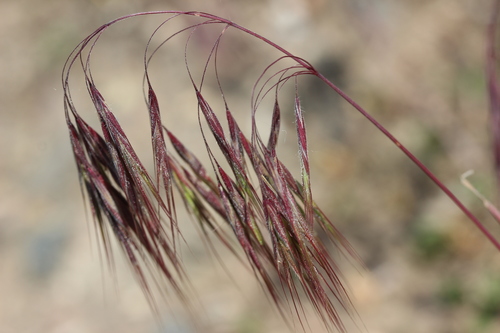
(c) Соколков Юрий Павлович, some rights reserved (CC BY-NC), uploaded by Соколков Юрий Павлович

(c) Pavel Gorbunov, some rights reserved (CC BY-NC), uploaded by Pavel Gorbunov
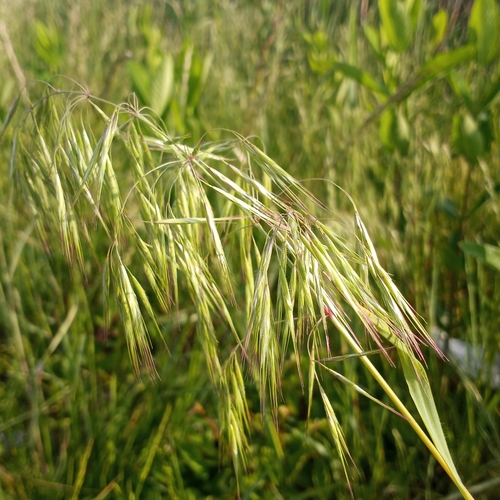
(c) Wayne Longbottom, some rights reserved (CC BY-NC), uploaded by Wayne Longbottom
What to Eat
Edible parts: Seeds, Cereal
Edible Parts: Seed Edible Uses: Coffee Seed - cooked. A famine food, the small seed can be cooked into a gruel in times of food shortage. A coffee is made from the roasted seed.
Known Hazards
Where to Find It
It is a temperate plant. It grows in desert places and also on walls and roofs. It will grow in most soils. It is best in an open sunny position. It is resistant to frost but sensitive to drought. It can grow in arid places.
Africa, Argentina, Asia, Australia, Central Asia, Chile, China, Europe, Himalayas, India, Kazakhstan, Korea, Kyrgyzstan, Luxembourg, Mediterranean*, New Zealand, North Africa, North America, Pakistan, Russia, Siberia, Slovenia, South America, Tajikistan, Tibet, Turkmenistan, Uruguay, USA, Uzbekistan,
How to Identify
An annual grass. It is erect and grows 60 cm high. The leaves are near the base and form a sheath. They are narrow and sword shaped. The leaf blades are 18 cm long. The flower panicle is 18 cm long and can be loose or dense. The spikelets are narrowly wedge shaped and fragile.
How to Grow
Plants are grown by seed.
Propagation: Seed - sow spring or autumn in situ and only just cover. Germination should take place within 2 weeks.
Medicinal Uses
Miscellany A paste made from the seeds is applied as a poultice to the chest to relieve chest pains.
Other Uses
Bedding Miscellany The leaves have been used as a bedding. B. tectorum is the most abundant forage species on many intermountain area rangelands of the USA [1d]. Special Uses
Wikipedia
Source ↗Bromus tectorum, known as downy brome, drooping brome, or cheatgrass, is a winter annual grass native to Europe, southwestern Asia, and northern Africa, but has become invasive in many other areas. It now is present in most of Europe, southern Russia, Japan, South Africa, Australia, New Zealand, Iceland, Greenland, North America, and western Central Asia. In the eastern US, B. tectorum is common along roadsides and as a crop weed, but usually does not dominate an ecosystem. It has become a dominant species in the Intermountain West and parts of Canada, and displays especially invasive behavior in the sagebrush steppe ecosystems, where it has been listed as noxious weed. B. tectorum often enters the site in an area that has been disturbed, and then quickly expands into the surrounding area through its rapid growth and prolific seed production. The reduction of native plants and the increased fire frequency caused by B. tectorum prompted the United States Fish and Wildlife Service (USFWS) to examine if the greater sage-grouse needed to be listed as a threatened or endangered species due to habitat destruction. After the review was completed by the USFWS, Secretarial Order 3336 was signed with the goal of reducing the threat of rangeland fires and preserve habitat by reducing downy brome. Research has shown that ecosystems with a healthy biological soil crust and native plant community are resistant to B. tectorum invasion. In areas where B. tectorum is invasive, treatments that are being researched/used by land managers to control B. tectorum include seeding of native plants and non-native bunchgrasses to outcompete B. tectorum, herbicides, and prescribed burns. The effectiveness of these treatments is tightly linked to the timing of the water availability at the site. With precipitation shortly after herbicide and seeding treatments increasing the success, and overall high precipitation increases B. tectorum growth, causing the treatment effects to be statistically insignificant.
Other Information
It is a famine food.
Notes
There are about 150 Bromus species. They are temperate.
Names & Synonyms
Bromo pendulo, Bromo tectorum, Bromo vellosa, Downy brome, Strešna stoklasa
References (6)
- Anderson, M. K., 2012, Edible Seeds and Grains of California Tribes and the Klamath Tribe of Oregon in the Phoebe Apperson Hearst Museum of Anthropology Collections, University of California, Berkeley. USDA p 81
- Bodkin, F., 1991, Encyclopedia Botanica. Cornstalk publishing, p 171
- Malezas Comestibles del Cono Sur, INTA, 2009, Buernos Aires
- Morley, B. & Everard, B., 1970, Wild Flowers of the World. Ebury press. Plate 25
- Plants for a Future database, The Field, Penpol, Lostwithiel, Cornwall, PL22 0NG, UK. http://www.scs.leeds.ac.uk/pfaf/
- Sp. pl. 1:77. 1753


