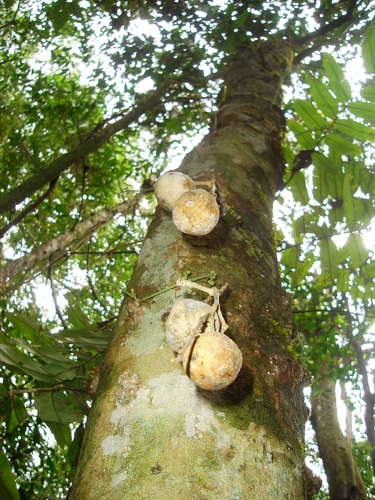
Viola pilosa
Blume
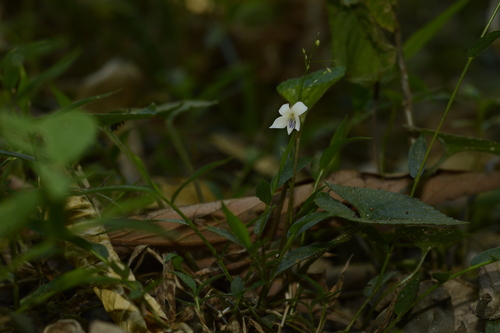
(c) Siddarth Machado, some rights reserved (CC BY)
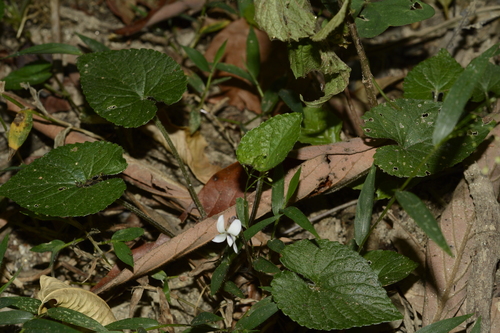
(c) Siddarth Machado, some rights reserved (CC BY)
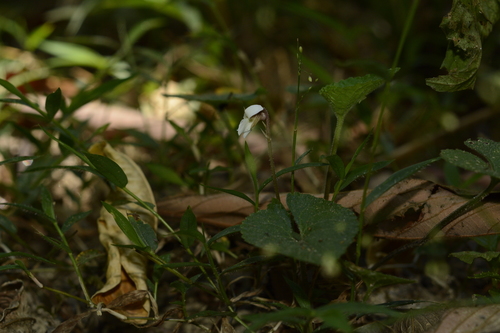
(c) Siddarth Machado, some rights reserved (CC BY)
What to Eat
Edible parts: Flowers - tea, Leaves
The shoots are cooked with dry fish or eaten raw, and shoots are sold in local markets. The flowers and leaves are used for flavoring tea.
Known Hazards
Where to Find It
It is a tropical plant. It grows in mountain forests between 800-3,000 m above sea level in south China. In Sichuan and Yunnan.
Afghanistan, Asia, Bhutan, China, Himalayas, India, Indochina, Indonesia, Malaysia, Myanmar, Nepal, Northeastern India, NW India, Pakistan, SE Asia, Sri Lanka, Thailand, Tibet, Vietnam,
How to Identify
A small creeping herb. It keeps growing from year to year. It is almost without a stem. The rhizome is erect and 3-5 cm long by 2-4 mm wide. The leaves are near the base. The flowers are purplish-white. The fruit is a flattened capsule 5-10 mm across and it can be hairy. The seeds have dotted lumps on their surface.
How to Grow
Viola pilosa has a wide native range from the warm temperate zone of southern China into the tropics of Thailand and Indonesia (where it is usually found at elevations over 1,000 metres). Species in this genus generally prefer a cool moist well-drained humus-rich soil in partial or dappled shade and protection from scorching winds. They can tolerate sandstone and limestone soils but become chlorotic if the pH is too high. They prefer a pH between 6 and 6.5. The flowers have a pleasant fragrance. All members of this genus have more or less edible leaves and flower buds, though those species with yellow flowers can cause diarrhoea if eaten in large quantities. Like several other members of this genus, this species has two types of flower. The first type has petals and is pollinated by insects, the second type, known as cleistogamous, does not have petals, never opens, but self-fertilizes and produces fertile seed.
Propagation: Seed - best sown as soon as it is ripe in containers in a lightly shaded position, Prick out the seedlings into individual pots when they are large enough to handle and plant them out when large enough. Division works at any time of the year, so long as the plants are kept moist. Small divisions are best potted up until established, larger divisions can be planted direct into their permanent positions.
Medicinal Uses
The aerial parts of the plant, especially the flowers, are generally taken as a diuretic and expectorant.
Other Information
Shoots are sold in local markets.
Names & Synonyms
Banaksha, Banapsha, Hoa-tim long, Huikhong, Jorsing, Lilo, Mansang, Tekro, Mansam, Ratkan
References (9)
- Amin, M., et al, 2023, Edible wild plant species used by different linguistic groups of Kohistan Upper Khyber Pakhtunkhwa (KP), Pakistan. Journal of Ethnobiology and Ethnomedicine 19:6 p 14
- Devi, O. S., et al, 2021, Wild edible plants associated with the people of Thoubal Khunou village and its migrated villagers. Int. J. Adv. Res. Biol. Sci. 8(9): 72-90
- Jain et al, 2011, Dietary Use and Conservation Concern of Edible Wetland Plants at Indo-Burma Hotspot: A Case Study from Northeast India. Journal of Ethnobiology and Ethnomedicine 7:29 p 8
- Konsam, S., et al, 2016, Assessment of wild leafy vegetables traditionally consumed by the ethnic communities of Manipur, northeast India. Journal of Ethnobiology and Ethnomedicine, 12:9
- Meitei, L. R., et al, 2022, An ethnobotanical study on the wild edible plants used by forest dwellers in Yangoupokpi Lokchao Wildlife Sanctuary, Manipur, India. Ethnobotany Research and Application 23:15
- Rashid, A., Anand, V.K. & Serwar, J., 2008, Less Known Wild Plants Used by the Gujjar Tribe of District Rajouri, Jammu and Kashmir State. International Journal of Botany 4(2):219-244
- Taram, M., et al, 2018, Wild Food Plant Resources of Komkar Adi Tribe of Upper Siang District in Arunachal Pradesh, India. Bulletin of Arunachal Forest Research, Vol. 33(2), 27-35
- Thakur, D., et al, 2017, Why they eat, what they eat: patterns of wild edible plants consumption in a tribal area of Western Himalaya. Journal of Ethnobiology and Ethnomedicine (2017) 13:70
- Wild edible plants of Himachal Pradesh (As Viola serpens)