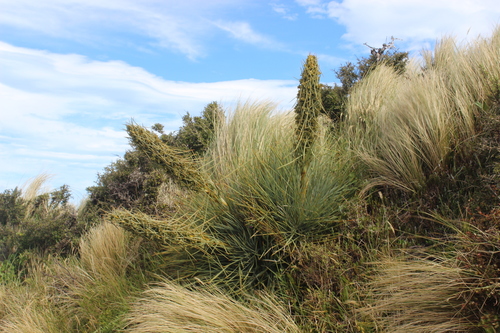
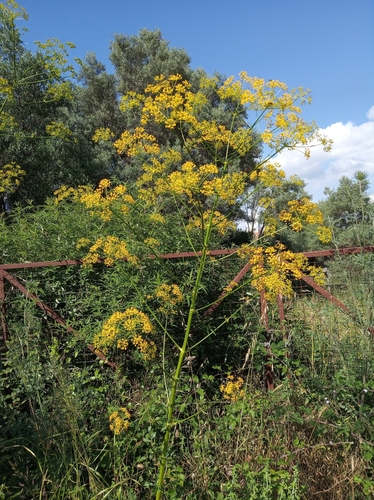
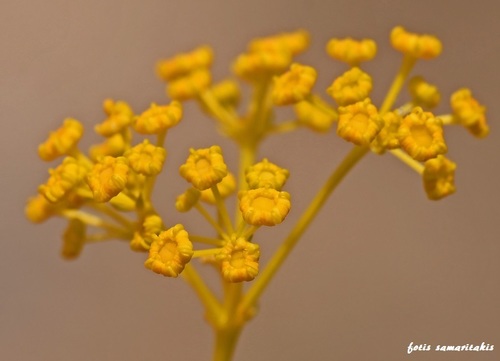
Opopanax hispidus
(Friv.) Griseb.
Opopanax, Yellow herb
iNaturalist · cc-by-nc
(c) Papageorgiou Nikolaos, some rights reserved (CC BY-NC), uploaded by Papageorgiou Nikolaos
(c) Papageorgiou Nikolaos, some rights reserved (CC BY-NC), uploaded by Papageorgiou Nikolaos

iNaturalist · cc-by-nc
(c) Alenka Mihoric, some rights reserved (CC BY-NC), uploaded by Alenka Mihoric
(c) Alenka Mihoric, some rights reserved (CC BY-NC), uploaded by Alenka Mihoric
iNaturalist · cc-by-nc
(c) fotis-samaritakis, some rights reserved (CC BY-NC), uploaded by fotis-samaritakis
(c) fotis-samaritakis, some rights reserved (CC BY-NC), uploaded by fotis-samaritakis
What to Eat
Edible parts: Leaves, Stems
The leaves are boiled and cooked with egg or used in stews. The stems are eaten raw after peeling or used in pickles.
Where to Find It
It is a temperate plant.
Asia, Turkey, Türkiye,
Countries: United Arab Emirates, Afghanistan, Armenia, Azerbaijan, Bangladesh, Bahrain, Brunei, Bhutan, China, Georgia, Indonesia, Israel, India, Iraq, Iran, Jordan, Japan, Kyrgyzstan, Cambodia, North Korea, South Korea, Kuwait, Kazakhstan, Laos, Lebanon, Sri Lanka, Myanmar, Mongolia, Maldives, Malaysia, Nepal, Oman, Philippines, Pakistan, Qatar, Saudi Arabia, Singapore, Syria, Thailand, Tajikistan, Timor-Leste, Turkmenistan, Turkey, Taiwan, Uzbekistan, Vietnam, Yemen
How to Identify
A herb. It keeps growing from year to year. It grows 160 cm tall. The flowers are yellow.
Nutrition Score: 35/100
| Part | Moisture | kJ | kcal | Protein | Vit A | Vit C | Iron | Zinc |
|---|---|---|---|---|---|---|---|---|
| Leaves | 89.2 | 107 | 26 | 1.6 | 210 | 5 | 3.4 | 0.5 |
Names & Synonyms
Corduk otu, Cortluk otu, Haliz, Heliz, Kaymak otu, Kaymaklik, Kekire, Kirkora zor, Mayasil otu, Sari cicek, Sariot
Ferula hispida Friv.Opopanax orientalis Boiss.
and others
References (5)
- Ahiskali, M., Ari, C. & Selvi, S., Edible wild plants and their consumption during winterin a rural village of Kazdagi (Mount Ida)
- Dogan, A., et al, 2014, A review of edible plants on the Turkish Apiaceae species. J. Fac. Pharm. Istanbul, 44(2) pp 251-262
- Dogan, Y., 2012, Traditionally used wild edible greens in the Aegean Region of Turkey. Acta Societatis Botanicorum Poloniae 81(4): 329-342
- Ertug, F., 2004, Wild Edible Plants of the Bodrum Area. (Mugla, Turkey). Turk. J. Bot. 28 (2004): 161-174
- Ertug, F, Yenen Bitkiler. Resimli Türkiye Florası -I- Flora of Turkey - Ethnobotany supplement