Campanula lyrata
Lam.
CampanulaceaeLeaves

iNaturalist · cc-by-nc-sa
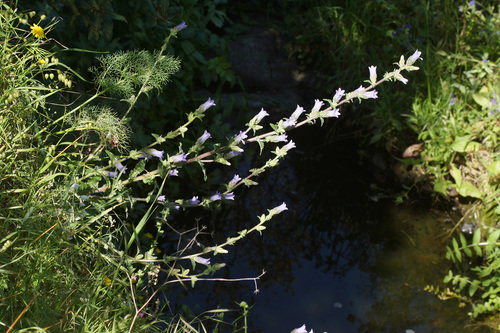
(c) Tamsin Carlisle, some rights reserved (CC BY-NC-SA), uploaded by Tamsin Carlisle
(c) Tamsin Carlisle, some rights reserved (CC BY-NC-SA), uploaded by Tamsin Carlisle
iNaturalist · cc-by-nc
(c) Felix Riegel, some rights reserved (CC BY-NC)
(c) Felix Riegel, some rights reserved (CC BY-NC)
What to Eat
Edible parts: Leaves
The roots are eaten raw, and the leaves are also edible.
Where to Find It
It is a temperate plant.
Europe, Turkey, Türkiye,
Countries: Andorra, Albania, Austria, Bosnia & Herzegovina, Belgium, Bulgaria, Belarus, Switzerland, Cyprus, Czechia, Germany, Denmark, Estonia, Spain, Finland, France, United Kingdom, Greece, Croatia, Hungary, Ireland, Iceland, Italy, Liechtenstein, Lithuania, Luxembourg, Latvia, Monaco, Moldova, Montenegro, North Macedonia, Malta, Netherlands, Norway, Poland, Portugal, Romania, Serbia, Russia, Sweden, Slovenia, Slovakia, San Marino, Turkey, Ukraine
How to Identify
A temperate herb in the Campanulaceae family with edible leaves and roots.
Wikipedia
Source ↗Campanula lyrata is a species of bellflower that occurs in the east-Aegean islands and Turkey.
Notes
There are about 300 Campanula species.
Names & Synonyms
Gelin mancari, Inek memesi, Kecelemek, Kok otu, Memek
References (5)
- Ahiskali, M., Ari, C. & Selvi, S., Edible wild plants and their consumption during winterin a rural village of Kazdagi (Mount Ida)
- Balut, G., 2016, Medicinal and wild food plants of Marmara Island (Balikesir - Turkey). Acta Societatis Botanicorum Poloniae 85 (2): 3501
- Ertug, F., 2004, Wild Edible Plants of the Bodrum Area. (Mugla, Turkey). Turk. J. Bot. 28 (2004): 161-174
- Ertug, F, Yenen Bitkiler. Resimli Türkiye Florası -I- Flora of Turkey - Ethnobotany supplement
- Taskin, T. and Bitis, L., 2016, In vitro Antioxidant activity of eight wild edible plants in Bursa Province of Turkey. Farmacia 2016, Vol. 64, 5


