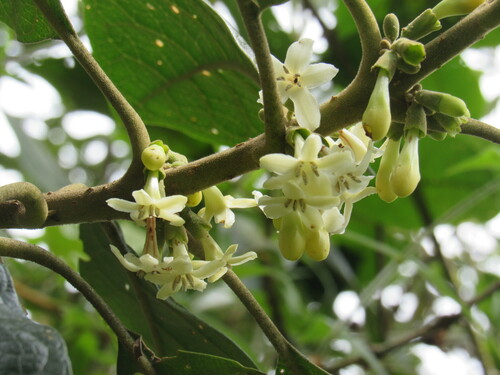
Micromeria myrtifolia
Boiss. & Hohen.
Cayotu

iNaturalist · cc-by-nc
(c) Ron Frumkin, some rights reserved (CC BY-NC), uploaded by Ron Frumkin
(c) Ron Frumkin, some rights reserved (CC BY-NC), uploaded by Ron Frumkin

iNaturalist · cc-by
(c) Eleftherios Katsillis, some rights reserved (CC BY)
(c) Eleftherios Katsillis, some rights reserved (CC BY)
What to Eat
Edible parts: Leaves - tea
The leaves are used for tea and as a spice.
Where to Find It
It is a Mediterranean climate plant. It grows up to 1,225 m above sea level.
Europe, Iran, Israel, Kurdistan, Mediterranean, Middle East, Turkey, Türkiye,
Countries: Andorra, United Arab Emirates, Albania, Austria, Bosnia & Herzegovina, Belgium, Bulgaria, Bahrain, Belarus, Switzerland, Cyprus, Czechia, Germany, Denmark, Algeria, Estonia, Egypt, Spain, Finland, France, United Kingdom, Greece, Croatia, Hungary, Ireland, Israel, Iraq, Iran, Iceland, Italy, Jordan, Kuwait, Lebanon, Liechtenstein, Lithuania, Luxembourg, Latvia, Libya, Morocco, Monaco, Moldova, Montenegro, North Macedonia, Malta, Netherlands, Norway, Oman, Poland, Portugal, Qatar, Romania, Serbia, Russia, Saudi Arabia, Sweden, Slovenia, Slovakia, San Marino, Syria, Tunisia, Turkey, Ukraine, Yemen
How to Identify
A herb of the mint family (Lamiaceae) adapted to Mediterranean climates, growing up to 1,225 m elevation.
Other Information
It is a temperate plant.
Names & Synonyms
Ayakli kekik, Topuk çayı
Micromeria lycia StapfMicromeria minoa Coustr. & Gand.
Satureja myrtifolia (Boiss. & Hohen.) Greuter & Burdet
References (4)
- Ertug, F., 2004, Wild Edible Plants of the Bodrum Area. (Mugla, Turkey). Turk. J. Bot. 28 (2004): 161-174
- Ertug, F, Yenen Bitkiler. Resimli Türkiye Florası -I- Flora of Turkey - Ethnobotany supplement
- Everest, A. & Ozturk, E., 2005, Focusing on the ethnobotanical uses of plants in Mersin and Adana provinces (Turkey). Journal of Ethnobiology and Ethnomedicine 1:6
- Özdemir, E. and Kültür, S., 2017, Wild Edible Plants of Savaştepe District (Balıkesir, Turkey), Marmara Pharm J 21/3: 578-589