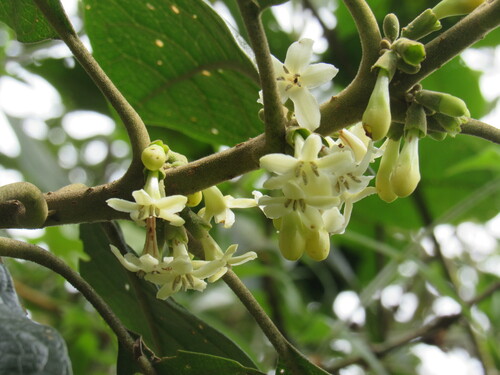
Ziziphora tenuior
L.

iNaturalist · cc-by-nc
(c) Ron Frumkin, some rights reserved (CC BY-NC), uploaded by Ron Frumkin
(c) Ron Frumkin, some rights reserved (CC BY-NC), uploaded by Ron Frumkin

iNaturalist · cc-by-nc
(c) Вячеслав Юсупов, some rights reserved (CC BY-NC), uploaded by Вячеслав Юсупов
(c) Вячеслав Юсупов, some rights reserved (CC BY-NC), uploaded by Вячеслав Юсупов

iNaturalist · cc-by-nc
(c) lougarou, some rights reserved (CC BY-NC), uploaded by lougarou
(c) lougarou, some rights reserved (CC BY-NC), uploaded by lougarou
What to Eat
Edible parts: Leaves - tea, Spice
The leaves are used to make tea and as a spice.
Where to Find It
It grows on hillsides, gravelly areas and semidesert areas.
Asia, Caucasus, Central Asia, China, Egypt - Sinai, Europe, Israel, Kazakhstan, Kyrgyzstan, Mediterranean, Middle East, Pakistan, Russia, Syria, Tajikistan, Turkey, Türkiye, Turkmenistan, Uzbekistan,
Countries: Andorra, United Arab Emirates, Afghanistan, Albania, Armenia, Austria, Azerbaijan, Bosnia & Herzegovina, Bangladesh, Belgium, Bulgaria, Bahrain, Brunei, Bhutan, Belarus, Switzerland, China, Cyprus, Czechia, Germany, Denmark, Algeria, Estonia, Egypt, Spain, Finland, France, United Kingdom, Georgia, Greece, Croatia, Hungary, Indonesia, Ireland, Israel, India, Iraq, Iran, Iceland, Italy, Jordan, Japan, Kyrgyzstan, Cambodia, North Korea, South Korea, Kuwait, Kazakhstan, Laos, Lebanon, Liechtenstein, Sri Lanka, Lithuania, Luxembourg, Latvia, Libya, Morocco, Monaco, Moldova, Montenegro, North Macedonia, Myanmar, Mongolia, Malta, Maldives, Malaysia, Netherlands, Norway, Nepal, Oman, Philippines, Pakistan, Poland, Portugal, Qatar, Romania, Serbia, Russia, Saudi Arabia, Sweden, Singapore, Slovenia, Slovakia, San Marino, Syria, Thailand, Tajikistan, Timor-Leste, Turkmenistan, Tunisia, Turkey, Taiwan, Ukraine, Uzbekistan, Vietnam, Yemen
How to Identify
An annual herb. It grows 5-15 cm high. The stems are hairy. The leaves are narrowly sword shaped and 1-2 cm long by 1-4 mm wide. The flower spikes have 2-6 flowers in a layer.
Names & Synonyms
Faldermannia tenuior (L.) Ter.-Chatschat.Faldermannia parviflora Trautv.Zizophora acutifolia Month. & Auch. ex Benth.
References (6)
- Bailey, C. and Danin, A., 1981, Bedouin Plant Utilization in Sinai and the Negev. Economic Botany 35(2): 145-162
- Dogan, A. & Tuzlaci, E., 2015, Wild Edible Plants of Pertek (Tunceli-Turkey). Marmara Pharmaceutical Journal 19: 126-135
- Ertug, F., 2004, Wild Edible Plants of the Bodrum Area. (Mugla, Turkey). Turk. J. Bot. 28 (2004): 161-174
- Ertug, F, Yenen Bitkiler. Resimli Türkiye Florası -I- Flora of Turkey - Ethnobotany supplement
- Rivera, D. et al, 2006, Gathered Mediterranean Food Plants - Ethnobotanical Investigations and Historical Development, in Heinrich M, Müller WE, Galli C (eds): Local Mediterranean Food Plants and Nutraceuticals. Forum Nutr. Basel, Karger, 2006, vol 59, pp 18–74
- Senkardes, I & Tuzlaci, E., 2016, Wild Edible Plants of Southern Part of Nevsehir inTurkey. Marmara Pharmaceutical Journal 20:34-43