Cyperus compressus
L.
Poorland flatsedge
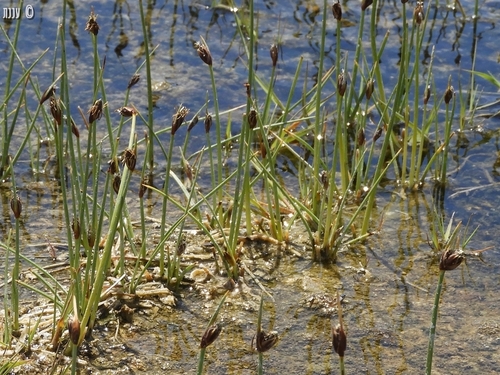
(c) François Rousseu, some rights reserved (CC BY-NC), uploaded by François Rousseu

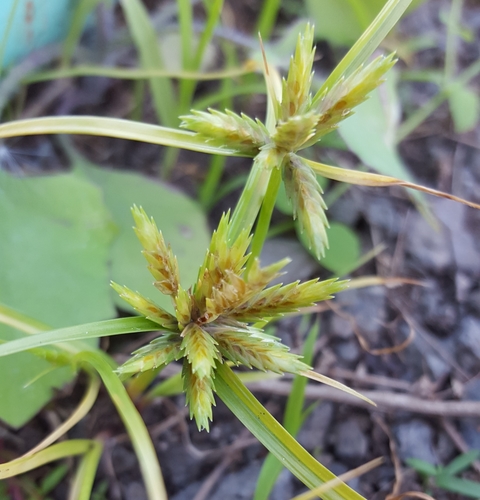
(c) anson_fl, some rights reserved (CC BY-NC)
What to Eat
Edible parts: Rhizomes, Root, Tuber
The rhizomes are eaten both cooked and uncooked. Mainly seen as a food for times of shortage. We have no specific information for this species, but it is said that the inner base of the young stems of all species in this genus can be eaten raw, and make an excellent survival food in times of need.
Where to Find It
It grows throughout the tropics. It grows in savannah grasslands. It grows in the Himalayas up to 1,200 m altitude. It can grow in arid places. It grows in wet sandy places and paddy fields. In Sichuan and Yunnan.
Afghanistan, Africa, American Samoa, Argentina, Asia, Australia, Bangladesh, Belize, Bhutan, Botswana, Brazil, Burkina Faso, Central Africa, Central America, China, East Africa, Fiji, Gabon, Guam, Guatemala, Guianas, Guinea, Guinée, Guinea-Bissau, Guyana, Himalayas, India, Indochina, Indonesia, Japan, Kenya, Kiribati, Laos, Madagascar, Marquesas, Mexico, Mozambique, Myanmar, Nauru, Nepal, Nigeria, North America, Pacific, Pakistan, Panama, Papua New Guinea, PNG, Philippines, Rotuma, SE Asia, Sierra Leone, Solomon Islands, South America, Sri Lanka, Suriname, Taiwan, Thailand, Tonga, Tuvalu, Venezuela, Vietnam, Wallis & Futuna, West Africa, West Indies, Zimbabwe,
How to Identify
A sedge. It is a herb that grows each year from seed. It grows 3-27 cm high. It forms small tufts. The stem can be up to 2 mm across. It is sharply triangle shaped. The blades are up to 16 cm long and 2.5 mm wide. They can be flat or folded. The flowers are in a small cluster of spikes.
How to Grow
Cyperus compressus is native through most of the tropics, extending into subtropical regions in regions such as N. America and eastern Asia. This plant forms stands in moist or wet sites. It is commonly found along riverbanks, lake margins, ponds and both permanent and seasonal pools. It also grows in roadside ditches and drainage trenches, in rice fields margins and on waste ground. It is considered a weed of cultivated and disturbed land in east Africa and Indian rice fields.
Medicinal Uses
The rhizomes have traditional uses in food and survival contexts.
Other Uses
The plant is used to make essential oils. The rhizomes are used for scenting oil.
Wikipedia
Source ↗Cyperus compressus, commonly known as annual sedge, is a sedge of the family Cyperaceae that has a wide distribution throughout countries with warmer climates. It is found in tropical areas of Africa, Asia and the Americas. In Europe it is commonly known as hedgehog sedge and the French know it as souchet comprimé. In India it is called mothi and in Japan it is known as kugugayatsuri.
Other Information
It is a famine food.
Names & Synonyms
Etipu, Pup, Tugulu, Wetlar-myet, Wetta-myet
References (9)
- Flora of Solomon Islands
- McClatchey, W., Thaman, R., & Vodonaivalu, S., 2000, A Preliminary Checklist of the Flora of Rotuma with Rotuman Names. Pacific Science (2000) Vol. 54, No. 4: 345-363
- Royal Botanic Gardens, Kew (1999). Survey of Economic Plants for Arid and Semi-Arid Lands (SEPASAL) database. Published on the Internet; http://www.rbgkew.org.uk/ceb/sepasal/internet [Accessed 16th April 2011]
- Simpson, D. A. & Inglis, C. A., 2001, Cyperaceae of Economic, Ethnobotanical and Horticultural Importance: A checklist. Kew Bulletin Vol. 56, No. 2 (2001), pp. 257-360
- Standley, P. & Steyermark, J., 1958, Flora of Guatemala. Fieldiana: Botany, Volume 24 part 1 p 120
- Thaman, R. R., 1987, Plants of Kiribati: A listing and analysis of vernacular names. Atoll Research Bulletin No. 296
- Thaman, R. R, 2016, The flora of Tuvalu. Atoll Research Bulletin No. 611. Smithsonian Institute p 44
- Wiersema, J. H. & Leon, B., 2013, World Economic Plants. A Standard Reference CRC Press. 2nd Ed. p 225
- World Checklist of Useful Plant Species 2020. Royal Botanic Gardens, Kew
More from Cyperaceae