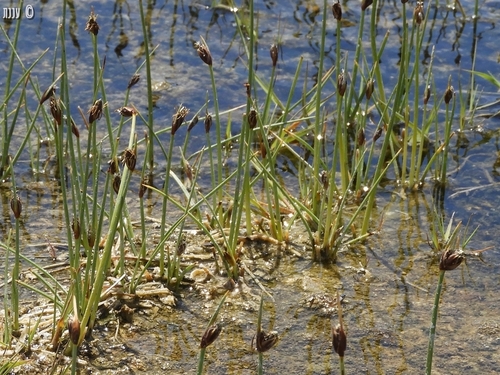
Cyperus laevigatus
L.
Smooth flatsedge

no rights reserved

no rights reserved

no rights reserved
What to Eat
Edible parts: Ash - salt
The plant is burnt for salt. No further details are given, but the general process is to burn the dried plant then percolate water through the ashes to dissolve out the salts. The water is then evaporated to leave behind the salts.
Where to Find It
It is widespread in the tropics and subtropics. It is often near salty areas and hot springs. It can grow in salty and alkaline soils. In Argentina it grows between sea level and 1,000 m above sea level.
Africa, Argentina, Australia, Botswana, Central America, Central Asia, Chile, East Africa, Fiji, Hawaii, India, Kenya, Kiribati, Madagascar, Micronesia, Mozambique, Pacific, Pakistan, Rotuma, St Helena, St. Kitts and Nevis, South America, Sudan, Tajikistan, Uganda, USA, Zimbabwe,
How to Identify
A sedge. It grows 60 cm high. It keeps growing from year to year and can form clumps connected by an underground stem. The flowering shoot has a small array of cylinder shaped spikelets.
How to Grow
Requires a sunny position.
Medicinal Uses
The rhizomes are diuretic. A paste made from the rhizome is taken as a remedy for kidney problems.
Other Uses
The culms are used for matting and to make various items including hats, cloaks, loincloths and string.
Wikipedia
Source ↗Cyperus laevigatus is a species of sedge known by the common name smooth flatsedge.
Names & Synonyms
Sirabozaka, Te maunei
References (4)
- Flora of Pakistan. www.eFloras.org
- McClatchey, W., Thaman, R., & Vodonaivalu, S., 2000, A Preliminary Checklist of the Flora of Rotuma with Rotuman Names. Pacific Science (2000) Vol. 54, No. 4: 345-363
- Simpson, D. A. & Inglis, C. A., 2001, Cyperaceae of Economic, Ethnobotanical and Horticultural Importance: A checklist. Kew Bulletin Vol. 56, No. 2 (2001), pp. 257-360
- Thaman, R. R., 1987, Plants of Kiribati: A listing and analysis of vernacular names. Atoll Research Bulletin No. 296
More from Cyperaceae